
You keep everything you design. It's your game, your IP, your content - I'm the design coach, not a co-owner.
Who you're working with
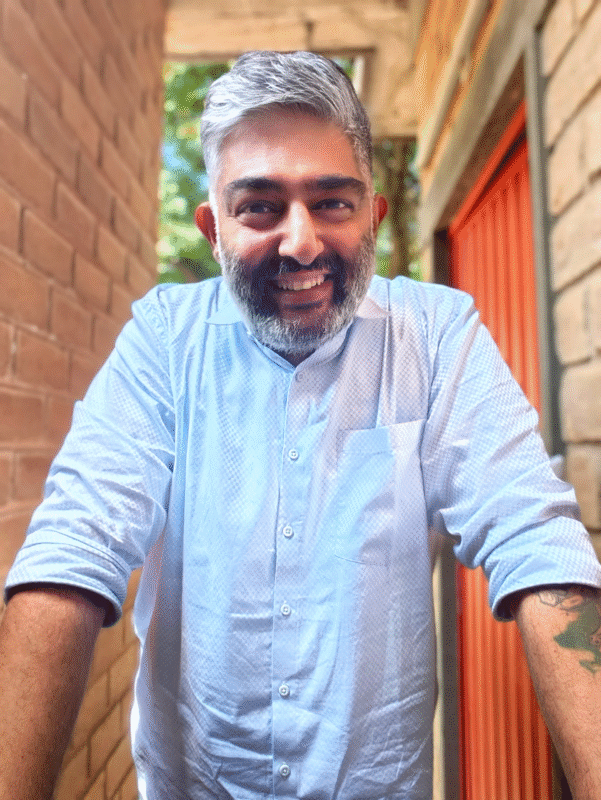
I'm Arvindh Sundar. I design serious games for corporate learning, and then I run them myself, in the room. That second part is what most designers never do.
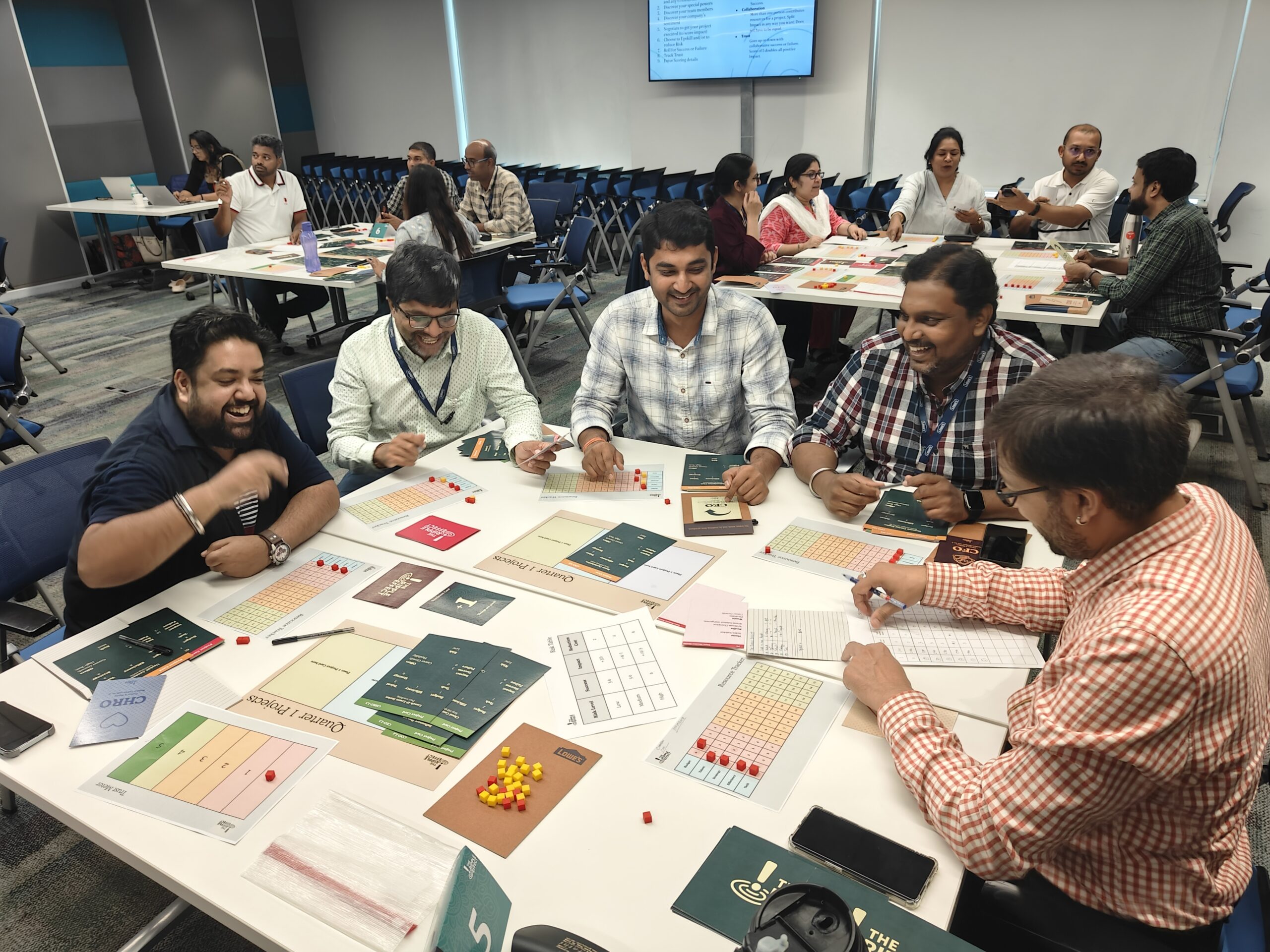
Build it, run it, watch exactly where a table goes quiet, rebuild it that night. That loop is the thing I am actually teaching you. Since 2019, and one programme built that way came back at 8.82 out of 10 across 113 respondents.
I also run a tabletop games convention, which means I have watched a great many games fail in front of real people. So I can usually tell you why yours will fail before you find out the hard way. That saves you about three months.
Why your first attempt probably did not land
Almost everyone who tries this alone hits the same handful of walls. Not one of them is about creativity.
- You built an activity, not a game - there's nothing to actually win or lose, so nobody plays seriously.
- The rules took eleven minutes to explain and you lost the room before it started.
- It's fun, everyone enjoys it, and it teaches nothing you can name.
- The clever people win every time, so the rest disengage by round two.
- The debrief is "so, what did we learn?" and the room goes silent.
- It worked brilliantly once with a great group and fell flat with the next one, and you don't know which part was luck.
- You bought an off-the-shelf game and spent the whole session apologising for the bits that don't fit your context.
What you will be able to do afterwards
These are the actual moves of the craft. You practise every one of them on your own game, never on an example of mine:
- Turn a fuzzy learning objective into a losable goal - the single conversion that separates a game from an activity.
- Design the tension - the constraint that makes a decision cost something, which is where all the learning actually lives.
- Teach rules in under three minutes - the sequencing trick that gets a room playing before they've understood everything.
- Build in the failure you want - so the lesson happens to them rather than getting explained at them.
- Stop the smart people running away with it - the balancing levers that keep a mixed-ability room in the game.
- Run a debrief that isn't "what did we learn?" - the structured sequence that reliably gets the room to say the insight out loud.
- Playtest properly - what to watch, what to write down, and the one question that tells you more than a feedback form.
- Know when to cut your favourite mechanic - and why the version people remember is almost always the simpler one.
How the five sessions run
Spaced deliberately, not stacked. The gap between sessions is where most of the learning actually happens. You go and test the thing, it breaks in a way neither of us saw coming, and you bring that back. A game nobody has tested is a hypothesis, not a game.
The outcome, and the goal that can be lost
Before any mechanic exists, we make the learning outcome sharp enough to design against.
- What behaviour, specifically, should be different afterwards
- Turning that into a goal players can fail at
- Who's in the room, and what they'll resist
- Your definition of done for the whole build
The core loop
The smallest repeating thing players do - and the constraint that makes it hurt.
- Choosing a mechanic that mirrors the real behaviour, not a theme pasted on top
- Designing the scarcity or the clock that forces trade-offs
- Rounds, turns and the shape of a session
- Cutting the two clever ideas that are secretly two different games
Playtest post-mortem, and balance
You've run it. It broke. This is the session that turns that into a real design.
- Reading what actually happened versus what people said
- Balancing so one player type can't dominate
- Fixing the rules-explanation problem you definitely hit
- Deciding what to cut - usually your favourite part
The debrief, which is where learning happens
The game creates the experience. The debrief is what converts it into something they use on Monday.
- A structured debrief sequence that works even with a quiet room
- Questions that surface the insight from them, not from you
- Handling the group that draws the wrong conclusion
- Landing it back on their real work, with commitments
Facilitation, materials, and the next one
Everything that turns a design into something you can hand to a room - repeatedly.
- Your facilitator notes: setup, timings, what to say when it stalls
- Components and materials - what to make properly, what not to bother with
- Running it online versus in person
- The repeatable method, so game two doesn't need me
Honestly, who this is and isn't for
This is for you if
- You train, facilitate or lead L&D and want a signature asset of your own.
- You know your subject deeply and want a better way to teach it.
- You can find a few people to playtest with between sessions.
- You'd rather own the thing than keep licensing someone else's.
This is not for you if
- You want a game built for you - that's a different engagement, just ask.
- You're designing a video game or anything needing engine code.
- You can't make space to playtest between sessions.
- You need it finished next week.
Take one of the mentorship slots
One-to-one, in person or online. You finish with a game you own outright and can run commercially, internally, or however you like - I take no share of it.
I only run a couple of these at a time, because between-session playtests need me actually reading what you send rather than skimming it.
Message me with what you would want to build and who it is for. And if I think a workshop or a built-for-you game is the better answer for your situation, I will tell you that instead. It happens fairly often, and I would rather say it early than take your money for the wrong thing.
Not for you, but somebody came to mind while reading? Send them my way. I would really appreciate it 🙂
Straight answers
What exactly do I finish with?
How long does the whole thing take?
Do I need any game design background?
Who owns the game?
What if I don't have people to playtest with?
Can you just build the game for me instead?
In person or online?
What does it cost?
Why payment in advance?
With love from Bengaluru, this is Arvindh saying over and out.