
How to Choose a Serious Games Vendor
A buyer's guide to picking a partner who changes behaviour, rather than one who fills a day very pleasantly.
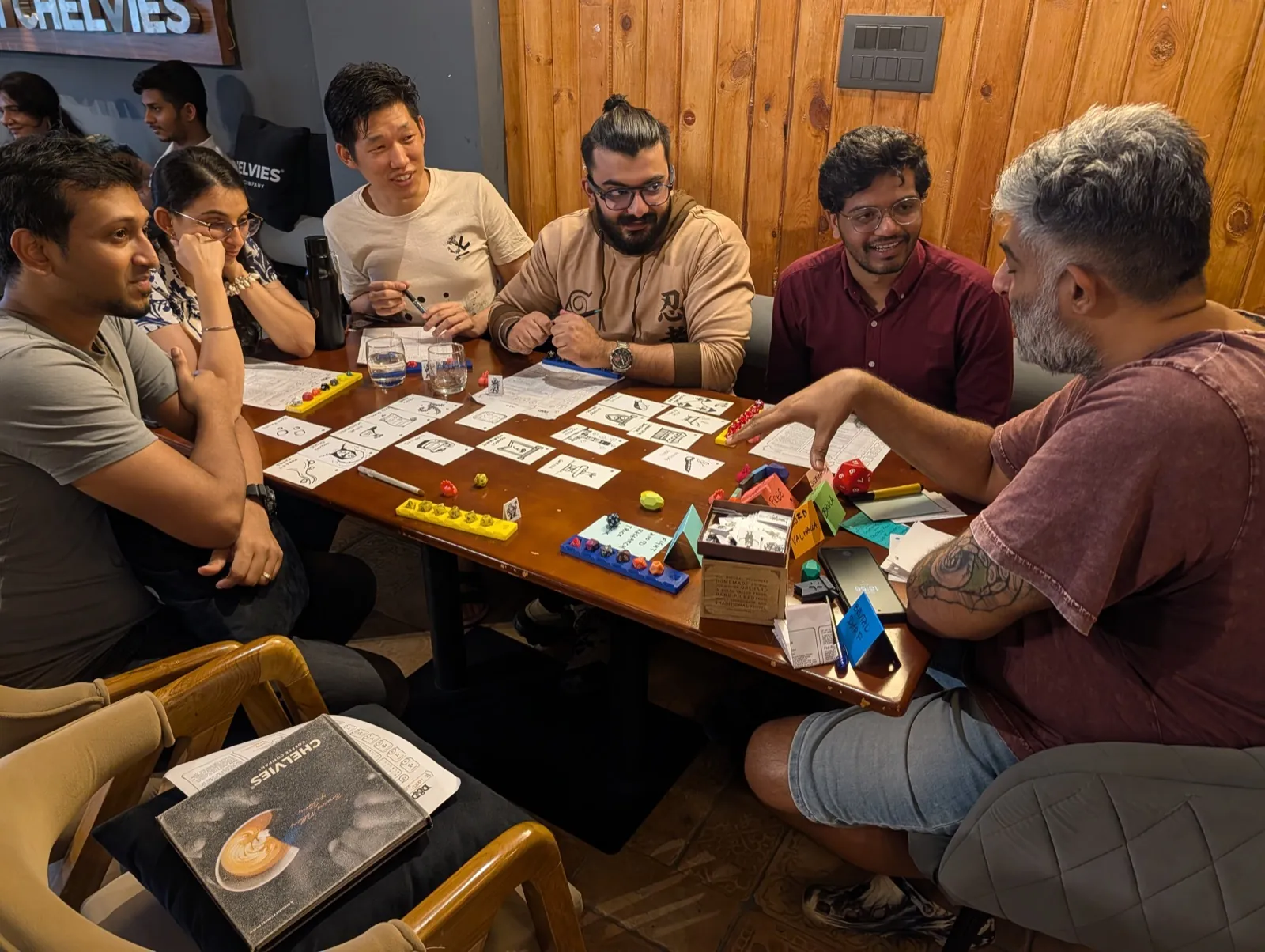
Short answer: To choose a serious games vendor, judge them on seven things: whether they design their own games or relicense off-the-shelf decks, whether the design targets behaviour change rather than entertainment, the quality of their live facilitation and debrief, their willingness to customise to your context, the evidence behind their claims, their ability to handle your group size and logistics, and how transparent they are about pricing. The single biggest signal is who actually runs the room. If you are still deciding whether this format is right for you at all, start with the serious games guide first.
Key takeaways
| What to check | Strong vendor | Weak vendor |
|---|---|---|
| The games | Original IP, designed in-house | Relicensed decks anyone can buy |
| The intent | Designed to change behaviour | Designed mainly to entertain |
| The debrief | Led by the person who watched the room | A generic script or none at all |
| The fit | Customised to your context | One size, run identically everywhere |
| The proof | Named client outcomes and theory | Stock photos and adjectives |
 What to look for in a serious games vendor
These are the criteria I would use if I were sitting on your side of the table instead of mine. Work through them in order. The first three alone will separate a real behaviour-change partner from an events company that happens to own a box of cards.
1. Original IP, not relicensed decks
Ask whether they designed the game or bought the rights to run somebody else's. Relicensed decks are not automatically bad. They're just available to every competitor you're also talking to, and they rarely fit your situation closely. A vendor who builds their own games controls the mechanics, can bend them, and knows exactly why every rule is there. I design and build mine, which is why I can change a constraint mid-session when a room needs it. Nobody running a licensed box can do that.
2. Designed for behaviour, not entertainment
A fun afternoon and a behaviour shift are two different products with the same invoice format. Plenty of vendors sell engagement. Everyone laughed. The energy was brilliant. The photos are excellent. So ask what specific behaviour the game is built to surface, and how. If the answer is about fun and bonding rather than decisions under pressure, you are buying entertainment with a learning label stuck on the lid. The right vendor can name the behaviour, name the exact moment in play where it turns up, and tell you how the debrief converts it into insight.
3. Quality of facilitation and debrief
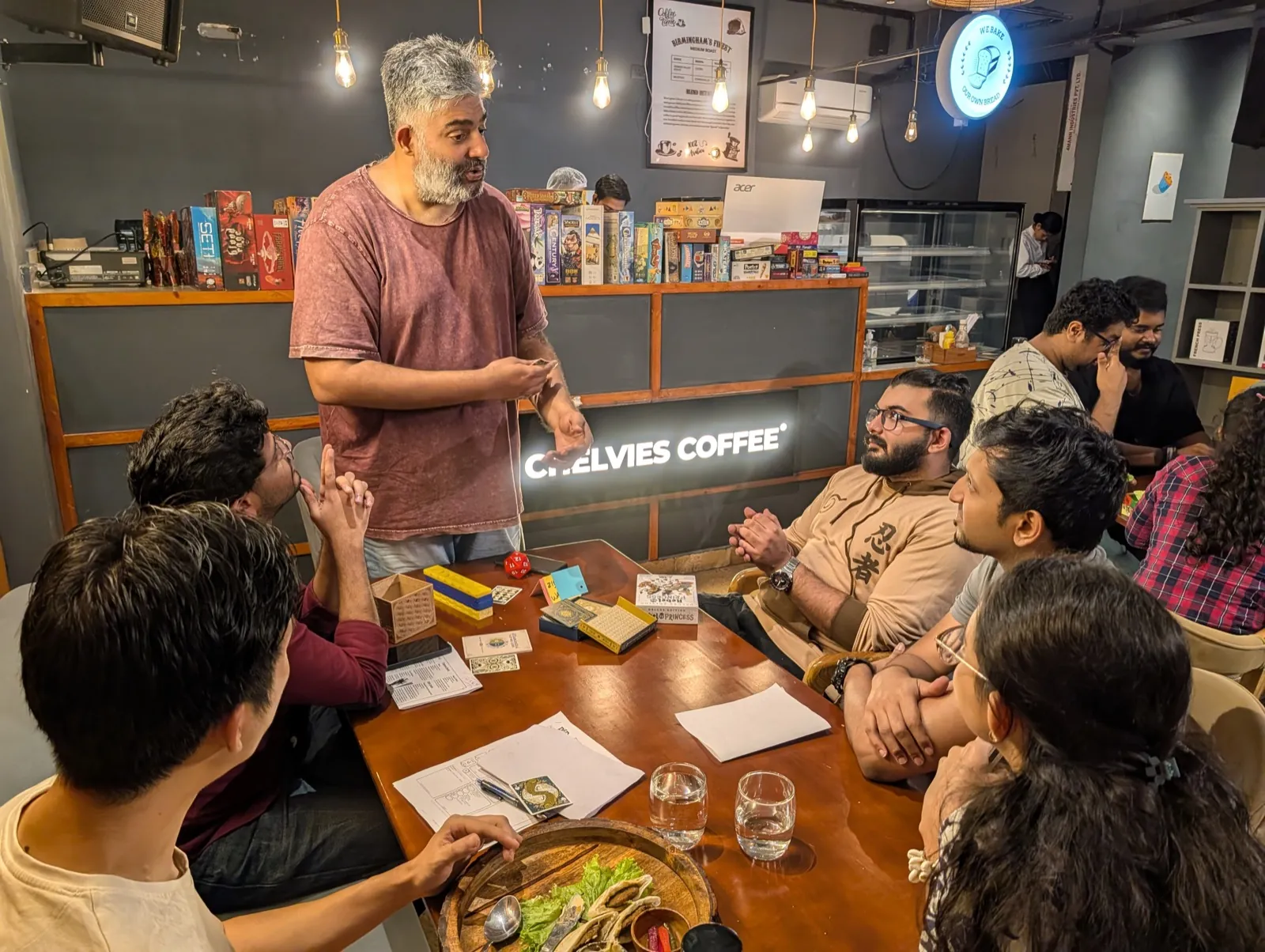
Behaviour change happens in the debrief, not in the game. The game surfaces the patterns. The facilitator is the one who makes people see them and own them out loud. So ask who is standing in front of your team on the day, whether they designed the game, and how the debrief is built. Somebody who was in the room can tell your people exactly what they did, in the exact moment it mattered. Somebody reading a licensed script cannot, and everybody in the room will know.
4. Customisation to your context
The closer the game sits to your real decisions, constraints and politics, the more your people recognise themselves in it. Ask how the vendor tailors things - framing, scenario language, debrief focus, or actual mechanical changes. Then watch out for both extremes. Somebody running the identical session everywhere is ignoring your context. Somebody insisting everything must be custom-built may simply be padding the invoice. A good partner will tell you honestly how much customisation you actually need, even when the honest answer is "less than you were expecting".
5. Evidence and case studies
Claims about behaviour change cost nothing to make. Ask for named client outcomes, the design rationale, and the theory sitting under the game. I point to delivery for a Fortune 100 company, a Fortune 500 technology company and a global life-sciences research firm, and to the behavioural science behind the design, because specifics can be checked and adjectives cannot. If a vendor can't tell you who they've run this for and what changed afterwards, the polish is marketing. It isn't proof.
6. Scale and logistics
A format that sings for 12 people can fall apart at 120. Ask the boring questions early. How many participants can one facilitator genuinely hold? What happens across parallel tables? Do they travel? What do they need from your venue? In India this gets concrete fast - room setup, moving materials between cities, a lift that doesn't work on the day. A vendor who has run your group size before answers crisply. One who hasn't goes vague, and you will hear it.
7. Pricing transparency
Most vendors quote per engagement rather than publishing rates, and that's fair enough - cost genuinely does depend on group size, customisation and number of sessions. What is not fair is a quote you can't decode. Ask what's included, how many participants the number covers, who facilitates, and what costs extra. A transparent vendor breaks it down so you can compare like for like instead of guessing in a spreadsheet at 9pm.
How to choose: a quick decision guide
Use these questions to narrow the field fast.
Is your challenge behavioural or informational? If people just need to absorb content - compliance, product knowledge - a serious game is overkill and something cheaper will do the job. I'll tell you that myself. If you need leaders to behave differently under pressure, a serious game or simulation fits, and the rest of these questions matter.
Do you need a generic capability or your specific context? If the behaviour is broad, like general collaboration, a well-designed off-the-shelf game is fine. If the patterns only show up inside your real constraints and politics, prioritise vendors who customise and consider custom serious game design.
Who is actually running the room? The debrief is the point, so insist the facilitator is present, experienced, and ideally the person who designed the thing. If the game gets licensed out to a third party to run, adjust your expectations for depth downward.
Can they prove it worked before? Named clients, outcomes and design logic - take the conversation forward. Stock imagery and superlatives - ask for references before any budget leaves the building.
Does the quote let you compare like for like? With two quotes in hand, normalise them. Same group size, same number of sessions, same level of customisation. The cheaper headline number is very often the more expensive engagement once the extras go back in.
 Red flags
- They sell fun and engagement but cannot name the behaviour the game targets.
- The facilitator who runs your session did not design the game and was not part of building the debrief.
- The same session is run identically for every client with no tailoring to context.
- Proof is stock photos and adjectives, with no named clients or outcomes.
- Pricing is a single opaque number with no breakdown of what is included.
- They have never run your group size and get vague when you ask about logistics.
Common questions
What should I look for when choosing a serious games vendor?
Look for original game design rather than relicensed off-the-shelf decks, an explicit focus on behaviour change over entertainment, strong live facilitation and debrief, willingness to customise to your context, evidence from real client outcomes, the ability to handle your group size and logistics, and transparent pricing. The single biggest differentiator is who designs and runs the session, and whether the debrief is led by someone who was actually in the room.
Does the vendor need to facilitate the session themselves?
For behaviour change, yes. The debrief is where most of the learning lands, and it requires a facilitator who watched what unfolded in real time. A vendor who licenses a game to a third party or hands you a box to self-run cannot reflect back what actually happened in your room. Ask who will be standing in front of your team and whether they designed the game.
Is a custom serious game worth it, or should we buy off-the-shelf?
Off-the-shelf serious games are fine when the behaviour you want to surface is generic, such as broad collaboration or communication. Custom design is worth it when the game needs to mirror your specific decisions, constraints, and politics so the patterns that show up are recognisably your team's. A good vendor will tell you honestly which one your situation needs rather than upselling custom by default.
How do I compare vendors on price without public rates?
Most serious games vendors quote per engagement rather than publishing rates, because cost depends on group size, customisation, and number of sessions. Compare on fit and outcome, not just the rupee figure. Ask each vendor what is included, who facilitates, how many participants the price covers, and what customisation costs extra, so you are comparing like for like.
If you're weighing up vendors and want a straight answer on whether a serious game fits your challenge at all, come and tell me what behaviour you're trying to shift. I'll tell you if it doesn't fit. And have a look at the games first, to see what original, behaviour-first design actually looks like before you decide anything.
Related reading
- Serious games for leadership development: the complete guide
- Custom serious game design for your context
- Serious games vs gamification for leadership development
See the games Come and say hello
With love from Bengaluru, this is Arvindh saying over and out.