
These are not products off a shelf. Each game is built to surface one specific leadership behaviour under real pressure. And the person who designed the mechanics is standing in your room on the day. That is not a small thing - it is the whole thing.
How to Pick One
Pick by the behaviour you want to see, not the theme you want to talk about. That one move saves most people a wasted day.
- Cross-functional trust, breaking silos: Ripple Effect
- Stakeholder management, influence without authority: Bloom
- Decision-making under ambiguity, learning agility: Planetfall
- Collaboration, communication, emergent leadership: Sticky Fingers
- Negotiation, political dynamics, coalition-building: Welcome to Zombiepuram
- Strategic thinking, scenario planning, adaptive leadership: Chaos in the Kitchen
- Working smarter instead of harder, adopting new tools: The Potter from Belagavi
Not sure? Just tell me the challenge, the group size, the seniority, and what you want people to walk out with. I'll tell you which game fits. And if none of them do, I'll tell you that too.
If "simulation" is the word you use for this sort of thing, the same seven are laid out that way on the leadership simulation games page.
 What All Seven Have in Common
Seven games. Seven scenarios. Seven different leadership muscles. One design principle underneath all of them: build the conditions where real behaviour comes out, then run a debrief that makes that behaviour impossible to look away from.
All of them are played in person. All of them are run by me, the person who designed the mechanics. No licensed delivery, no associate facilitation, no digital version. The social dynamics need bodies in a room, and the debrief needs the designer in it.
Every session closes the same way. A named action, a named situation, a named date. Not "I'll try to be a better leader." The commitment gets made out loud before anybody leaves the room.
Ripple Effect
Cross-functional trust and systems thinking.
Every table runs its own company. Each one makes two things the room needs and is short of three more, so nobody can win alone. The deals happen table to table, out loud, in front of everybody. You find out fast who keeps a promise when keeping it costs them something, and who quietly grabs.
Group size: 16-60 | Duration: 3 hours | Format: In-person
See Ripple Effect →Bloom
Stakeholder management, relationships, networking.
How do your leaders invest in people when something valuable is on the line? Who treats a relationship as an asset, and who treats it as a transaction? You will see it inside twenty minutes.
Group size: 12-40 | Duration: 2 hours | Format: In-person
See Bloom →Planetfall
Learning agility and living with ambiguity.
Conditions shift. No answer is clearly right. Who adapts and who freezes? Planetfall makes that visible in a room where nobody ever gets the full picture - because at work, nobody ever does.
Group size: Up to 20 | Duration: 2 hours | Format: In-person
See Planetfall →Sticky Fingers
A card-based heist. Collaboration and creative problem-solving.
Runs for a dozen people or a hundred and fifty. Shows you who leads when the clock is running, who contributes and who watches, and what structure a team invents when you give them none.
Group size: 12-150 | Duration: 1 hour | Format: In-person
See Sticky Fingers →Welcome to Zombiepuram
Multi-faction negotiation and influence, for mid-to-senior leaders.
Competing factions, clashing agendas, and no authority to fall back on. Who builds coalitions. Who ends up alone. How influence actually works when the politics are real. My longest game, and my loudest room.
Group size: 15-80 | Duration: 6 hours | Format: In-person
See Welcome to Zombiepuram →Chaos in the Kitchen
Strategic thinking and scenario planning, for senior leaders.
Teams make big calls while the ground keeps moving. It shows you how your seniors handle uncertainty, where they put money when there isn't enough of it, and how well they explain a hard decision to the people who have to live with it.
Group size: 15-50 | Duration: 2 hours | Format: In-person
See Chaos in the Kitchen →The Potter from Belagavi
Working smarter instead of harder, for individual contributors and team leads.
Seven rounds to sell as many pots as you can. You can make them by hand, or you can spend a round building a workshop that makes them for you. Round five is when the person who stopped working overtakes the person who never did.
Group size: 12-40 | Duration: 45 minutes | Format: In-person
See The Potter from Belagavi →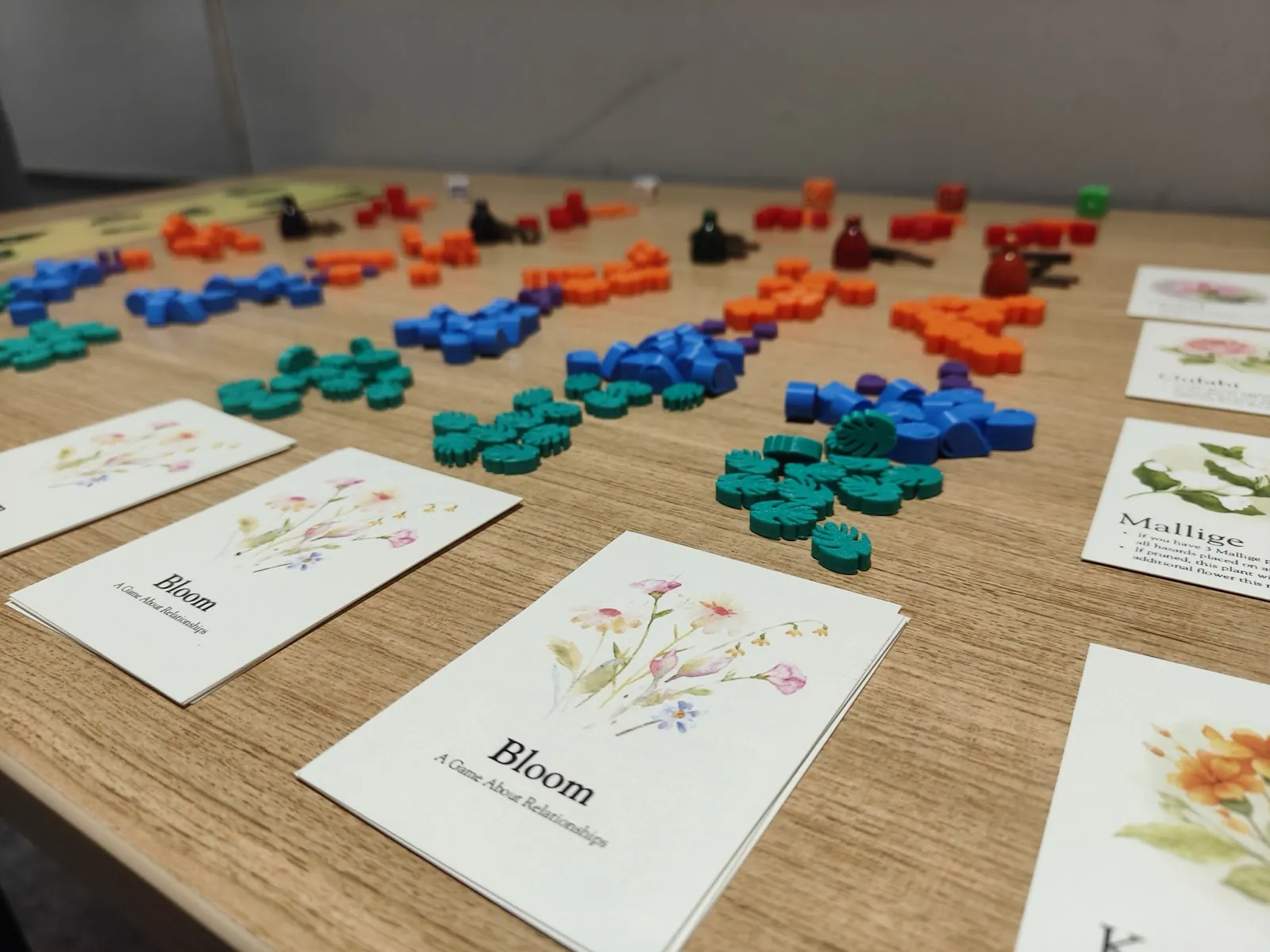
What Participants Say
"Activities that forced me to think."
Participant, AI Bootcamp for Teams
"The auction activity we played and the overview it brought in."
Participant, AI Bootcamp for Teams
"The frameworks, double diamond, lotus blossom, and how to apply them to real work problems."
Participant, AI Bootcamp for Teams
What You Get, Whichever Game Runs
Your people leave with three things. A named behaviour they watched themselves do. The principle that explains why they did it. And a commitment - what they will do differently, in which situation, starting when. No reflection worksheets to fill in later. The commitment gets made in the room.
You get something else entirely: observation data. I watch every person across the whole session, and afterwards you get a written summary of what actually happened - which patterns were everywhere, which were one person, which showed up consistently inside a particular sub-group. Most L&D teams never get to see their people this clearly.
Still not sure which one fits?
Tell me the challenge, the group size, the seniority, and what you want people to take away. I'll tell you which game fits - or whether a custom build makes more sense for you.
With love from Bengaluru, this is Arvindh saying over and out.