
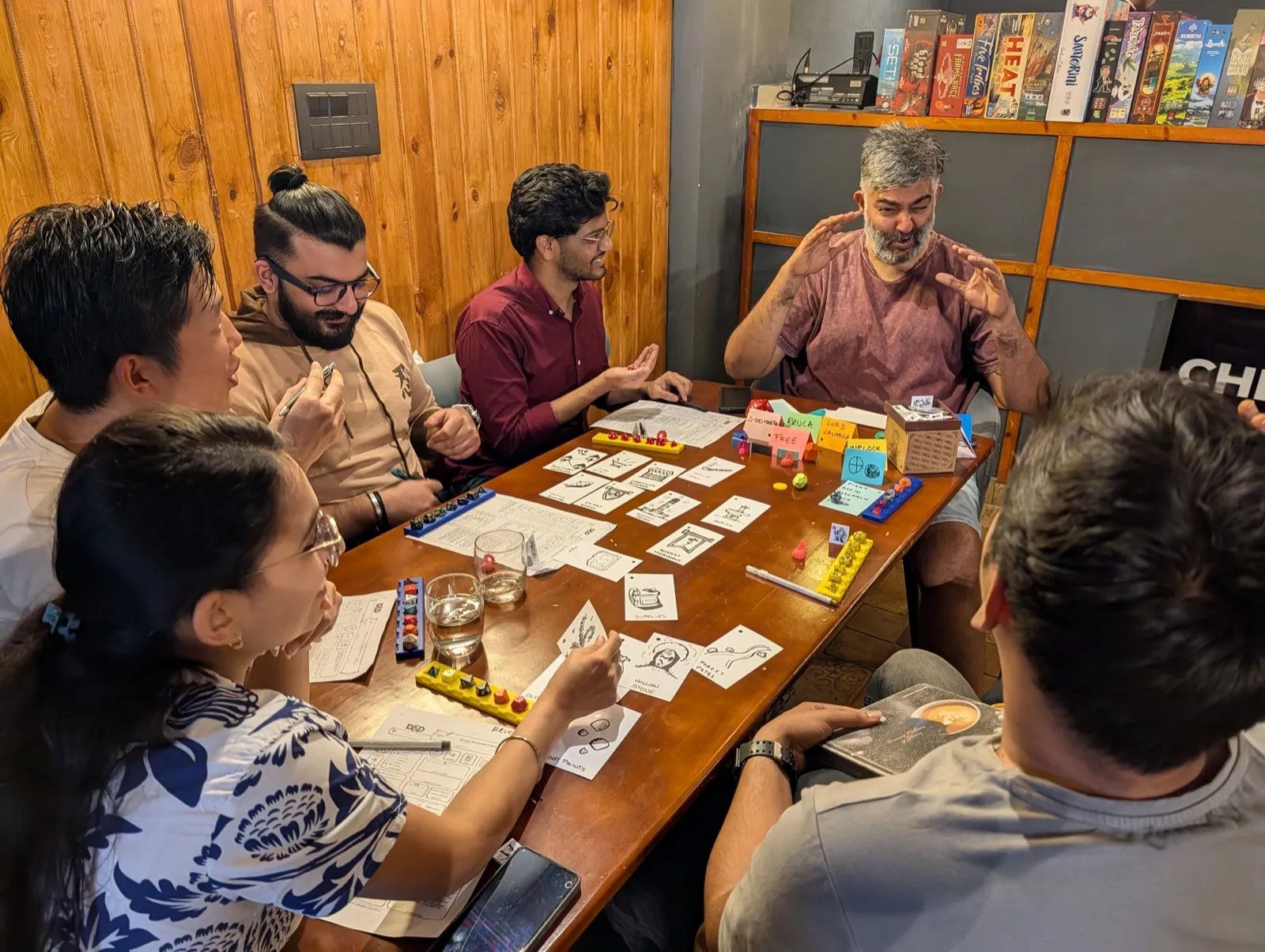
You are running a professional kitchen. Bookings are in. Ratings have to hold. Revenue has to keep moving.
And you can see the trouble from here. The weekend rush. That supplier who has form. The one team member who is having a month. You know all of it is coming. You have no idea what shape it arrives in.
This game has never once been about having the right answer. It is about how many futures you were ready for... and most people, it turns out, were ready for one.
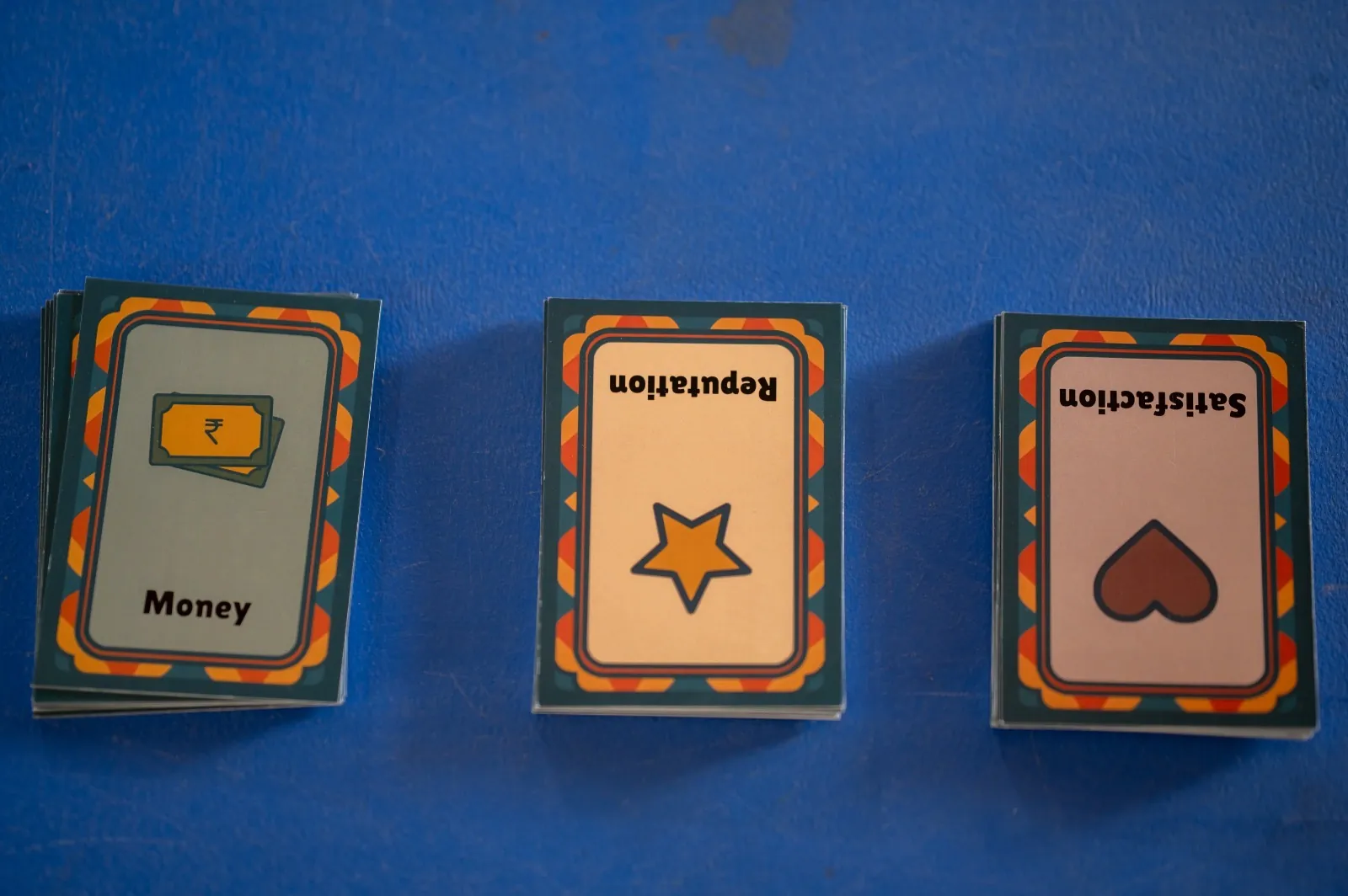
 What the game actually is
Teams run a kitchen as a business. Ratings on one side, revenue on the other, and a service coming that nobody can see clearly.
Staff are short. Supplies are short. Time is very short. Demand keeps moving. So every round they triage, they trade something away to get something else, and they find out whether they were making a judgment or just reacting quickly with confidence.
Strategy offsites surprised me on this point. Most senior teams are not bad at planning. They are brilliant at planning. They are just planning for exactly one future, in enormous and loving detail, and calling it preparedness.
Deals can be cut with other kitchens. Alliances form. The future in this game is uncertain but it is not unknowable - not if somebody in the room is actually thinking about it.
What it tells you about how your leaders think
Make the future genuinely unclear and people stop describing how they plan. They just plan, in front of you:
- Who hedges, and who bets the whole night on one outcome and then discovers there was never a plan B, only a strong feeling.
- Who buys options, and who locks something in round one that turns into a liability by round three.
- What a team does with the gap between the future they prepared for and the one that turned up.
- Who negotiates early, while calm and holding something - and who goes looking for a deal at the exact moment everybody can smell that they need one.
- Who can tell a bad decision from a bad result. A sound call still loses sometimes. A reckless one still wins sometimes. Watch who judges a colleague purely on the scoreboard, and watch who puts their hand up for a poor result that came from a good process.
The debrief turns that into scenario-thinking frameworks they can actually use, built out of the calls they made in that room. Not a case study about an airline.
Who It's For
Senior leaders and strategy teams. The people whose calls cost real money and land two quarters later.
It is especially good for teams in the middle of something changing, where the job is not executing a clear plan but staying ready for four of them. Volatile market, fast-growth stretch, restructure - that is when scenario thinking stops being a nice slide and starts being the edge.
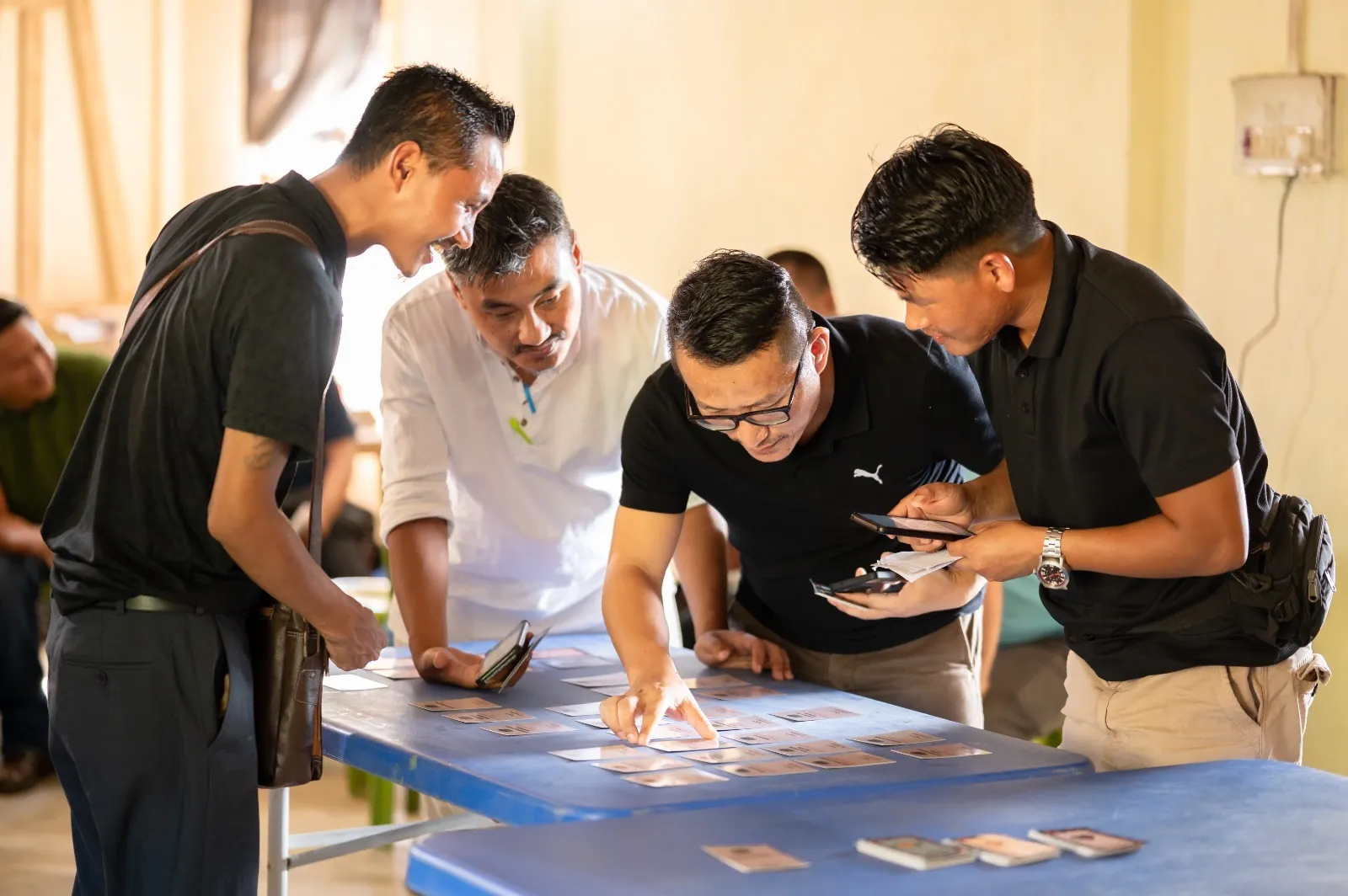
What Happens in the Room
Teams get their situation. They make their opening calls. The plans look good. Everybody feels quite clever.
Then conditions move. Sometimes a nudge. Sometimes a proper gut-punch. And the game stops being about the plan and starts being about whether anyone is willing to reopen it.
Rigid teams suffer. Teams who made reversible calls early keep breathing. And the tell is simple: does somebody say out loud "this has changed, let's decide again", or does the room quietly keep executing a plan that stopped matching reality ten minutes ago?
The pattern I see most often, and it is the one that stings: groups plan so beautifully that they run out of clock. Gorgeous strategy. No time left to run it. Everybody in the room recognises it instantly, because everybody in the room has done it at work.
 Specific Patterns That Surface
- Who treats the opening plan as a promise, and who treats it as a guess worth testing
- How fast new information actually changes behaviour, and whether that turn is decided out loud or just drifted into
- Who says "we should reverse this", and whether the room listens or defends the original call because it was theirs
- Whether trade-offs get made on purpose, or resources just quietly disappear
- The planning-to-doing ratio - the perfect plan with no runway versus the rough plan that moved early
- Whether they judge a call by the process or the scoreboard, and who owns a poor result that came from a good decision
When to Bring This In
- Strategy offsites, on the morning of day one - watch how this team decides, before they start deciding things that matter
- Leadership teams whose post-mortems keep arriving at the same sentence: "we planned for X, Y happened, and we carried on doing X"
- Fast-moving markets where the annual planning cycle has quietly stopped keeping up
- Just before a real planning session, so the habits are visible and named while there is still time to change them
When I'll Tell You to Pick Another One
- Operational and frontline teams. This is built for people allocating resources, and it does not land the same with roles built around execution
- Groups with no budget and nothing real to trade off - the whole engine needs something to spend
- When the actual problem is execution quality rather than strategic judgment. Different game, sometimes not a game at all, and I'll say which
The debrief is the actual product
The kitchen is the bait. The debrief is where it lands, and it runs on EPPA - Experience, Patterns, Principles, Application.
Nobody leaves with reflections. They leave with one behaviour, one situation and one date. And I run it myself, because I watched every call get made, and that is not something you can hand to somebody reading from a guide.
Bring this to your team
Tell me about your leaders and the kind of uncertainty sitting in front of them. I'll tell you straight whether this is the right game. There is no hard sell here - I'd rather lose the booking than run the wrong day.
What Clients Say
"We'd run leadership workshops before. This was the first time we could actually see how our managers made decisions under pressure. The debrief alone was worth the session."
L&D Head, GCC (India)
"What surprised me was how quickly the room opened up. Within 20 minutes, patterns were visible that hadn't surfaced in six months of 360 feedback. We brought Arvindh back for two more cohorts."
Learning & Development Manager, Manufacturing
"I've sat through a lot of training. This was the first time I left thinking about my own behaviour, not the content on the slides."
Participant, Leadership Development Programme
If you want the thinking behind it
- Decision-making under uncertainty, the thinking this game is built to build
- Problem-solving for teams, coordinating and triaging under operational pressure
- How to delegate as a manager, why hoarding every call buries you in the rush
- Decision Labs, the consequence-based decision environments behind the games
- The Put The Player First framework, the method we design every game around
Come and see if it fits
Twenty minutes on a call. Your team, your goal, my honest answer.
Book a discovery call WhatsApp Arvindh
With love from Bengaluru, this is Arvindh saying over and out.