
Why I Run It This Way
"Behaviour under pressure is the only data worth developing from, and you can only get that data by creating the pressure."
The Knowing-Doing Gap
Leadership training runs into the same wall nearly every time. Your leaders already know. Ask any manager in the room what good delegation looks like and you will get a tidy, correct, well-structured answer. Half of them could deliver the module for you. Then the quarter goes sideways, and they quietly take the task back and do it themselves at 11pm, because it was faster.
The problem was never information. More of it will not help. What is missing is practice in conditions close enough to real that people behave the way they actually behave.
Why Games Work
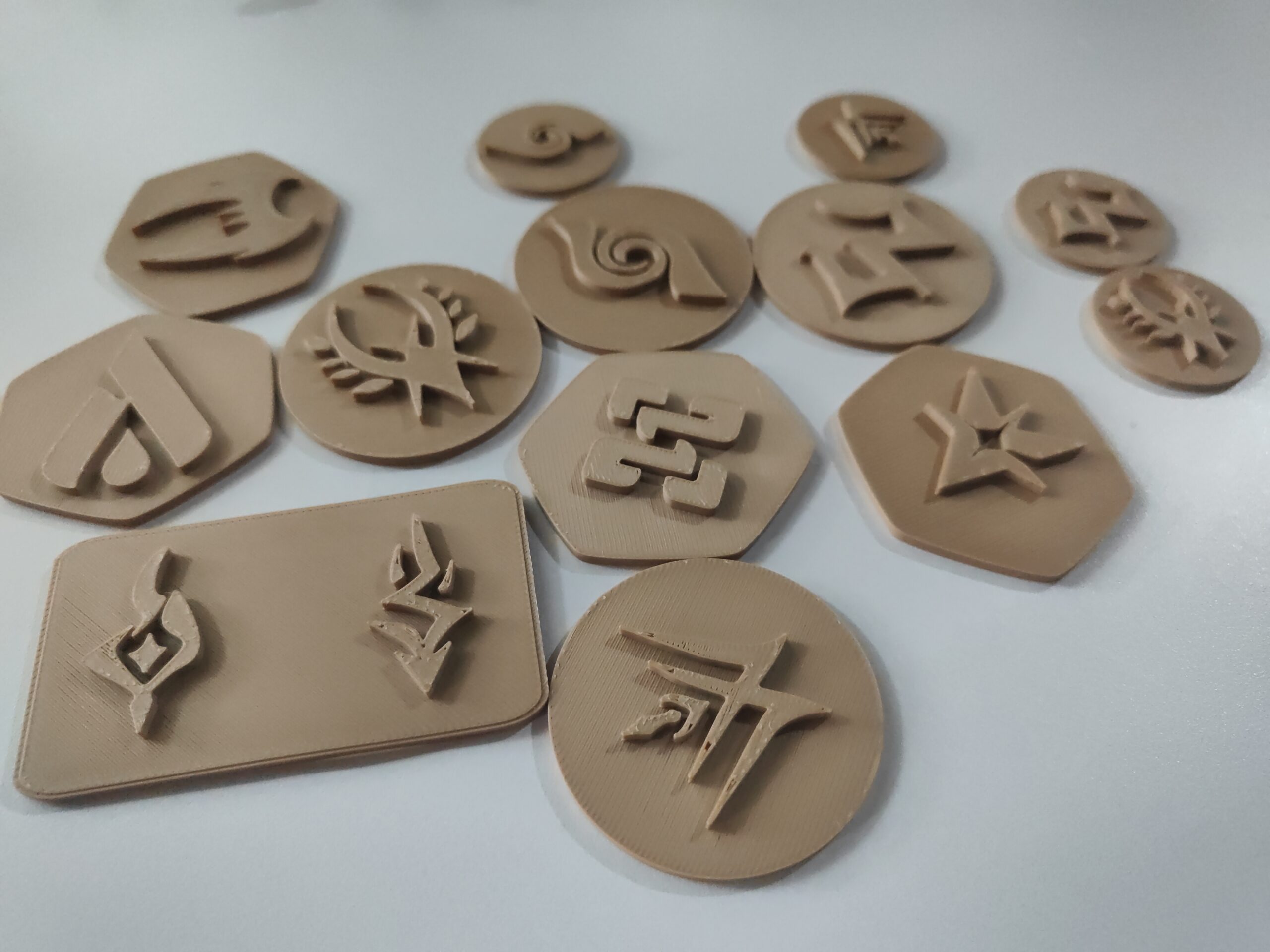
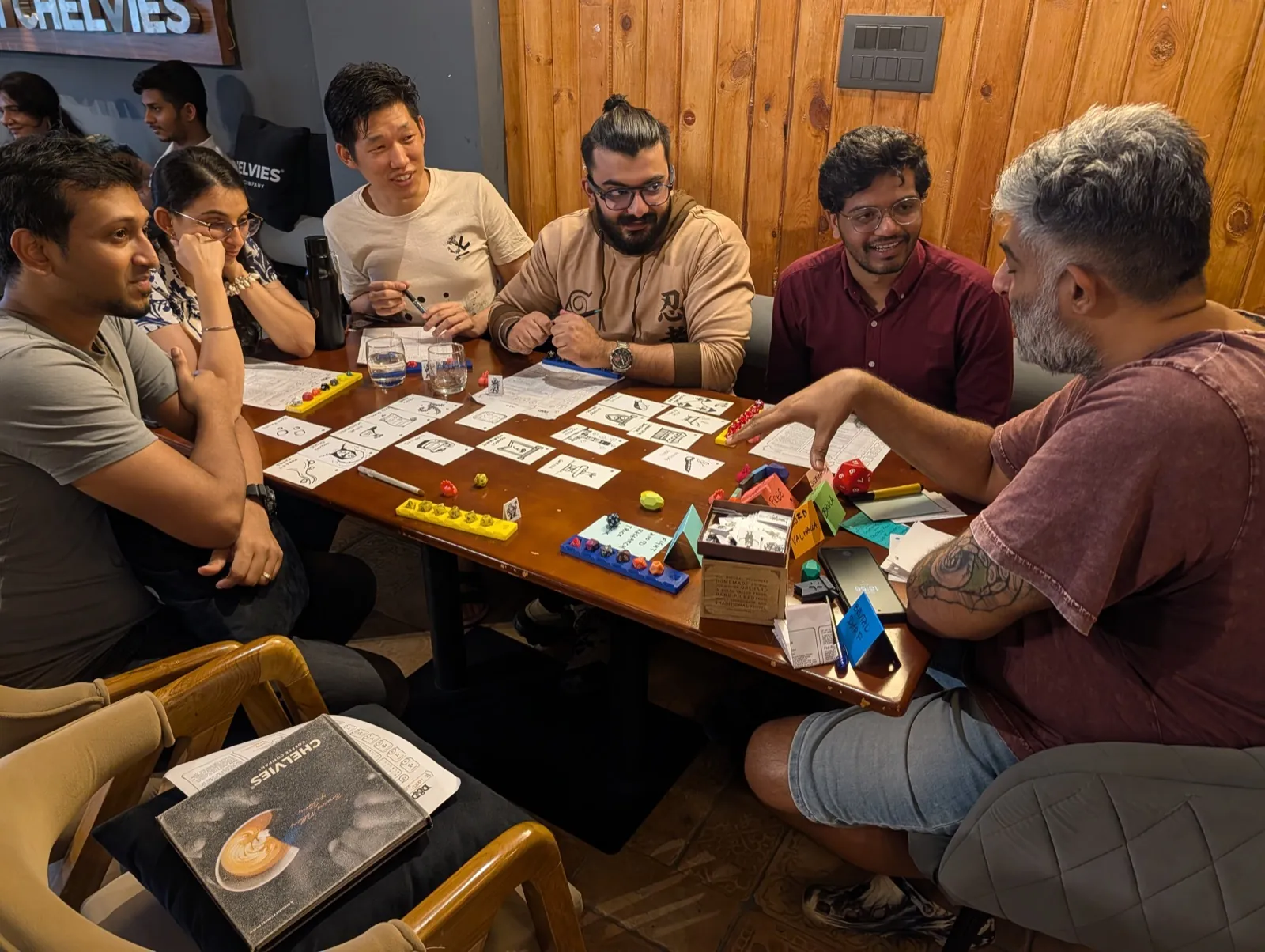
A game builds a small bounded world where the stakes are fake and the feelings are not. When something matters to a player inside the game - a pile of plastic resources, a made-up city, a deadline I invented that morning - they respond the way they respond outside it. Reliably. It is slightly unnerving the first time you watch it.
And that is the whole trick, because it makes the behaviour visible. You cannot coach somebody on a pattern they have never once seen themselves do. The game is a machine for making people see it.
The EPPA Debrief Loop
Every session runs on the same four-stage debrief, which is where the game stops being fun and starts being useful:
- Experience. Rebuild what actually happened. Not what people meant to do. What they did.
- Patterns. Name what kept repeating under pressure. What showed up again and again?
- Principles. Connect those patterns to leadership principles, through their insight rather than my lecture.
- Application. Concrete commitments for Monday morning. A named behaviour, a real situation, a date. Not "communicate better."
How This Works in Practice
I run every session myself. I do not license the games and I do not train other people to deliver them, which is a commercially foolish decision I keep making on purpose. The debrief is only ever as good as the person who watched the game, and the person who watched the game should be the person who built it. You manage your relationships. I manage the quality of the debrief.

What the Research Says
Edgar Dale's work on retention has been quoted, mangled, and eventually turned into a pyramid with suspiciously round numbers printed on it. The pyramid is rubbish. The principle underneath it holds: people keep more from doing than from watching or reading. Experiential learning is not a teaching preference, it is how memory works. Real emotion, real decisions, real consequences - that combination encodes far harder than a slide going past.
Feynman had a line about the difference between knowing the name of a thing and actually understanding it, and it maps straight onto this problem. Leaders can name good behaviour instantly. They can win a case-study discussion without breaking a sweat. But in the room, at pace, with something on the line, those named principles do not fire. Knowing a concept and having it wired in as a reflex are two completely different states. Games are how you get from the first to the second.
The Designer-Facilitator Difference
Most experiential work is run by a licensed facilitator delivering somebody else's design. That leaves a structural hole. They did not build the mechanics, so they do not know what each mechanic was built to reveal. They can follow the debrief script beautifully. What they cannot do is leave it. And the moment a group plays unusually - which is often, because people are people - the script is calmly pointing at a pattern that never turned up.
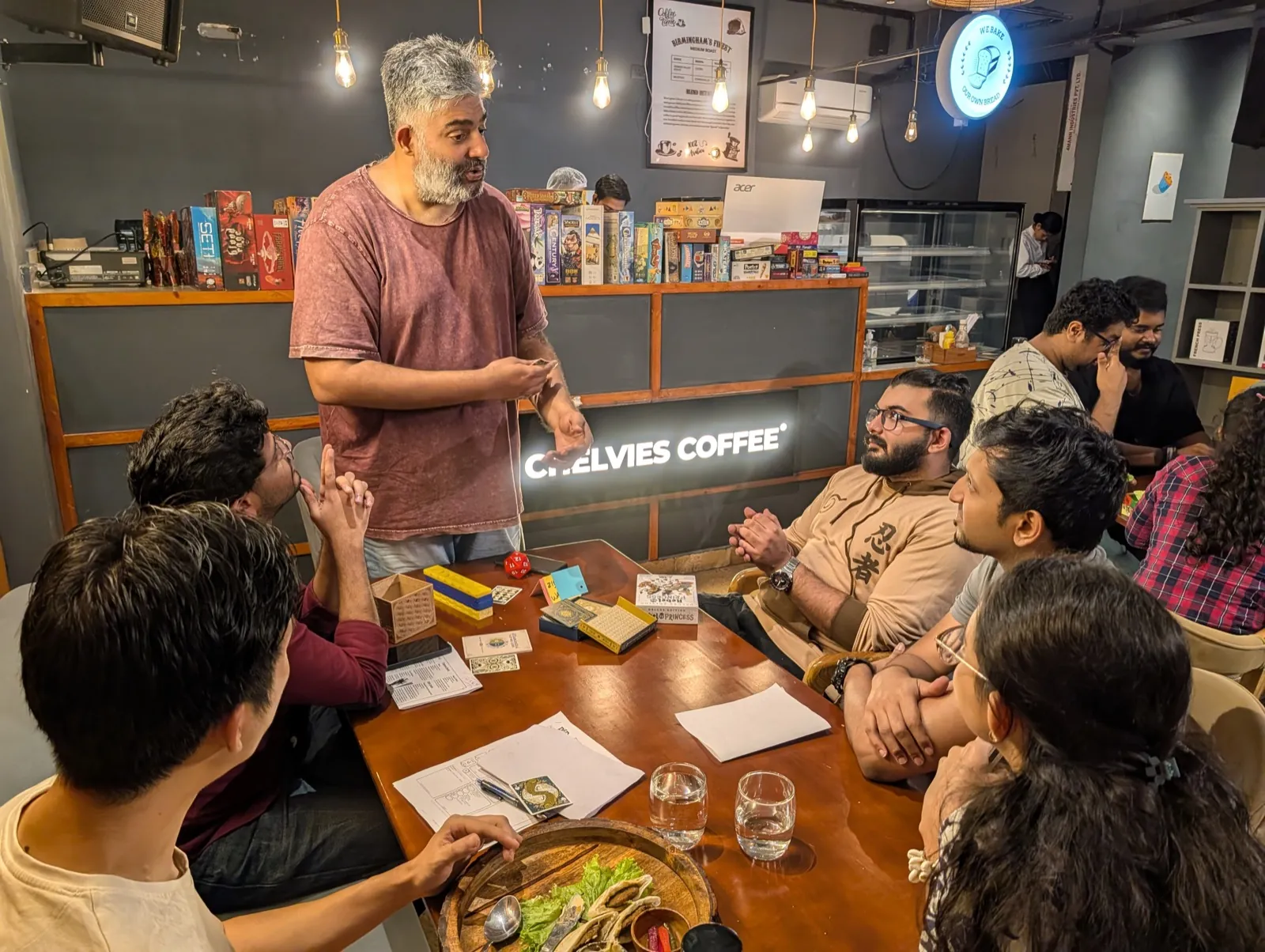
When the designer runs the session, the debrief is built out of what actually happened in front of him. "I watched you make that call in round three, and here is what I saw" is a different order of thing from "people typically find that..."
That is the whole reason this is a solo practice. Scaling through licensing or associates would mean giving away the one thing that makes the debrief worth sitting through.
Why In-Person Only
Everything a game produces - the negotiating, the trust calls, the coalition forming quietly in the corner, the pressure - lives in the body. People read posture and faces and who is standing where, constantly, without noticing they are doing it. A player who gets up and walks across the room to a rival group has made a loud public choice. Online, that move is invisible. It may as well not have happened.
The debrief degrades too. Rebuilding what happened needs a shared memory of a shared event: people pointing at each other, standing up to re-enact what they did, referencing a moment the whole room watched. On a video call every one of those anchors is gone.
So in-person only is not me being precious about technology. It is a quality standard. The game works because the behaviour it produces is real, and real behaviour needs bodies in a room.
Common Questions
Can the game run inside a longer programme?
Yes, and honestly it works better that way. Games stand alone fine, but as an anchor in a longer programme they earn their keep twice: run it on day one, and everything after that is built on real behavioural data instead of hypotheticals. What it should never be is the energiser after lunch.
What if participants don't take the game seriously?
It does not really happen. Games switch on competitive and social instincts fast. Ten or fifteen minutes in, the room is behaving authentically - sometimes more authentically than it does at work, because the game strips out the political consequences of a decision while keeping every single one of the emotional ones.
How does this fit with psychometric tools like MBTI or DiSC?
Psychometrics measure how people describe themselves. Games measure what people do when something is at stake. Both are useful and they are not the same data. Most people find their game behaviour broadly matches their profile, and then shows up something the profile missed - usually around what they do when the clock is running out.
Is there evidence that serious games produce lasting behaviour change?
Honest answer: all leadership development struggles to prove lasting change, and I am not going to pretend I have quietly solved that. What games demonstrably produce is sharper immediate insight. People walk out far more specific about their own patterns than they do from most formats. Whether that becomes lasting change depends on what happens next - whether the commitments get followed up, whether managers reinforce them, whether the environment lets the new behaviour survive at all. Games give people better data to work from. The change still costs effort. Anyone promising you otherwise is selling something.
Talk to Arvindh about a session
With love from Bengaluru, this is Arvindh saying over and out.