
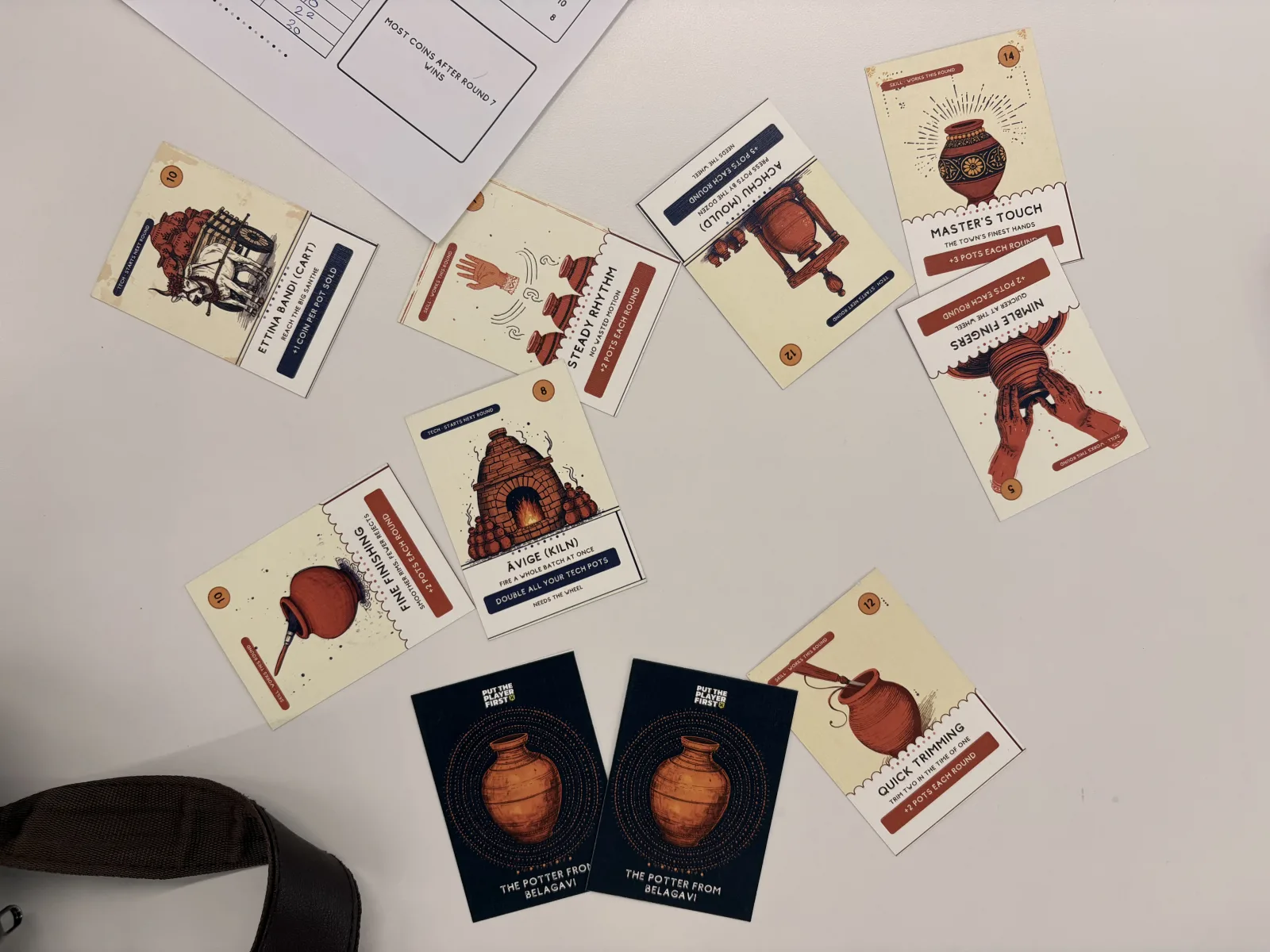
You are a potter in Belagavi. You start with five coins and a pair of hands. Every round you can make three pots by hand, carry them to the santhe, and sell them. Do that seven times and you will have made a perfectly respectable pile of coins.
You will also lose.
Because somewhere in round two, one person at your table stops making pots for a moment and buys a wheel instead. Then a mould. Then a kiln that fires the whole batch at once. By round five they are not making pots at all. The workshop is. And they are sitting there with more coins than you, having done visibly less work.
In a lot of teams, the person who is busiest is the one holding the team back. That is an uncomfortable thing to notice about somebody who is clearly trying so hard, which is probably why it mostly goes unnoticed. I know, because I was that person for years and would not have thanked anyone for pointing it out.
Why a potter, and why Belagavi
Because I am tired of simulations set in a fictional company called Acme with a fictional product called Widget. Nobody has ever cared about Acme.
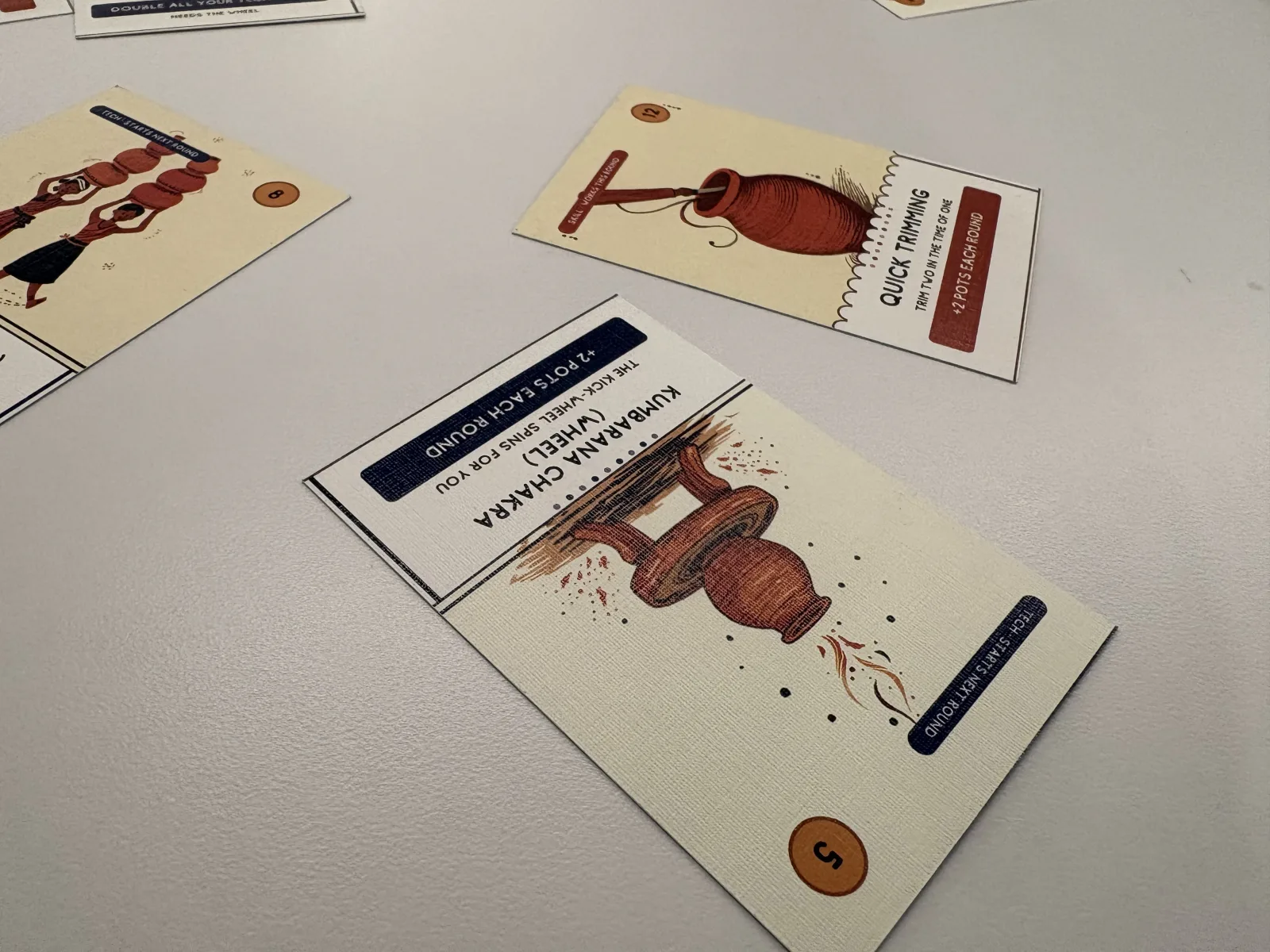
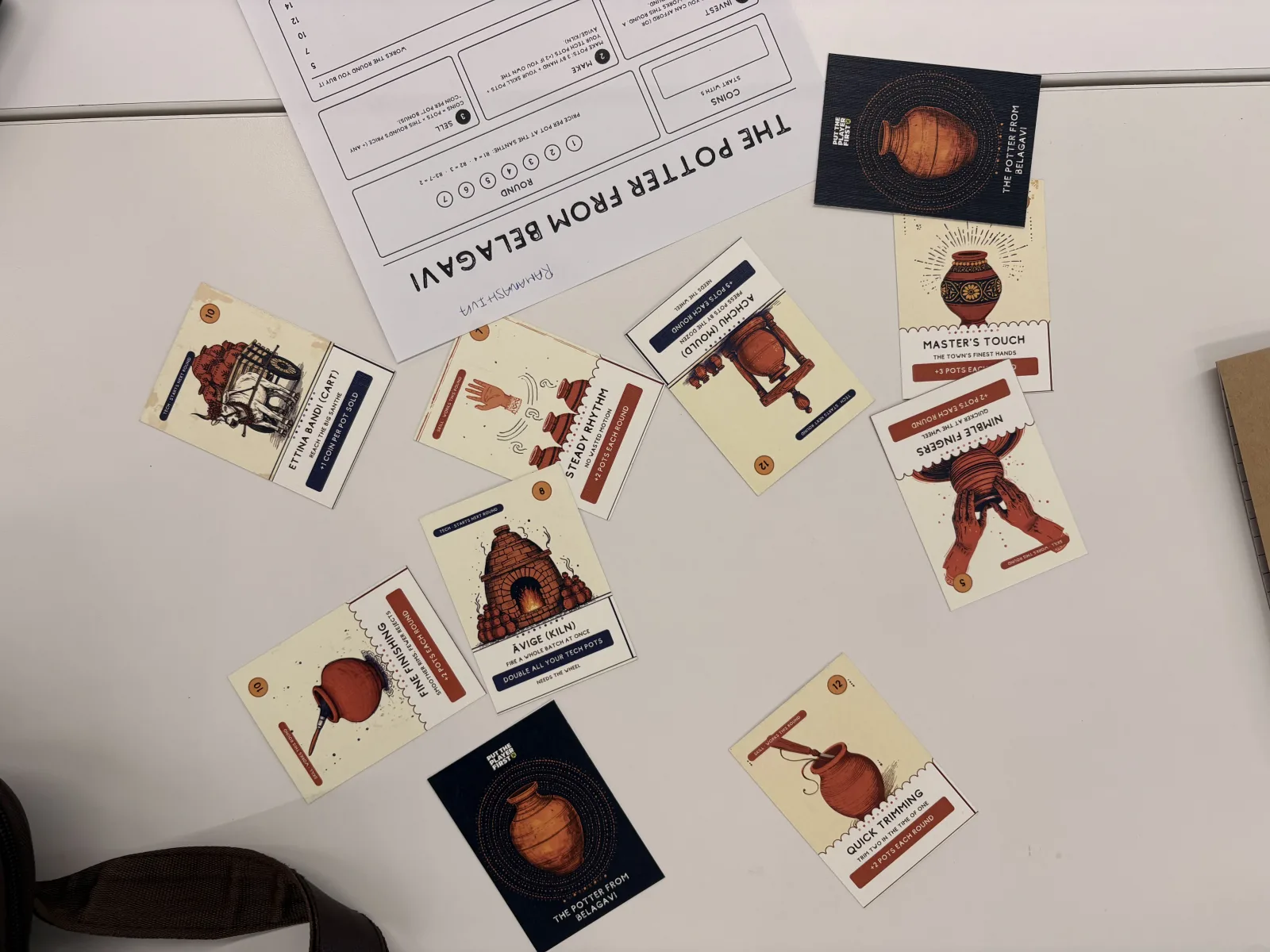
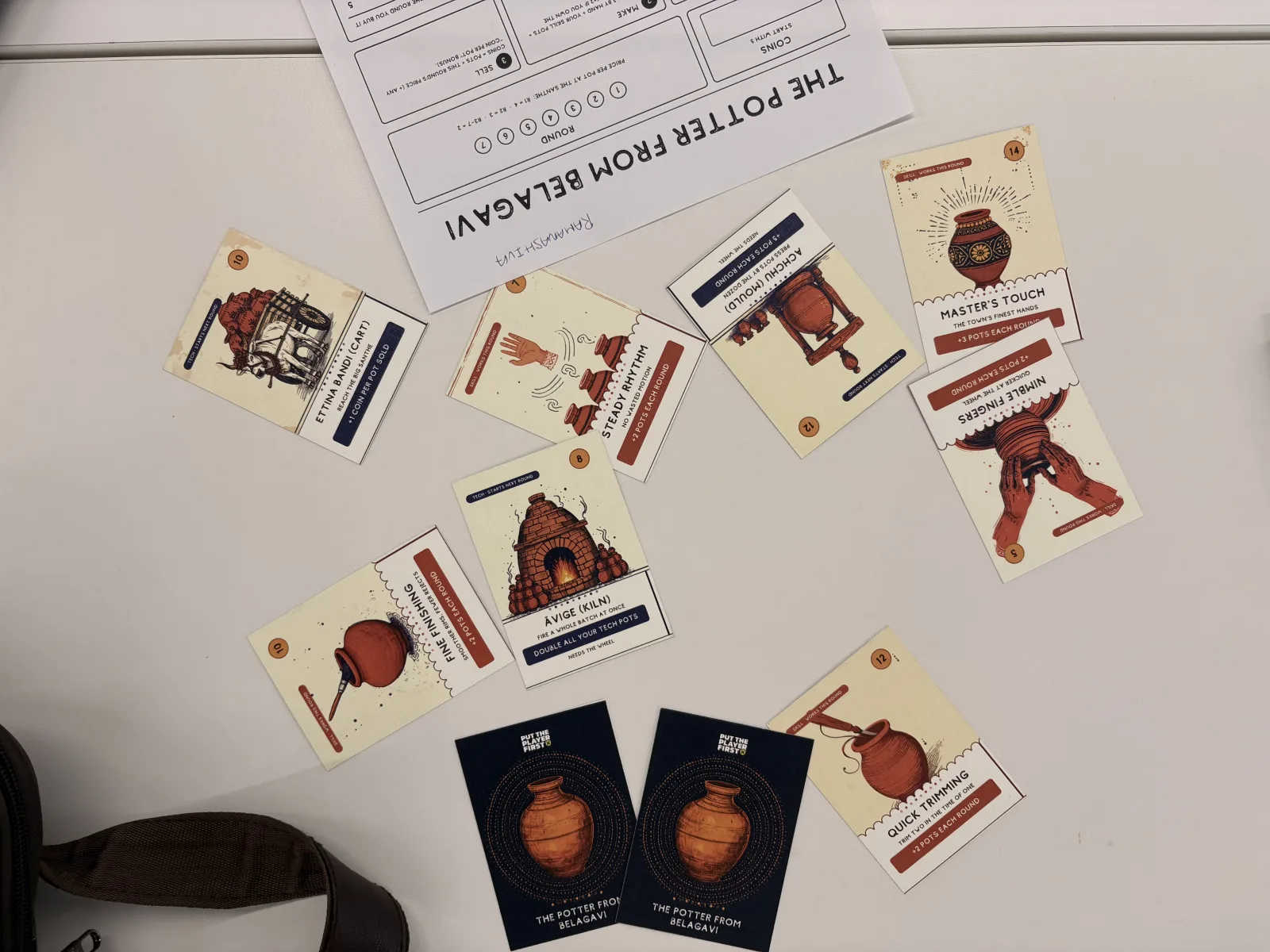
A potter's workshop is something everyone in an Indian room already understands without a single slide of setup. The wheel is the Kumbarana Chakra. The mould is the achchu. The kiln is the avige. The bullock cart that gets you to the big santhe is the Ettina Bandi. The cards are terracotta folk art on cream stock, and people pick them up and turn them over before I have finished explaining the rules. That is not decoration. A room that wants to touch the thing is a room that has already started playing.
How it actually runs
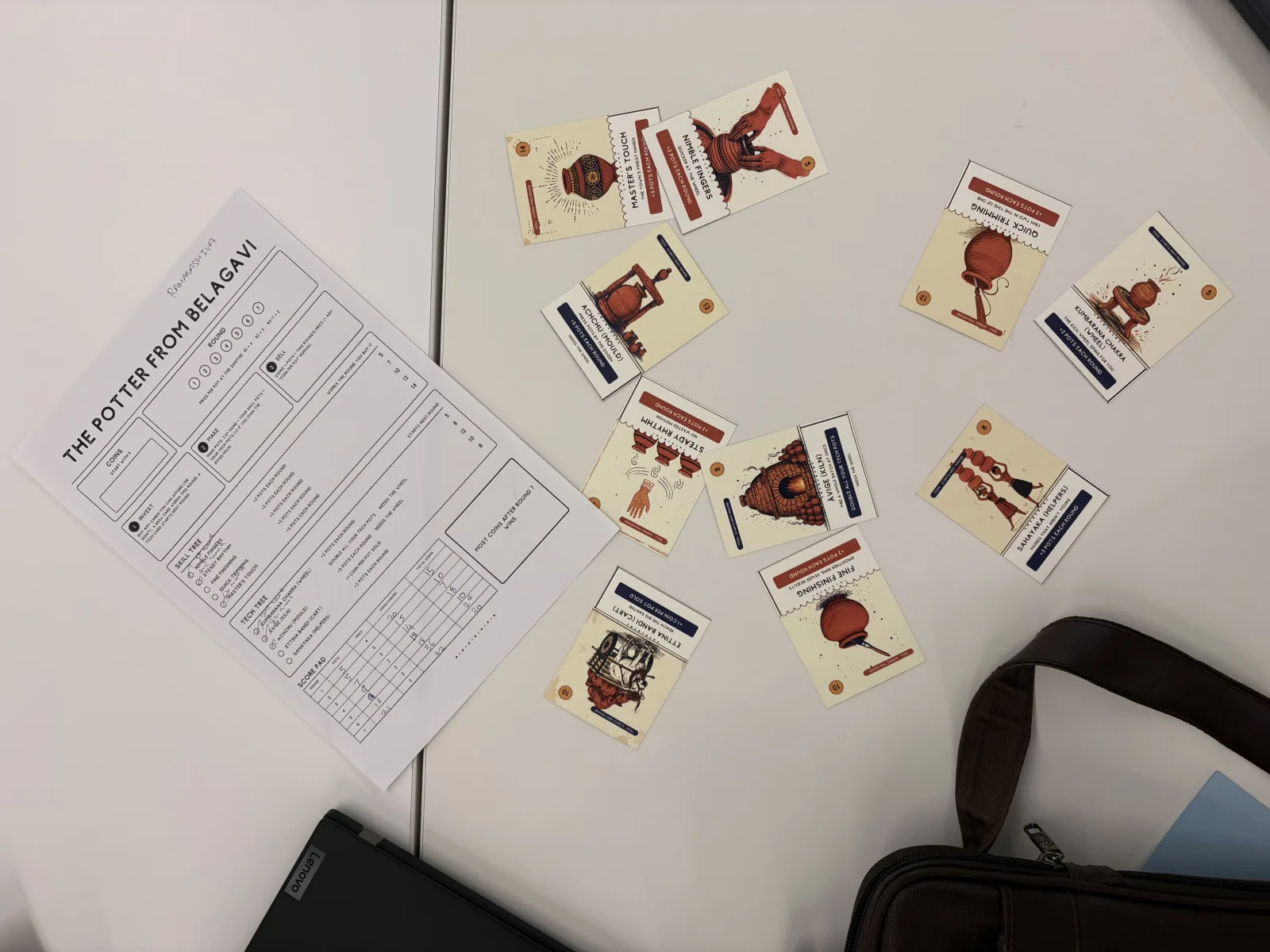
Three things happen every round, in the same order, and the whole game fits on one printed sheet.
- Invest. Buy one card you can afford, or none. Skills work the round you buy them. Tech starts next round. That one-round delay is where the entire lesson lives.
- Make. Three pots by hand, plus whatever your tech makes for you. Own the kiln and your tech pots double.
- Sell. Pots times the price at the santhe. The cart adds a coin on every pot you sell, forever.
Most coins after round seven wins. Seven rounds is deliberately not many. It is just enough time for compounding to beat effort, and not a round more, so the people who kept their heads down have to watch it happen rather than hear about it afterwards.
Two ways to get better, and only one of them compounds
There are skill cards. Nimble Fingers. Steady Rhythm. Fine Finishing. Quick Trimming. Master's Touch. Each one makes you a slightly better potter, immediately, with no waiting. They are lovely and they feel brilliant to buy.
And there are tech cards. The wheel, the mould, the kiln, the helpers, the cart. These cost more, do nothing at all on the round you buy them, and need each other to work. The mould needs the wheel. The kiln needs the wheel. The kiln then doubles everything the tech makes, every round, until the game ends.
Skills add. Tech multiplies. The game never tells anyone this. The scorecard does, in round five, in front of everyone.
What you will watch happen in the room
Forty-five minutes, and the working habits people carry into Monday come out in the open:
- The one who buys nothing for three rounds. Every table has one. Grinding out three pots a round, coins piling up nicely, feeling productive. They are not being cautious. They are being busy, which feels identical and is not.
- The one who buys every skill card in sight. Fast, satisfying, visible progress each round. And a hard ceiling they cannot see until it arrives.
- The one who takes the early loss to build in round two. Usually quiet about it. Occasionally insufferable about it later. Either way, watch how long the table takes to copy them.
- The moment someone says "wait, show me your sheet." This is the moment the session turns. Nothing I say beforehand creates it. Someone loses to a person doing less work and needs to know how.
- The late convert. Round six, they finally buy the wheel. It is too late and they know it is too late and they buy it anyway. That is the most useful thing anyone will feel all day.
Who it's for
Individual contributors and team leads who are very good at their job and doing all of it by hand. People being asked to use new tools and quietly resisting, not because they are stubborn, but because learning the tool costs a round and the deadline is today.
It works particularly well as the opener on an AI or digital-fluency day. The instinct you need people to have is "could something else do this so I can do the thinking", and this game installs that instinct in forty-five minutes without mentioning a single piece of software.
When I'll tell you it's not the right fit
- When the real problem is that nobody has time. The game says invest a round to gain six. If your people genuinely have no round to spare, the game will feel like a taunt. Fix the load first. I'll say so.
- When you want team dynamics. This is a game about how one person spends their own effort. If you want to watch a team talk to each other, take Sticky Fingers or Ripple Effect instead.
- When you want a tool demo. There isn't one. No laptops, no software, no screens. Cards and a pencil. If what you need is training on a specific platform, buy that instead and use this to make them want it.
Where the real learning lands: the debrief
Every session ends on an EPPA debrief - Experience, Patterns, Principles, Application. Nobody walks out with fuzzy takeaways. They leave with one named thing they currently do by hand every week, and the first system they are going to build instead.
And I run the debrief myself, as the person who watched the whole thing unfold. That continuity is what makes it stick. Have a look at how the debrief works.
Make the ceiling visible. Make the compounding visible. Make somebody lose to it in front of the room. That is the whole design, which is either elegant or lazy depending on which day you catch me.
Bring this to your team
Tell me a little about your people and I'll tell you honestly whether this is the right game for them. No hard sell either way.
Come and see if it fits your team
Book a quick call and we'll talk through your people, your goals, and whether this is the right game. No obligation.
Book a discovery call WhatsApp Arvindh
With love from Bengaluru, this is Arvindh saying over and out.