
 Why your best operators are not automatically your best leaders
Retail is a brutal place to lead, and nobody warns anybody. The pace is relentless. The decisions arrive forty a day. And the ground keeps moving - a new channel, a new format, a new tool, a competitor promotion that lands at four o'clock on a Friday. The people holding all of that together got there by being outstanding operators. They hit the numbers. They ran a store or a category beautifully. So you promoted them, and now they have to lead other people doing the job they personally used to be the best at.
None of that is anybody's fault, really. That is a different job, and almost nobody is actually taught it. We hand them a leadership framework. They nod. The deck goes into a folder that will never be opened again. Then a stockout hits on a festive weekend and they revert instantly to who they were before... which is a very good operator, doing everybody else's job while the team stands around watching.
What a retail leader actually needs is to see how they personally behave when the decision cannot wait, the information is half there, and eleven people are reading their face to work out how worried to be. You will never get that off a slide. You only get it by putting them inside the situation and letting it run.
What a serious game surfaces in retail
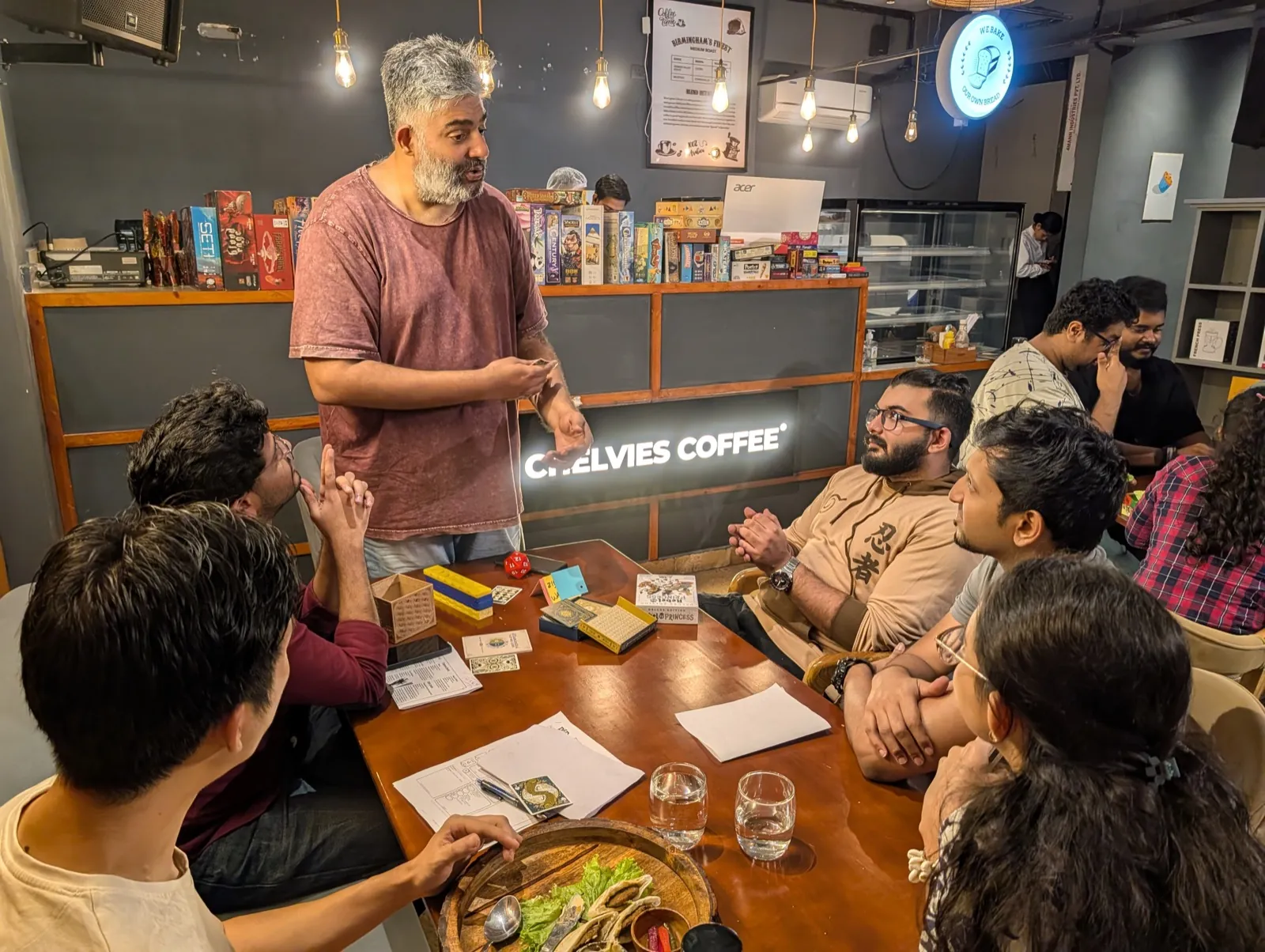
A serious game is a simulation with teeth. A designed scenario, real pressure on real people, and then a debrief that says out loud what came out of them. Run it with a retail leadership group and in one afternoon you can see:
- Who decides cleanly and keeps moving when the ground shifts - and who freezes, or grabs the wheel and quietly does it all themselves.
- Who picks up the phone to another function when the clock is running - and who defends their own patch and calls it prioritisation.
- Who takes a team through a change they did not choose and do not like - and who resists it just quietly enough to deny it later.
- Who holds a steady tone when the floor goes chaotic - and who transmits the panic straight down the line, at full volume, within ninety seconds.
Then the debrief names it. Specifically, in the language of a retail day, not in the language of a competency framework.
 Which games fit a retail programme
I match the game to your situation, not to a theme. Anyone selling you a retail-themed simulation is selling you set dressing.
- Chaos in the Kitchen - senior decision-making when conditions refuse to hold still. The closest thing to a retail Friday that fits on a table. 15-50 people.
- Sticky Fingers - emergent leadership, collaboration, and who really shares information when sharing it costs them something. Scales to a full store or category cohort. 12-150 people.
- Planetfall - learning agility. What people do when the evidence says the old playbook is finished. The exact muscle omnichannel and AI keep asking for. 8-20 people, ~2 hours.
- Ripple Effect - cross-functional trust, for the seams between merchandising, supply, operations and digital where all your real problems actually live. 16-60 people, 75-90 minutes of play.
Why I run every session myself
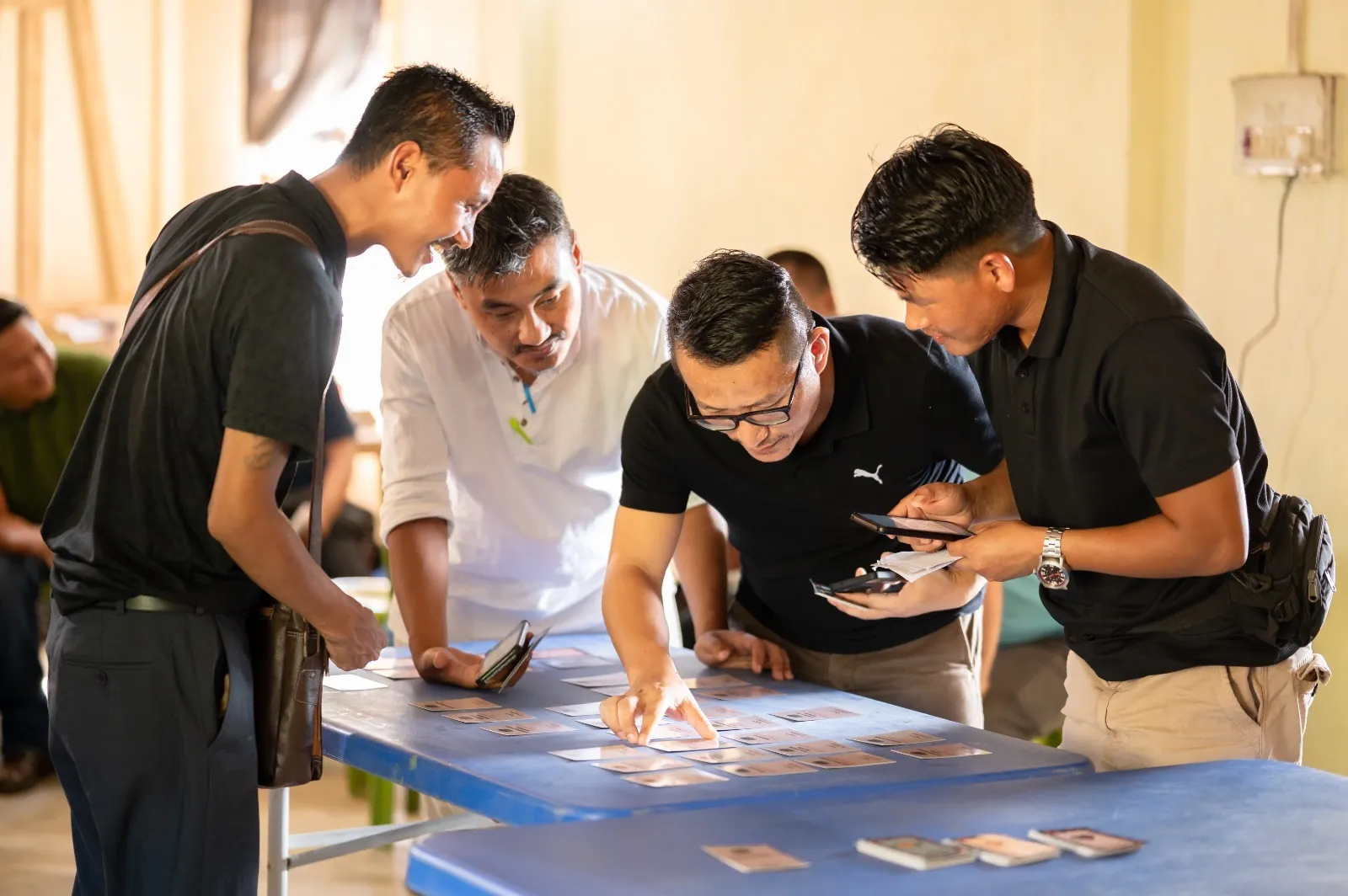
Retail leaders will not sit politely through training theatre. They have targets waiting and a phone buzzing in their pocket, and they can smell generic from the doorway. The only reason this holds a room like that is that the person who designed the game is the person running it. I watch how your leaders behave inside the simulation, and then I hand it back to them specifically - what they did, when, and what it cost. No scripted lesson. No associate delivery, no licensed hand-off. Fast, concrete, named. It is the only register an operator has any patience for.
 Proof
Proof
I have run these programmes for a global retail corporation and for other consumer and technology organisations. Out of Bengaluru. Groups from 15 to 150. One programme at a Fortune 100 company scored 8.82 out of 10 average satisfaction, across the 113 people who rated it, over six session-days. Then that client came back and commissioned a second, different programme, which is honestly the fact I trust most.
What you get
- A discovery call and a written brief, tuned to your formats, your functions and the level in the room
- The game itself, half-day or full-day, run by me - the person who built it
- An EPPA debrief, designed to make behaviour visible and then say it out loud
- A written behaviour summary afterwards, ready to put straight in front of a CHRO or a leadership team
- A committed action plan from every single person in the room
And my promise: if the session doesn't surface at least three named leadership behaviour patterns worth changing, I redesign the next one at no cost. Nobody should pay for a session that showed them nothing.
What it costs
A day in the room runs between ₹60,000 and ₹1,00,000, plus taxes as applicable.
Half a day is half of that. So ₹30,000 to ₹50,000, plus taxes as applicable, on the same terms.
Both of those are ranges rather than a price list, and I do mean that. A short session with a lot built into it can land above a longer one with very little, so the clock is only part of it.
I put the range here because you should not have to sit through a call just to find out whether we are in the same ballpark. If that number is nowhere near your budget, you have saved yourself a fortnight and I would still rather you wrote to me and said so.
Where you land inside either of them comes down to five things, and none of them are a mystery:
- How long we are in the room. Half a day with one game and its debrief is one thing. A two-day programme is another.
- How many people are in the room, and how senior they are. Fifteen managers and sixty leaders are not the same day's work.
- How much I build from scratch. Running a game I already own costs less than designing your world, your constraints and your data into a new one.
- Whether I am leaving Bengaluru. Travel and stay are quoted separately, up front, so nothing appears on the invoice we did not talk about first.
- Whether it is one session or a series. Four batches of the same programme do not cost four times a single batch, because the design is built once.
A bespoke senior day, built from nothing, in another city, sits at the top of the band. A game I already run, one batch, here in Bengaluru, sits at the bottom. Most work lands somewhere in the middle, and I will tell you which end you are at in the first conversation rather than the third.
One honest thing about the calendar while we are being straight with each other. I take two or three engagements a month, mostly because I run every one of them myself, so dates go three or four weeks out. I would rather say that now than when you already have a date in mind.
Tell me roughly what you are trying to fix and you will have a real number, not a range, within a day of us speaking.

Frequently asked questions
Why do retail businesses need serious games for leadership?
Retail runs on speed, volume and constant change - omnichannel, new formats, AI landing in operations - and its leaders were promoted for delivering on the floor, not for taking other people through the churn. So the gap is behaviour under fast-moving pressure, not knowledge. They already know what a good leader does. A serious game is a live simulation that shows them what they actually do, and that is the thing you can develop.
Which serious game fits a retail team?
Chaos in the Kitchen for senior decision-making when conditions keep shifting, which is the retail day almost exactly. Sticky Fingers for emergent leadership and collaboration under pressure. Planetfall for the learning agility that omnichannel and AI change keep demanding. I choose in the pre-session brief, once I know what is actually going wrong.
Can serious games support a retail AI or digital transformation?
Yes, and the technology is rarely the hard part. The hard part is whether your leaders change their own behaviour and carry their teams with them. A simulation builds exactly that muscle - deciding and adapting when the evidence says the old playbook is finished - and the debrief names where the real resistance is sitting, which is almost never where the steering committee thinks it is.
Related
- Serious games for leadership development in India
- Case study: AI enablement
- Change management for managers
With love from Bengaluru, this is Arvindh saying over and out.