
Remote team building that actually changes how a team works
Stop trying to fix distributed connection with another video call. Make the in-person gathering count.
My actual view: most remote team building changes very little about how your distributed team works. The virtual escape room happens. Everybody says it was nice. Then the next sprint starts, and the working week is the exact shape it was. Day-to-day remote connection is a ritual problem, and no single online event has ever fixed one. The one genuinely high-leverage move you have is to make your periodic in-person gathering count. A real behavioural session, debriefed properly, with agreements your people carry back into the daily remote work. I run in person only, and this page is me explaining why rather than selling you the other thing.
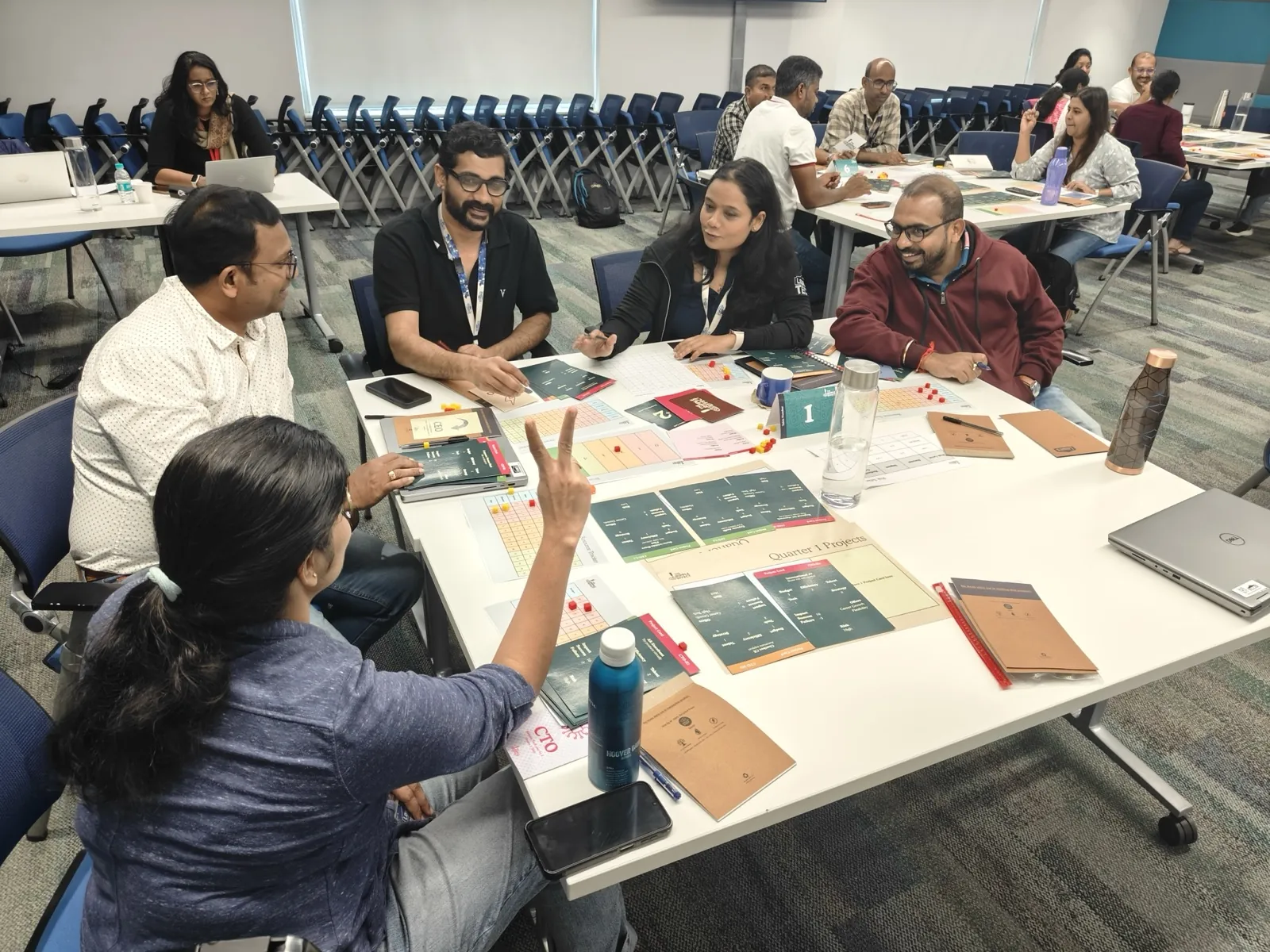
 Why online remote team building almost never sticks
The thesis behind everything I do is one line: knowledge transfers, behaviour doesn't. You can tell a distributed team to over-communicate, assume good intent, and surface blockers early. Everyone nods. Nothing moves. Behaviour does not change because you told it to - it changes when people see their own patterns under pressure and decide, together, to do it differently.
And an online quiz simply cannot show you the patterns that matter:
- Who quietly checks out the moment the work turns ambiguous - the disengagement that costs you weeks, invisible behind a muted tile.
- Who steamrolls the remote colleague whose connection just dropped - the airtime imbalance you feel in your numbers but never get to name.
- Who never speaks unless someone invites them in - the quiet expertise your team is leaving on the table on every single call.
Those patterns are the actual material of how a team works, and a screen flattens every single one. A video call hands everybody an escape hatch. A muted mic. A camera off. A second tab with something far more interesting in it. The social friction that makes behaviour visible is precisely the thing a call removes, and for a perfectly good reason. Nobody sets out to make a call frictionless in order to hide behaviour. It just works out that way.
 Connection is a ritual problem, not an event problem
For a distributed team, the day-to-day issue is rarely a missing offsite. It is the absence of small, repeated rituals: clean handoffs, predictable check-ins, a shared language for disagreement, a way to flag that something is off without booking a meeting. No single team-building day, online or in person, installs those rituals for you - and pretending it can is where most of the budget quietly disappears.
So let me be straight about what each lever really does. Rituals get built in the daily flow of work, owned by the team and its leads. The in-person gathering is where you reset trust, surface the behaviours those rituals are meant to manage, and agree on what changes. Used well, the gathering feeds the rituals. Used badly, it is a nice lunch everyone has forgotten by the following Tuesday.
How to make the one gathering you get actually count
Most distributed teams meet once a year. Maybe twice. That window is rare and it is expensive, which is exactly why it should not be spent on trust-falls and organised fun. Spend it on a session that puts your team under real pressure, playfully, makes their working behaviour visible, and then turns that into something they've agreed to change.
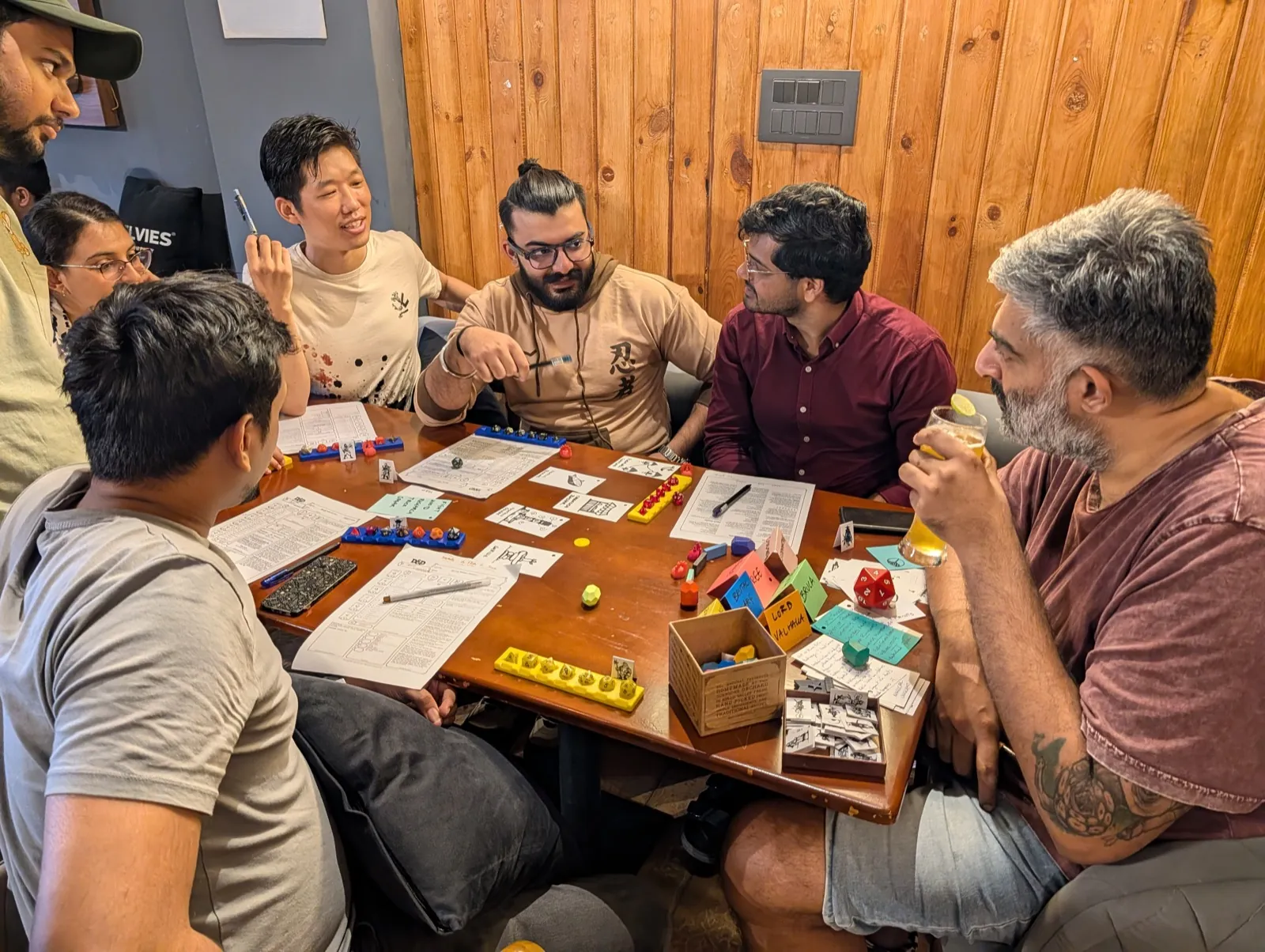
That is what a serious game does. Sticky Fingers - an escape-room-in-a-card-deck built around collaboration, communication and creative problem-solving - forces a group to coordinate, decide, and recover from mistakes in real time. It scales to around 150 players, so it fits a single distributed team or a full-company offsite just as well. The game is not the point. The behaviour it drags into the open is.
The change lands in the debrief. I use an EPPA debrief - Experience, Pattern, Principle, Action - to take what just happened in the room and turn it into patterns your team recognises as their own, then into concrete agreements about how they will work once everyone is scattered across time zones again. That is the bridge from a fun afternoon to a team that genuinely operates differently on Monday.
What I do, and the one thing I will not sell you
I do not run virtual or online sessions, and I will not talk you into one. I work in person because the social dynamics are the behavioural data, and a screen kills them. If your offsite is still months away, I would honestly rather you spend that time tightening daily rituals than book an online event that changes nothing. This is the facilitation philosophy I run on: behaviour first, in the room, under pressure.
If you want to go deeper before you book anything, start with the pillar on team-building games for employees, browse the practical leadership guides, and see how the EPPA approach works for a team that is only together a few times a year.

Straight answers
Do you run virtual or online sessions?
No - I work in person only. The social dynamics under pressure are the behavioural data I work with, and screens flatten them. For a distributed team, I would rather help you make the periodic in-person gathering count than run you another video call.
Why doesn't online remote team building change how a team works?
Video icebreakers and online quizzes hand over information and buy you a pleasant hour, but knowledge transfers and behaviour doesn't. The real working habits - who interrupts, who defers, how the group handles ambiguity - only surface when people share a room under genuine pressure. That is exactly what a behavioural session is built to reveal.
Our team is fully distributed. When should we actually meet in person?
Treat the in-person gathering as a ritual, not a one-off event. Most distributed teams already bring people together once or twice a year. The leverage is in using that rare, expensive window for a real behavioural session and debrief, then carrying the language and the agreements back into daily remote work.
How many people can a session hold at an offsite?
It depends on the game. Sticky Fingers scales to around 150 players, so it suits a full-company offsite as easily as a single distributed team. I size the format and the debrief to your group and the behaviours you want to surface.
Come and talk to me See the games
With love from Bengaluru, this is Arvindh saying over and out.