
Serious Games vs Classroom Training for Leadership
Knowing a thing and doing a thing are not the same skill. Nobody ever became a better leader by understanding leadership harder.
Short answer: Classroom training is the quickest way to get a framework and a shared vocabulary into twenty heads. It almost never changes what those twenty people do when it counts. A serious game is a live simulation - real decisions, real pressure, real consequences arriving in front of everyone - and it makes leadership behaviour visible instead of theoretical. Use the classroom for the concepts. Use the game to change the behaviour.
Key takeaways
| Dimension | Classroom training | Serious games |
|---|---|---|
| What it is | Someone at the front, handing you models | A live simulation you have to act inside |
| Best for | Concepts, shared vocabulary, common ground | Behaviour under pressure, when the ground is moving |
| What it measures | Whether you know the right answer | What you actually did at 3:40pm on Tuesday |
| Behaviour change | Rare. Knowing is not doing | Strong. You cannot argue with what the room saw |
| Cost and scale | Cheap per head, reaches everybody | Small cohorts, live facilitation, a real debrief |
Classroom training works well for...
Frameworks. Concepts. Getting everyone to mean the same thing by the same word. I am not here to be rude about the classroom - it is genuinely the best tool in the world for this. Twenty managers, forty minutes, and they all know how to structure a feedback conversation. Try building that common ground any other way and you will still be at it in November.
It is also lovely for argument. A good facilitator gets a room debating, someone says the thing nobody wanted to say, and half the cohort quietly revises an assumption they had been carrying since 2019. That is real. Classroom training moves what people think.
The trouble starts the moment you need it to move what people do.
 Where it falls short for leadership development
The difference, I think, is what each room is built for. A classroom is built for safety, clarity, and looking competent in front of your peers. Everyone learns the right answers. Everyone discusses the hypothetical. Everyone identifies what a good leader would do. The slides are excellent. The samosas arrive at four. Then Monday comes, and very little of it has moved.
That is not a failure of intelligence. It is a failure of format. The classroom carefully removes the three things that make leadership hard - pressure, ambiguity, and other people behaving in ways you did not plan for - and then asks people to practise leadership without them.
So you get a manager who can deliver flawless feedback to a willing role-play partner, and who will not say the same sentence to a senior colleague who might take it badly. That is not a knowledge gap. That is the small horror of being disliked by someone whose opinion you value. No framework has ever fixed it.
Leadership doesn't live in the bit of the brain that stores frameworks. It lives in the habits and instincts that switch on when the clock is running and somebody is watching. The classroom reaches the first one. It rarely gets anywhere near the second.
 What serious games do differently
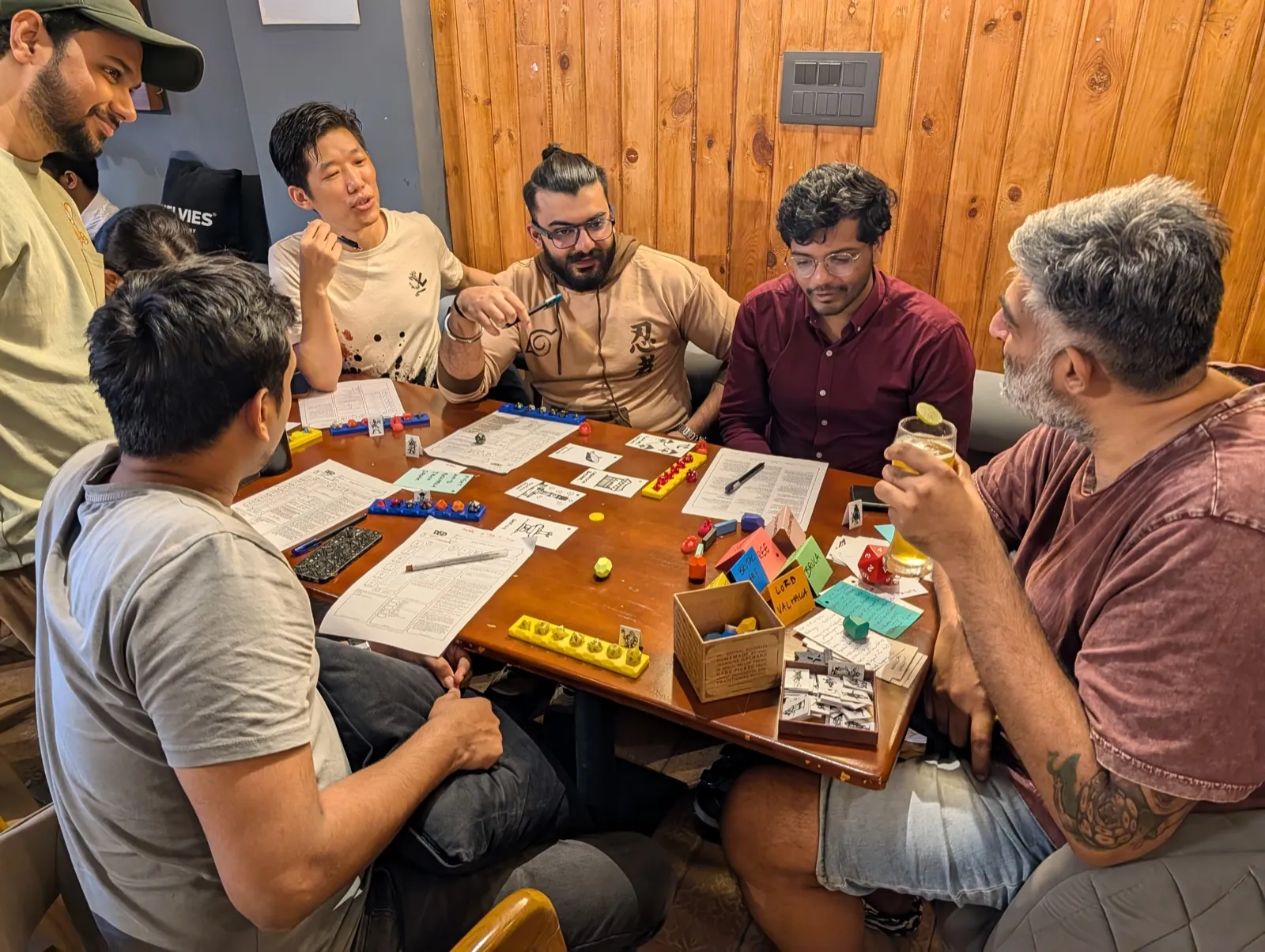
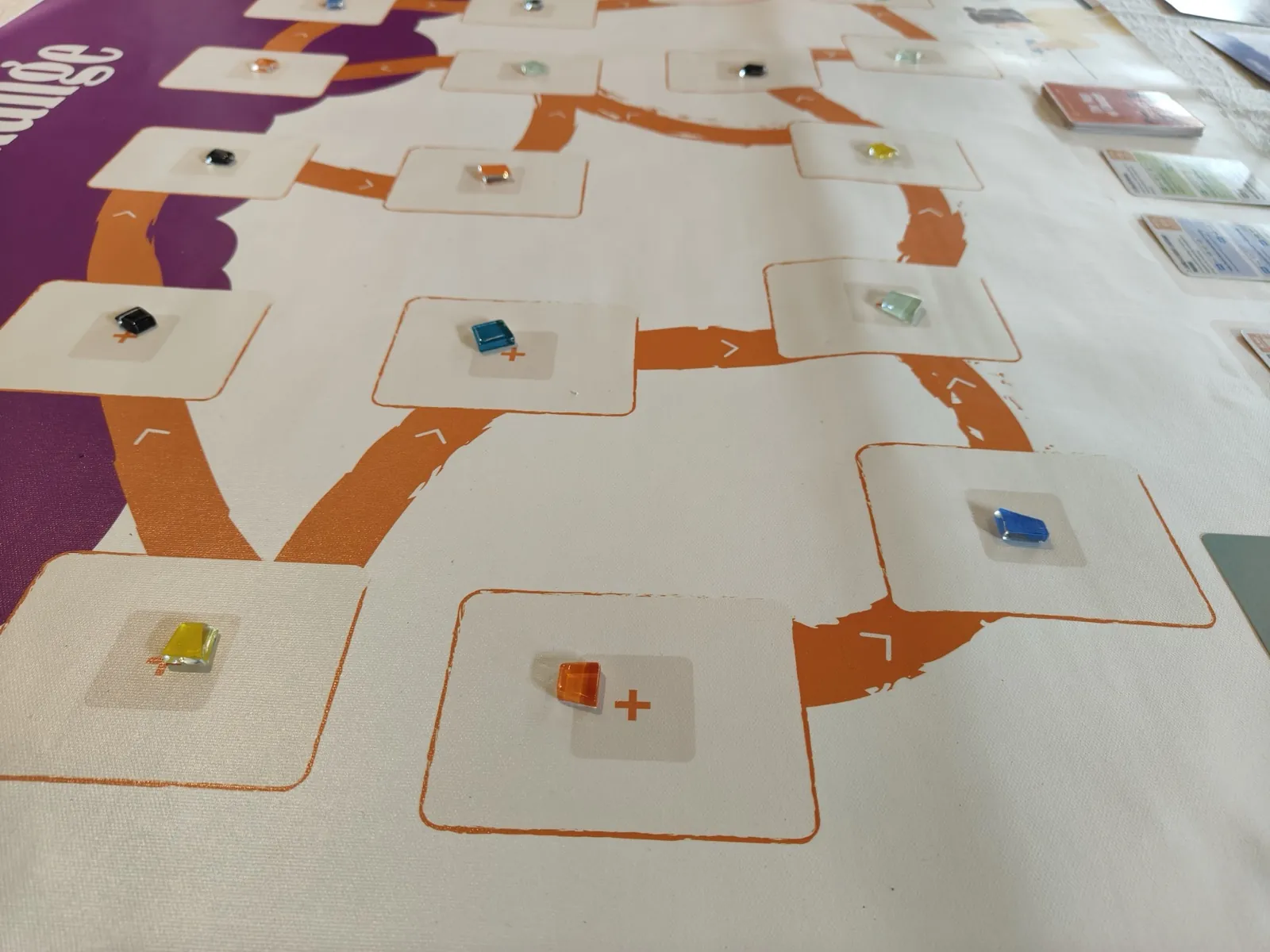
A serious game puts all three things back. It is a simulation with teeth: real decisions, a running clock, other humans with their own agendas, and consequences that turn up whether or not you were ready. Nobody describes their leadership. Nobody performs it. They just do it, in front of everyone, and the system reports back without mercy or flattery.
Take Ripple Effect. Every team's decision lands on somebody else's table two rounds later. You cannot discuss what you would do in a situation like that. You are in it. A rubbish call in round one wrecks round four, and by then three people are quietly furious with you and one of them has stopped sharing information. That is not a case study. That is Tuesday, compressed into ninety minutes.
And that changes the debrief completely. "What would you do if a stakeholder pushed back?" is a classroom question, and everyone answers it beautifully. "What did you actually do when your stakeholder pushed back in round two, and what happened to the plan after that?" is a simulation question. One produces thoughtful reflection about an imaginary person. The other produces recognition. Only one of those makes anybody behave differently in March.
The facilitation difference
I design every game I run, and I run every session myself. That matters here for one specific reason. In a classroom, the facilitator is the authority. Everyone is looking at the front of the room for the right answer, and the trainer's job is to hand it over.
In a simulation, I am not the authority. The game is. What happened, happened. You can rationalise it afterwards all you like, but eleven other people watched you do it. My job in the debrief is much smaller and much harder: help people see what they actually did, rather than what they meant to do, or what they would very much prefer to believe about themselves.
Which is why I have to be in the room for the whole thing. Not an associate watching half of it. Not a report landing in my inbox afterwards. The insight only lands if it is specific - the exact moment, the exact call, the exact face somebody made - and you cannot be specific about a session you did not see.
 The bottom line
Keep the classroom. Genuinely. It builds the foundation - the models, the shared language, the common ground a simulation then goes and stress-tests. These two are not enemies, whatever the internet says.
But if your leaders can already describe good leadership fluently, at length, with examples... and the behaviour has not shifted in a year, another classroom day is not the missing piece. The gap is not knowledge. The gap is practice under pressure, with feedback you cannot talk your way out of.
Teach the idea in a room. Test the behaviour in a game. That is the whole argument. And the room still matters, by the way - I am not arguing the classroom away.

Related reading
- Serious games for leadership development: the complete guide
- Decision Labs: turning game decisions into behavioural data
- Serious games vs gamification: why the difference matters
Frequently asked questions
Are serious games more effective than classroom training for leadership?
For behaviour change, yes. Classroom training is still the fastest way to hand a cohort a framework and a shared vocabulary. But knowing the right answer in a role-play has never stopped anyone from ducking the hard conversation on Tuesday. A serious game is a live simulation of the pressure, the ambiguity and the social mess of a real leadership moment, and it makes the actual behaviour visible. You cannot change what nobody can see.
When should we still use classroom training?
When the job is the concept. Mental models, shared language, a cohort that needs to mean the same thing by the same word. Classroom training does that brilliantly and quickly. These are not rivals. The classroom hands out the framework, the simulation finds out whether it survives contact with other people.
Do serious games cost more than classroom workshops?
They cost more per head, yes. Small cohorts, live facilitation, a proper debrief - none of that broadcasts cheaply. But price is the wrong thing to compare. Cheap training that changes nothing is not cheap, it is just quietly expensive. If your leaders can already recite the frameworks and still behave exactly as they did last year, another classroom day will not move it. That gap is the whole reason the game exists.
With love from Bengaluru, this is Arvindh saying over and out.