
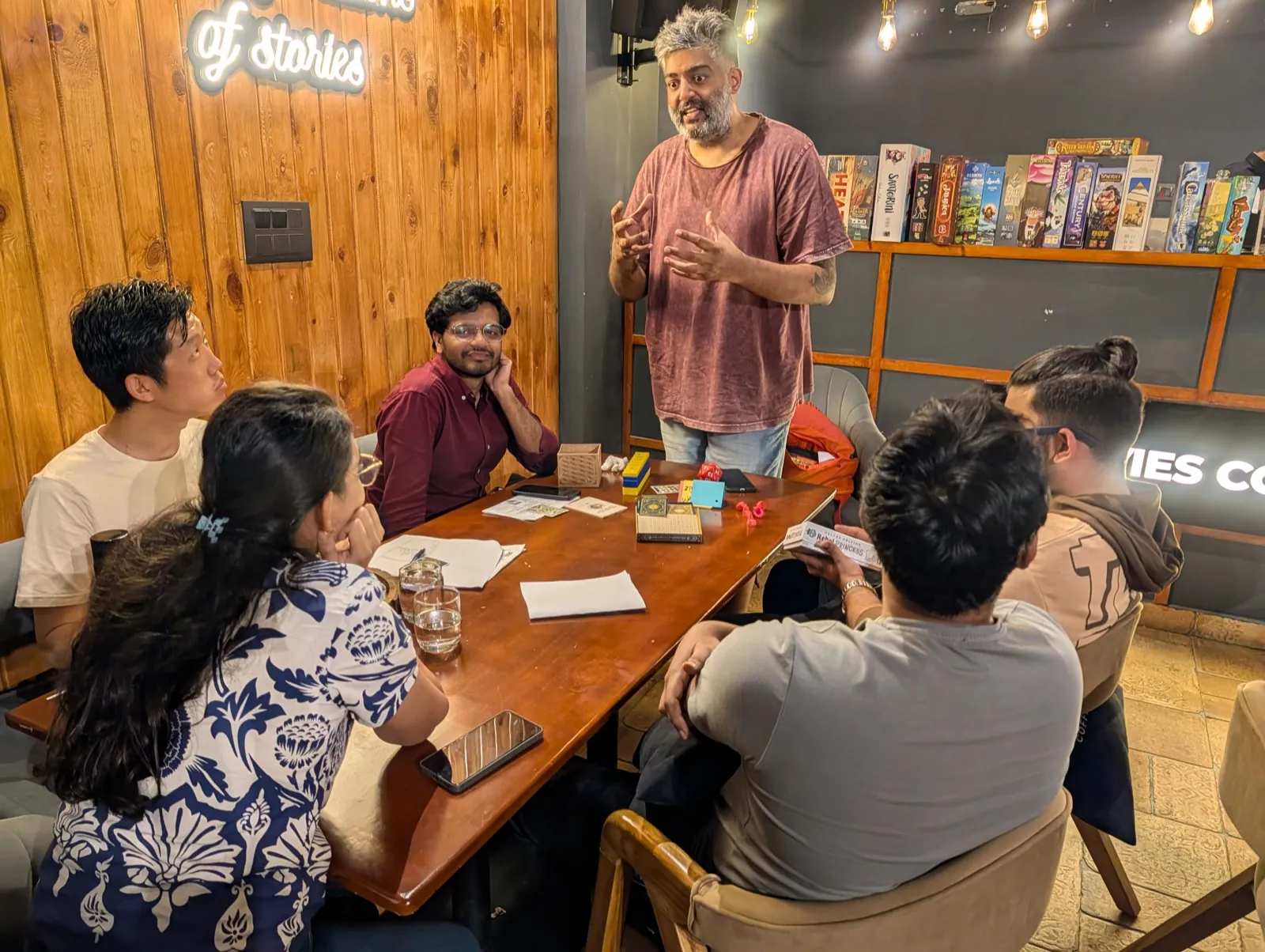
 Why most leadership development spend is wasted
Here's the thing nobody says out loud, and you have probably suspected it for years. The standard leadership development program teaches leaders about leadership. Situational leadership. Feedback frameworks. The five behaviours. Everyone leaves understanding the models. Attendance is excellent. The scores are lovely. Nobody leads any differently. That gap between knowing and doing is exactly where the budget goes, quietly, every year.
Because leadership isn't a body of knowledge. It's a handful of things you do when it is awkward. Reading resistance without dismissing it. Deciding when half the information is missing and the clock is running. Handing another function the thing they need when nobody is watching and it costs you something. None of that is framework recall. All of it is a skill, and skills need reps. A slide has never given anybody a rep.
What a game-based program develops that a course can't
A serious game is a simulation with teeth. A designed situation, a running clock, other people with their own agendas, and consequences that turn up whether or not anyone was ready. Then a debrief that says out loud what just happened. For a leadership cohort, it makes visible:
- Who decides cleanly and keeps the team moving - and who stalls, hedges, then quietly pulls every decision back to their own desk.
- Who reads a team as a system - and who wins their own scorecard beautifully while the group loses the round.
- Who leads through a change they didn't choose - and who resists it just quietly enough to deny it later.
- Who listens to the quiet person with the answer - and who talks straight over the one piece of information that would have saved them.
The debrief names those behaviours specifically, in the language of your leaders' actual week. That recognition is the transfer, not the game. The game is only the most honest way I know to produce it.
Put leaders under pressure. Watch what they really do. Say it back to them, kindly and specifically. That is the entire program and it fits on a napkin.
 Which games power the program
I match the game to the behaviour you're trying to build, not to a theme.
- Sticky Fingers - emergent leadership, collaboration and information-sharing under pressure. Scales to a full cohort. 12-150 people.
- Ripple Effect - reading a team as a system, cross-functional trust, and the cost of everyone optimising their own patch. 16-60 people.
- Planetfall - learning agility and adapting when the evidence contradicts the plan. Up to 20 people.
- Bloom - influence without authority and stakeholder relationships.
- Chaos in the Kitchen - senior decision-making when conditions keep shifting.
Want the full picture first? Start with experiential leadership development or the complete guide to serious games for leadership development.
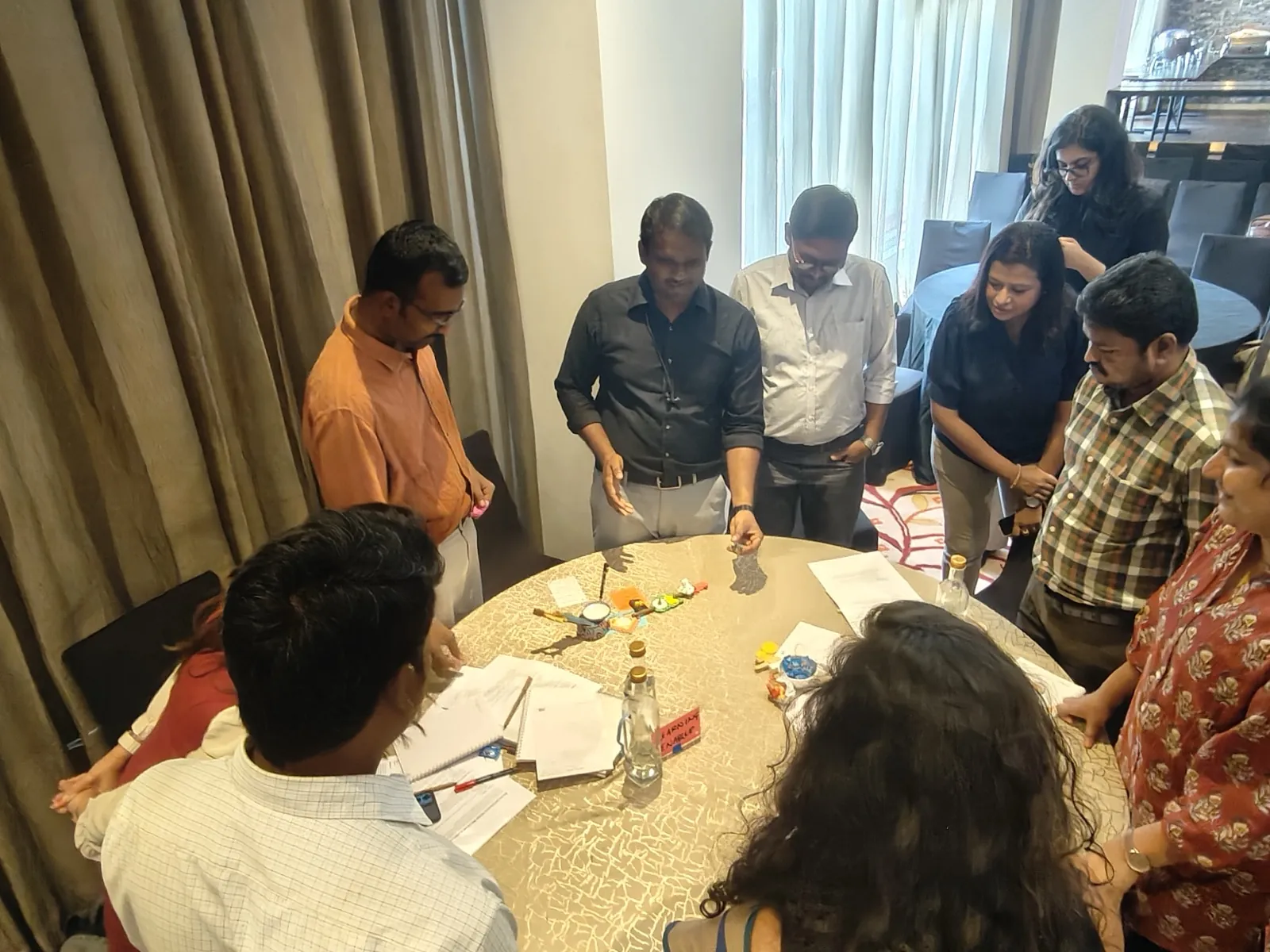
Why I run every session myself
The reason this works is that the person who designed the game runs it: watching your leaders act under the game's pressure, then debriefing the specific behaviour they saw, not a scripted lesson. No associate delivery, no licensed hand-off. It's fast, concrete and named - the only register that holds a room full of senior people who have targets waiting.
 Proof
Proof
I've been designing and running these programs since 2019, for a Fortune-100 organisation and fast-growing companies, with leaders across five countries. One of those Fortune-100 programmes ran six session-days and scored 8.82/10 average satisfaction across 113 respondents, then came back for a second, different program.
What you get
- A pre-session discovery call and brief, calibrated to your leaders' level and your real situation
- The facilitated game session (half-day or full-day), run by me, the designer
- An EPPA debrief, built to make behaviour visible and name it clearly
- A written behaviour summary afterwards, ready to hand to a CHRO or leadership team
- A committed action plan from every person in the room
And my promise: if the session doesn't surface at least three named leadership behaviour patterns worth changing, I redesign the next one at no cost. You should never pay for a session that showed you nothing.
Pricing
Programs start at ₹50,000 for a group of 15-25 participants. Your final number depends on group size, seniority, location, and whether it's a single batch or several. Send me a note and I'll get you a quote within 24 hours of a discovery call. Fair warning: I only take 2-3 programs per month, so the calendar fills.
Book a discovery call WhatsApp Arvindh
Frequently asked questions
What makes a leadership development program actually work?
Practice, not lecture. Leadership is a behaviour, and you can't develop a behaviour you can't see. A program works when it puts leaders in a situation that surfaces how they really decide and lead under pressure, then debriefs that behaviour specifically - not when it hands them another framework deck.
How long is a leadership development program?
I run these as half-day or full-day facilitated sessions, and as multi-batch programs when the population is bigger. The right length depends on how many leaders, how senior they are, and how much behaviour you need to shift.
Who runs the sessions?
I do. I design every game and I facilitate every session myself - no associate delivery, no licensed hand-off. The value is in reading the room live and running the debrief that connects the game to your leaders' real work.
Related
- Experiential leadership development
- Leadership skills training
- First-time manager guide
- The complete guide to serious games for leadership development
With love from Bengaluru, this is Arvindh saying over and out.