 Your best operators aren't automatically your best leaders
The manager carrying your team was brilliant at the job one rung below. That is precisely why they got promoted. But leading is a different job and a behavioural one - reading a team, delegating instead of doing it yourself at 11pm, deciding on partial information, taking people through a change nobody chose. Classroom training hands them a framework they will never open. What they need is to watch how they personally lead when the decision cannot wait and the whole team is reading their face for the tone.
That only becomes visible when they're inside the situation - not reading about it on a slide.
What a serious game surfaces in your managers
A serious game is a designed scenario - a live simulation - where behaviour comes out under pressure, followed by a debrief that names it out loud. With a manager cohort, it makes visible:
- Who delegates and trusts the team - and who grabs the work back and does it themselves.
- Who decides cleanly and keeps moving - and who stalls when the information isn't complete.
- Who leads a team through a change they didn't choose - and who resists it just quietly enough to deny it later.
- Who sets a steady tone under chaos - and who transmits the panic straight down the line.
The debrief names those behaviours specifically and connects them to the manager's real week. That recognition is the transfer.
 Which games fit a manager cohort
I match the game to the behaviour you're trying to build, not to a theme.
- Sticky Fingers - emergent leadership, collaboration and information-sharing under pressure. 12-150 people.
- Bloom - influence without authority and stakeholder relationships.
- Ripple Effect - reading a team as a system and cross-functional trust. 16-60 people.
- Chaos in the Kitchen - senior decision-making under shifting conditions.
For newly promoted managers, pair this with the first-time manager guide.
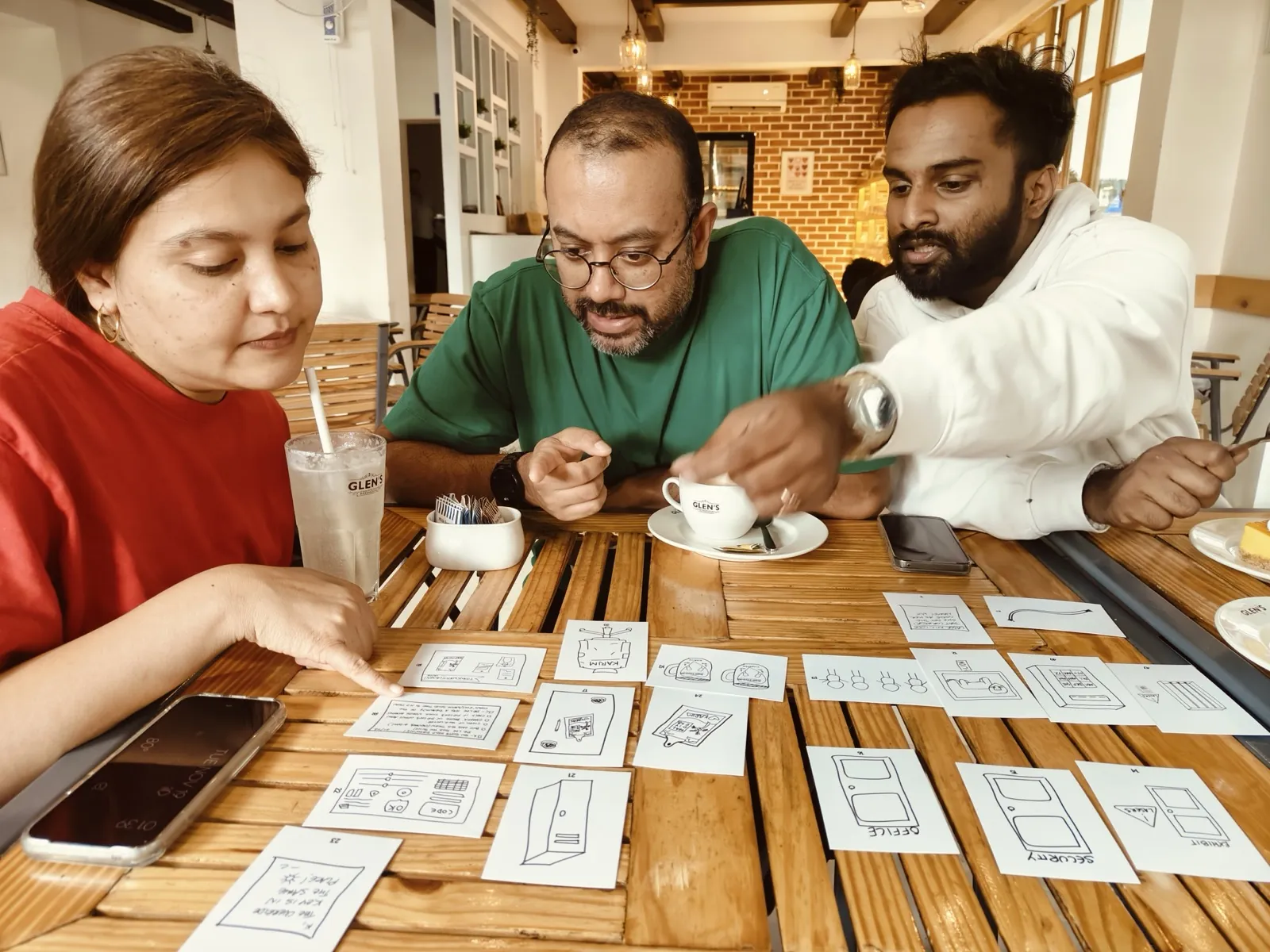
Why I run every session myself
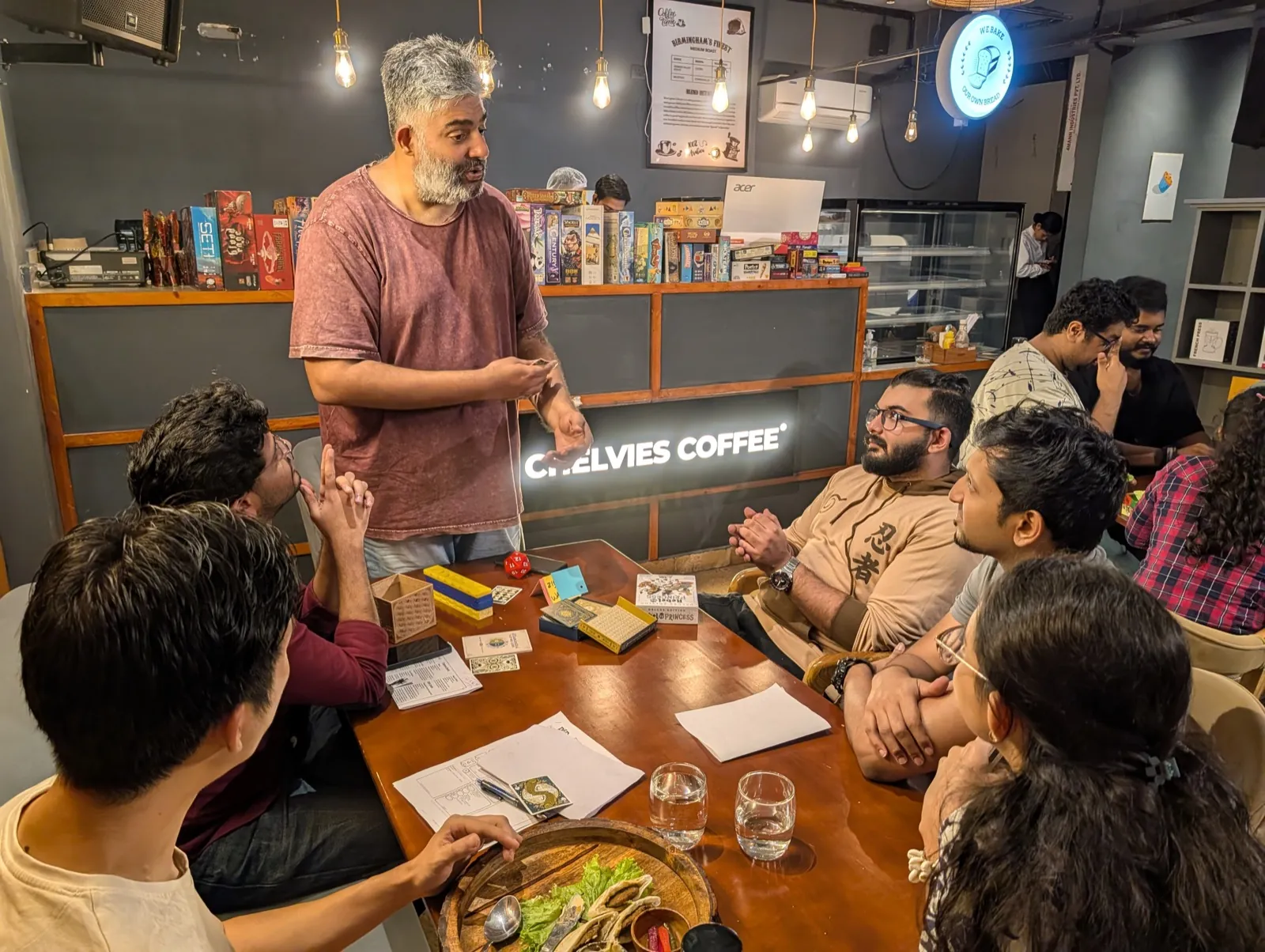
Managers will not sit through training theatre - they have targets waiting, and they'll tune out the moment it feels generic. The reason this works is that the person who designed the game runs it: watching your managers act under the game's pressure, then debriefing the specific behaviour they saw, not a scripted lesson. No associate delivery, no licensed hand-off.
 Proof
Proof
Designing and running these programs since 2019, for a Fortune-100 organisation and fast-growing companies, with leaders across five countries. One of those Fortune-100 programmes ran as serious games, scored 8.82/10 average satisfaction across 113 respondents - the game-based learning was the most-cited takeaway in every batch - and came back for a second program.
What you get
- A pre-session discovery call and brief, calibrated to your managers' level and situation
- The facilitated game session (half-day or full-day), run by me, the designer
- An EPPA debrief, built to make behaviour visible and name it clearly
- A written behaviour summary afterwards, ready to hand to a CHRO or leadership team
- A committed action plan from every person in the room
And my promise: if the session doesn't surface at least three named leadership behaviour patterns worth changing, I redesign the next one at no cost.
Pricing
Programs start at ₹50,000 for a group of 15-25 participants. Final pricing depends on group size, seniority, location and batch count. Send me a note and I'll quote within 24 hours of a discovery call. I take only 2-3 programs a month.
Book a discovery call WhatsApp Arvindh
Frequently asked questions
Why do managers need leadership training specifically?
Because managers are usually promoted for delivering as individuals, then asked to lead other people - a different job that no one trained them for. Leadership training for managers targets that gap: deciding under uncertainty, delegating, building trust, and leading a team through change, rather than just running tasks.
What does a session look like?
A facilitated serious game (half-day or full-day) where managers act under real pressure, followed by a structured debrief that names the specific behaviours that surfaced and ties them to the manager's real week. You also get a written behaviour summary afterwards.
Can you run it for a whole management layer?
Yes. I run multi-batch programs for bigger populations, and some games scale to large single groups with extra facilitators. I calibrate the format to your numbers and seniority in the brief.
Related
- Management and leadership training
- Leadership development programs
- First-time manager guide
- How to delegate as a manager
With love from Bengaluru, this is Arvindh saying over and out.