
When Leadership Training Removes Everything That Makes Leadership Real
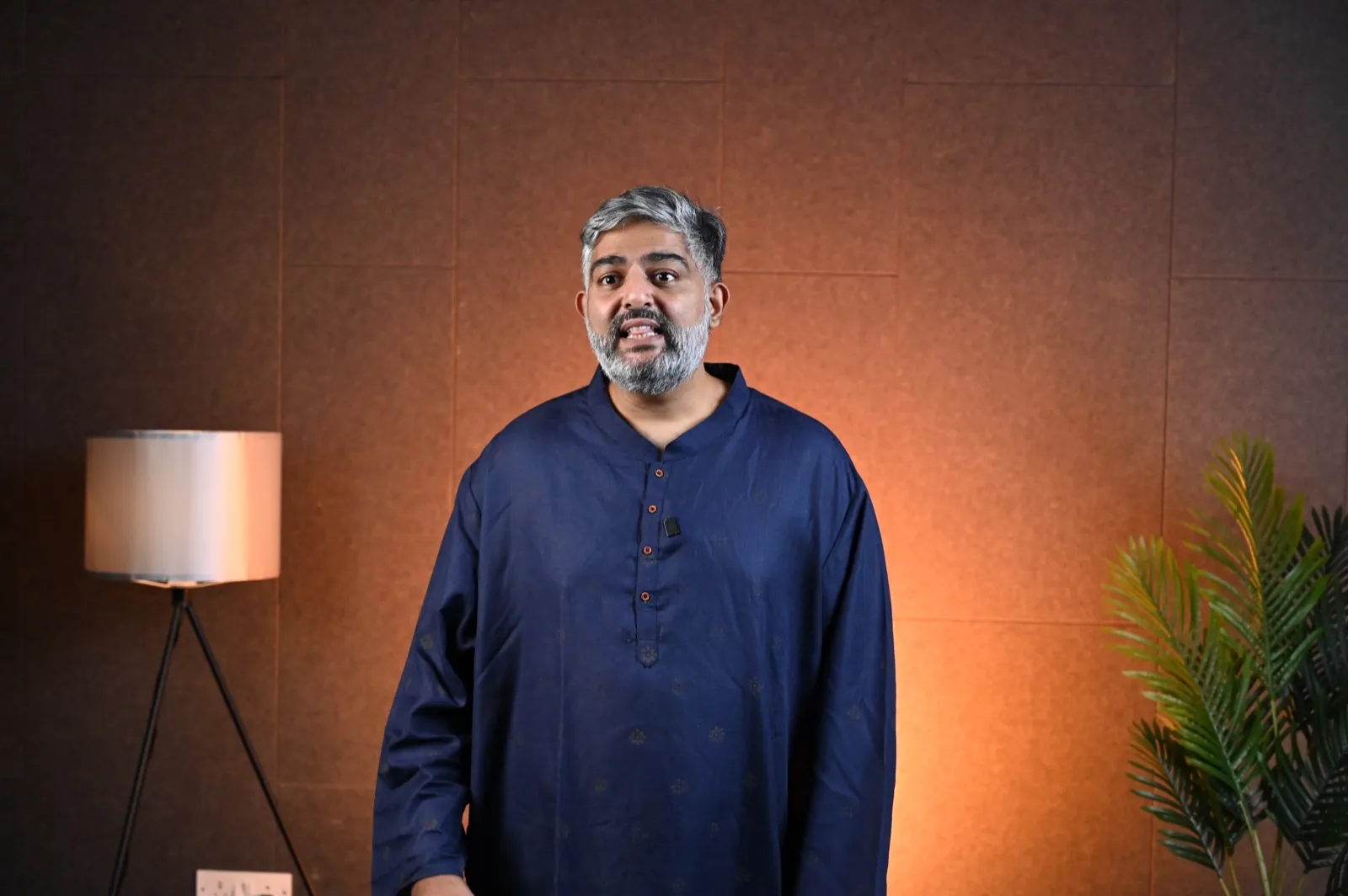
Leaders don't fail because they lack knowledge. They fail because nobody ever tested their behaviour in a system that fights back.
Every angle I try on this lands in the same place. Most leadership training works brilliantly... for the people who were already going to change.
I've watched the other version dozens of times now. The manager who aces every workshop, quotes Drucker in meetings, can draw servant leadership on a whiteboard from memory - and hoards information the second budget gets tight. The executive who says collaboration in every town hall and builds an empire the moment interdependence threatens his autonomy. The high-potential who tests beautifully and then freezes completely when the handrails come off.
Every one of them knew what to do. Nobody had ever checked what they'd actually do once the environment stopped being polite.
And this isn't a facilitation problem or a curriculum problem. It's an environment problem. We've built training that carefully removes consequence, scarcity, politics, ambiguity and pressure - which are, inconveniently, the exact things that make leadership visible - and then we act surprised when leaders wobble the first time reality hands them any of it.
Workshops teach frameworks superbly. They expose operating behaviour not at all. The gap between those two is where most leadership careers quietly stall.
Serious games don't fix that by teaching better. They fix it by testing differently. Behaviour becomes visible in a room, before it becomes expensive in a business.
The Thing Everyone Calls a Game That Isn't Actually a Game
Quick clear-out, because the vocabulary has gone sloppy.
Not gamification. That's points and badges bolted onto a process you already had - it moves completion rates, not thinking. Not an icebreaker; those make energy, not decisions under constraint. Not team building; that builds rapport, not data. And not a simulation in the traditional sense, where the goal is copying reality closely enough that the transfer is obvious.
A serious game is a consequence-based decision environment. That's it.
The theme is secondary. The mechanics are secondary. What matters is the decision architecture - the invisible scaffolding of constraints, incentives, dependencies and trade-offs that decides what is possible and what those choices give away about you.
I've run a game about gardening that exposed political manoeuvring more sharply than any crisis scenario I've built, because the architecture made resources scarce and information uneven, and suddenly coalitions were the only way through. The tomatoes were set dressing. The real game was who protected their patch, who shared what they knew, who built alliances in round one, and who went it alone until the maths made that impossible.
Which brings me to the bit traditional L&D finds genuinely uncomfortable. Consequence and ambiguity are not problems to be solved in a learning environment. They are the point. Take them out in the name of safety or clarity and you don't get better learning. You get professional theatre - people performing the version of themselves that training rooms reward, which is never the version that turns up when resources are short and three stakeholders want different things by Friday.
Why Training Rooms Are Structurally Incapable of Revealing Real Leadership
Real leadership runs on incomplete information, competing priorities, politics, limited resources and constraints that keep moving. That isn't a bug in organisational life. That's the operating system.
Then we build a training room and drain all of it out.
We give complete information. We remove politics, or label it dysfunction. We provide generous time and resources. We publish clear learning objectives, so nobody is ever unsure what good looks like. We keep a facilitator on hand to steer things away from discomfort. The worst available outcome is mild embarrassment.
And then we wonder why leaders struggle with volatility. Why they duck hard trade-offs. Why decision quality drops under pressure. Why they revert to command-and-control the instant ambiguity spikes.
It isn't weak facilitation. I've seen genuinely world-class facilitators run thoughtful days that revealed nothing about anyone, because the environment was built to prevent exactly that.
If the environment is safe, predictable and guided, it is not a test of leadership. It's a test of compliance.
Frameworks aren't broken. The rooms we teach them in are. That's not blame, it's physics. You can't measure a thing after removing the conditions that make it measurable.
How Decision Environments Create Behavioral Visibility
Serious games work by putting the conditions back. Consequences real enough to matter inside the game's logic. Scarcity that forces choices. Interdependence that makes collaboration a necessity rather than a value on a poster. Uneven information. Volatility. Moral tension with nowhere comfortable to stand.
Behaviour only becomes visible where a decision collides with a constraint.
Give someone unlimited time and money and you learn nothing about how they prioritise. Make it scarce and you immediately see who defends their patch, who negotiates, who shares, who builds a coalition, and who tries to do it all alone until arithmetic forces them to ask for help.
Give everybody the same information and you learn nothing about trust. Make it uneven and you see how people build credibility without all the answers, whether they trade knowledge or sit on it, and how they behave when somebody clearly knows something they don't.
This is why people are more honest inside a well-built system than in any reflection exercise. In reflection I can tell you I value collaboration. In a role-play I can demonstrate collaboration. In a game with real scarcity, you find out whether I collaborate when it means handing over something I could have kept.
Stated value. Demonstrated technique. Actual behaviour under pressure. The distance between those three is the entire development opportunity.
Four Decision Architectures That Make Leadership Visible
Here's the machinery. Four architectures I use again and again, each pointed at a different part of how somebody leads.
Scarcity architecture. Resources - time, budget, information, support - are deliberately not enough for everyone to get what they want. Now prioritisation is forced, and you see who looks after themselves first, who negotiates from strength and who negotiates from panic, who pools early, and who isolates and loses influence without ever noticing it happen. A garden does this as well as a crisis, provided the soil and water genuinely run out.
Asymmetric information architecture. Different players know different things. One has the market. One has the politics. One has the technical constraint. Nobody can win alone because nobody has the full picture, and now influence, trust and transparency stop being values and start being strategy.
Alliance and interdependence architecture. Winning alone is made mathematically impossible. So coalitions, negotiation and relationship management become functional necessities rather than nice ideas, and the informal power map draws itself. You see who builds bridges, who builds walls, and who mistakes independence for strength right up until dependency explains it to them.
Cascading consequences architecture. Every decision reshapes the board for the next one. A rubbish call in round one wrecks round four. An alliance made early becomes an obligation later. Information withheld compounds. This is the one that separates people who think in systems from people who are perpetually astonished by second-order effects.
Get the architecture right and behaviour emerges on its own. Get it wrong and you've built a very expensive icebreaker.
The Behavioral Science That Makes This Work
There's proper science under this, not just design instinct.
Cognitive load research tells us decision quality shifts under pressure - not because people get less clever, but because working memory narrows and habits step in where deliberation used to be. Stress response research shows real behaviour surfaces when stakes feel real within a context, even a game, because the systems making the decision don't carefully distinguish between real consequences and immediate social ones.
Ambiguity tolerance turns out to be one of the more reliable markers of leadership effectiveness, and a game measures it directly by removing the clarity a classroom hands out for free. Some people widen their options when uncertainty rises. Others narrow them, grabbing for control. You cannot see that in a discussion about managing ambiguity. You can only see it by creating some.
And the difference from a 360 or a self-report tool is straightforward. Those measure perception, filtered through social desirability and whatever happened last month. I don't need to ask whether you collaborate when resources are tight. I can watch. The data is behavioural, not perceptual, and that distinction is the whole thing.
What Gets Revealed When Frameworks Collide With Reality
Leaders don't reveal themselves in discussion. They reveal themselves in collision.
Frameworks against constraints. Stated values against scarcity. Long-term thinking against a deadline this afternoon. Their own success against the group's. A serious game arranges those collisions on purpose and then makes everybody watch.
You see real decision patterns. How fast someone commits under uncertainty, or how long they wait for a clarity that is never arriving. Whether they consult widely or decide alone and announce it.
You see influence with the org chart taken away. Who builds credibility through expertise, who through relationships, who through track record. Who reaches for formal authority the moment the informal route stops working.
You see conflict styles arrive by themselves, because the interests genuinely diverge - not because a facilitator manufactured a disagreement between two people who actually agree.
And you see ethical moments nobody scripted. The choice between personal success and the group's, between a quick gain and long trust, between saying the thing and saying nothing. Made live, on real incentives, rather than debated as a hypothetical over lunch. The game doesn't judge any of it. It just makes it visible, and visible is discussable.
TLDR - Because Frameworks Don't Change Behavior, Environments Do
- Stop teaching leadership in rooms that have removed everything leadership actually requires
- Knowledge with no behavioural test is professional theatre, not development
- Decision architecture matters far more than theme - a garden can expose politics
- Scarcity, ambiguity, interdependence and consequence aren't problems to fix. They're the features
- Leaders reveal themselves in collision, not in conversation
- Behaviour under constraint predicts performance better than stated values or a 360
- A small game run three times beats a large production run once
- The future of this is better environments, not more content
Why Thematic Variety Actually Matters Less Than You Think
I've built games about ecosystems, badminton academies, corporate crises, and worlds that emerged out of tabletop role-playing. Looks varied in a portfolio. It's the least interesting thing about any of them.
What matters is whether the thing underneath is a negotiation-and-alliance engine, a resource allocation system, an ethical dilemma generator, or a volatility machine. The theme is the clothing that makes the architecture wearable.
This is exactly where gamified workshops fall over. They start with a theme and hope mechanics turn up. What you get is lovely storytelling and zero behavioural data. Or an "interactive" experience that is a slide deck with a participation counter attached. No consequences. No interdependence. Far too much clarity. All the trappings of a game and none of the features that make one diagnostic.
Serious game design is leadership architecture. Every rule is a hypothesis about people - if I create this constraint, this pattern should emerge. The game is the instrument. Running it produces data. The debrief turns data into insight. And if the pattern I predicted doesn't show up, the design was wrong and I go and fix it.
The Misconceptions That Need Correcting Before We Go Further
The objections are predictable, so let's do them properly.
"Serious games are childish." They're diagnostic instruments with consequences. Calling them childish because there are cards on the table is like calling an MRI childish because you have to lie down. The modality doesn't set the rigour, the design does. I have watched C-suite executives get completely lost in a game about soil and water, because the tension was genuine. The tomatoes were irrelevant. The scarcity was everything.
"Games simplify reality." They reveal what reality hides. Real organisations are so thick with confounding variables that isolating a pattern is nearly impossible. A game strips out just enough noise to let the pattern show while keeping the dynamics that produce it. That's not simplification. That's signal extraction.
"Learning must be clear and clean." Ambiguity is where leadership growth comes from. Remove it and you produce people who panic the first time reality supplies some. The discomfort of not knowing the right answer isn't a flaw in the design. It's a Tuesday.
"Serious games are entertainment." They're behaviour laboratories. High engagement doesn't make something frivolous. I design for engagement because engagement is a prerequisite for honest behaviour, not because I'm trying to make learning fun. The fun is a side effect and I'll take it, but it isn't the goal.
"Workshops fail because facilitators are weak." No. Workshops fail because the environment caps how honest anyone can be, however good the person at the front is. It's structural, not personal.
When Politics Shows Up (And When It Doesn't)
Politics isn't in every game, and that's deliberate.
It shows up when the architecture makes informal power, alliances, resource dependency and strategic ambiguity relevant. Plenty of objectives don't need any of that - a game about ethical reasoning or systems thinking can run perfectly well with no political dimension at all.
When it does show up, it arrives on its own. You don't script politics. You create conditions where political behaviour becomes advantageous and then you sit back and take notes. Who builds coalitions early and who scrambles for them late. Who leans on relationships and who reaches for the title. Who builds trust across factions and who just deepens the tribe they were already in.
What it reveals is influence without authority, which is the single hardest thing on this list. Some leaders are fluent in it. Others are completely blind to it until a game about gardening makes it impossible to miss.
That visibility is only useful if the organisation actually wants the conversation. Not every client does, and that's fair enough. I'd rather know before we start.
How This Scales Without Breaking
These run from 12 people to well over 100 without losing the diagnostic edge, but the scaling logic isn't a workshop's.
Modularity does the work. The same architecture flexes by changing the number of competing factions, the complexity of the allocation problem, or how uneven the information is. An alliance engine that works for 15 works for 60 if you multiply the stakeholder groups and nest the coalitions.
The hard part isn't running the game at size. It's the follow-through. Running it produces patterns. The debrief surfaces them and ties them to the real business. The work afterwards turns them into individual development and team conversations. That last bit is where programmes quietly die.
Which is why a small game run three times with rigorous debriefs beats a big one run once with a nice photo afterwards. Change one variable each time, debrief the difference, and patterns appear that a single exposure will never show you.
The Future Is Environments, Not Content
The future of leadership development isn't more frameworks, more content, more assessments or more workshops.
It's better environments. Places where behaviour becomes visible before it becomes expensive.
That shift is already underway in organisations that have worked out their assessment tools measure perception rather than performance, and that a workshop teaches a framework without ever checking whether it survives contact with a bad Tuesday. Once you accept that behavioural data beats perceptual data, the uses stack up quickly - talent identification, supporting a manager into a new role, stress-testing a leadership team, baselining how a group actually decides things.
Change the environment and behaviour emerges. Serious games change the environment.
That's the whole pitch. It's compelling or it isn't, depending entirely on whether you think behaviour matters more than knowledge. I've built a career on believing it does.
Where This Shows Up in My Work
At PutThePlayerFirst.com I design and run these for leadership development and team diagnostics, and none of the above is theory. It's what the last few years have taught me, mostly by going wrong first.
I've watched leaders who interview brilliantly reveal hard command-and-control instincts the moment collaboration started costing them something. I've seen high-potentials who look flawless on paper come apart when the right answer became context-dependent. I've run a session where political dynamics everybody knew about and nobody would name became discussable, because a game about gardening made the alliances undeniable.
Those aren't edge cases. That's the norm, once you build a room where behaviour has nowhere to hide.
The reason I keep building these is simple. Organisations keep telling me they need better leaders, and then keep training them in environments that actively prevent leadership from showing up. That gap is fixable.
Make behaviour visible. Make consequences immediate. Make reflection unavoidable. That's the entire design philosophy. Short enough to write down, anyway. Doing it in a live room is the part that took me years.
If you're tired of watching capable people fail for reasons no workshop predicted, and you're not convinced another 360 or another offsite will tell you anything new - come and talk to me. Or have a look at the games that make leadership behaviour visible.
With love from Bengaluru, this is Arvindh saying over and out.