
I've been trying to work out for a long time why negotiation in leadership is the skill people describe best and practise least.
Not because they don't know how. Most senior people I meet could teach a decent session on it.
And the training is usually fine. Interests over positions, know your walk-away, all of that. The frameworks are sound, and the people teaching them generally know what they're doing.
It's just that the real negotiations in a leader's week don't announce themselves.
They happen in a budget meeting, in a corridor, in a quiet "can you help me with something". Nobody calls them a negotiation at all.
So a leader walks in with a framework and walks straight past the moment to use it. Quietly. Most weeks.
I'm not immune to it either, for what it's worth. I'm a game designer, and I still miss them.


How it works: a six-hour day, play first, then the EPPA loop
The programme runs on one loop. I call it EPPA - Experience, Patterns, Principles, Application.
- Experience. The game: three to four hours of play inside the six-hour day. The arc is the product, so I don't cut it.
- Patterns. The players name what kept repeating across the factions, before anyone says what it means.
- Principles. They connect it to how they negotiate at work. In their own words, not mine at a flipchart.
- Application. A named behaviour, a real situation and a date. The stage that tends to get squeezed in training, and the only one that changes Monday.
That last stage is the only place AI turns up. Inside the day, in the debrief, never inside the game.
Nobody at the table has a laptop open. The game is people, a map and a great deal of talking, and it stays that way.
The game at the heart of it: Welcome to Zombiepuram
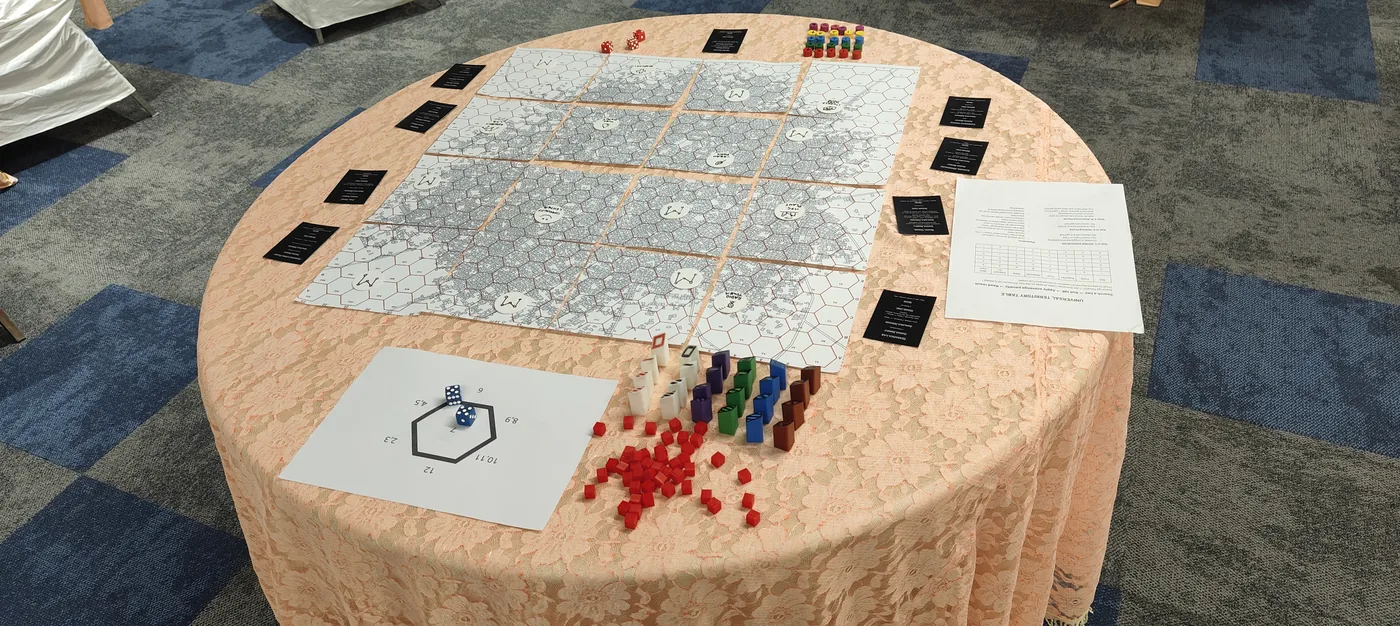
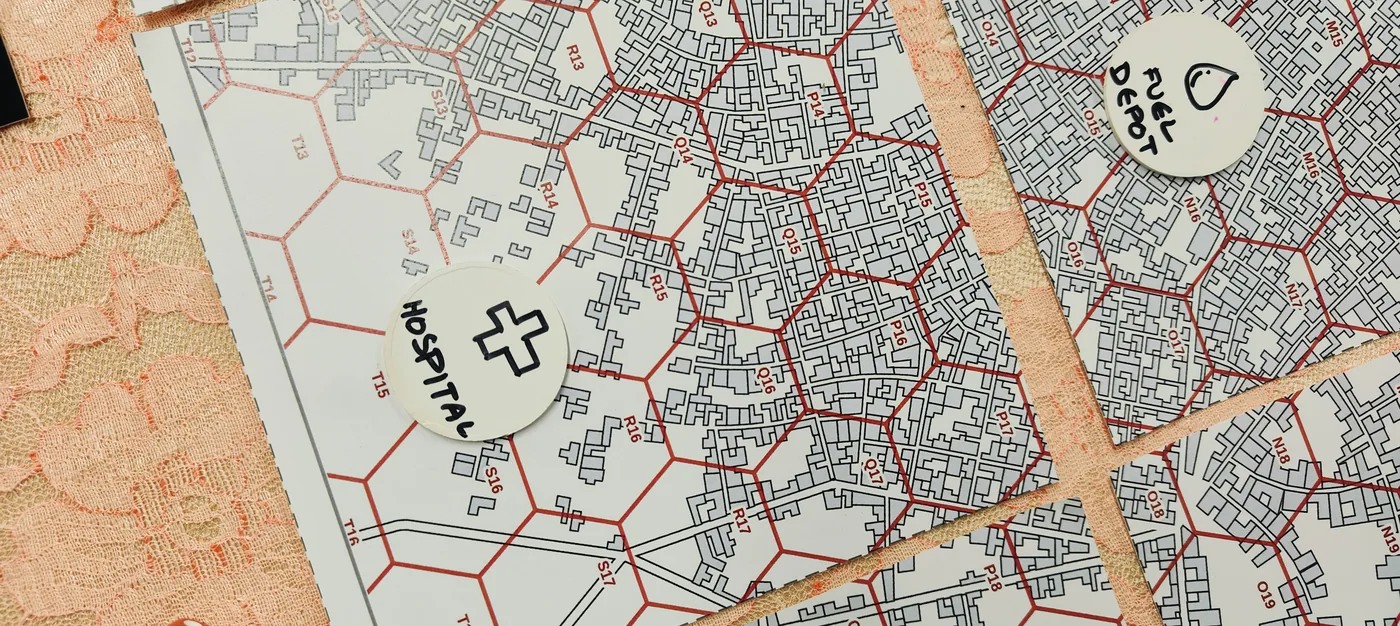
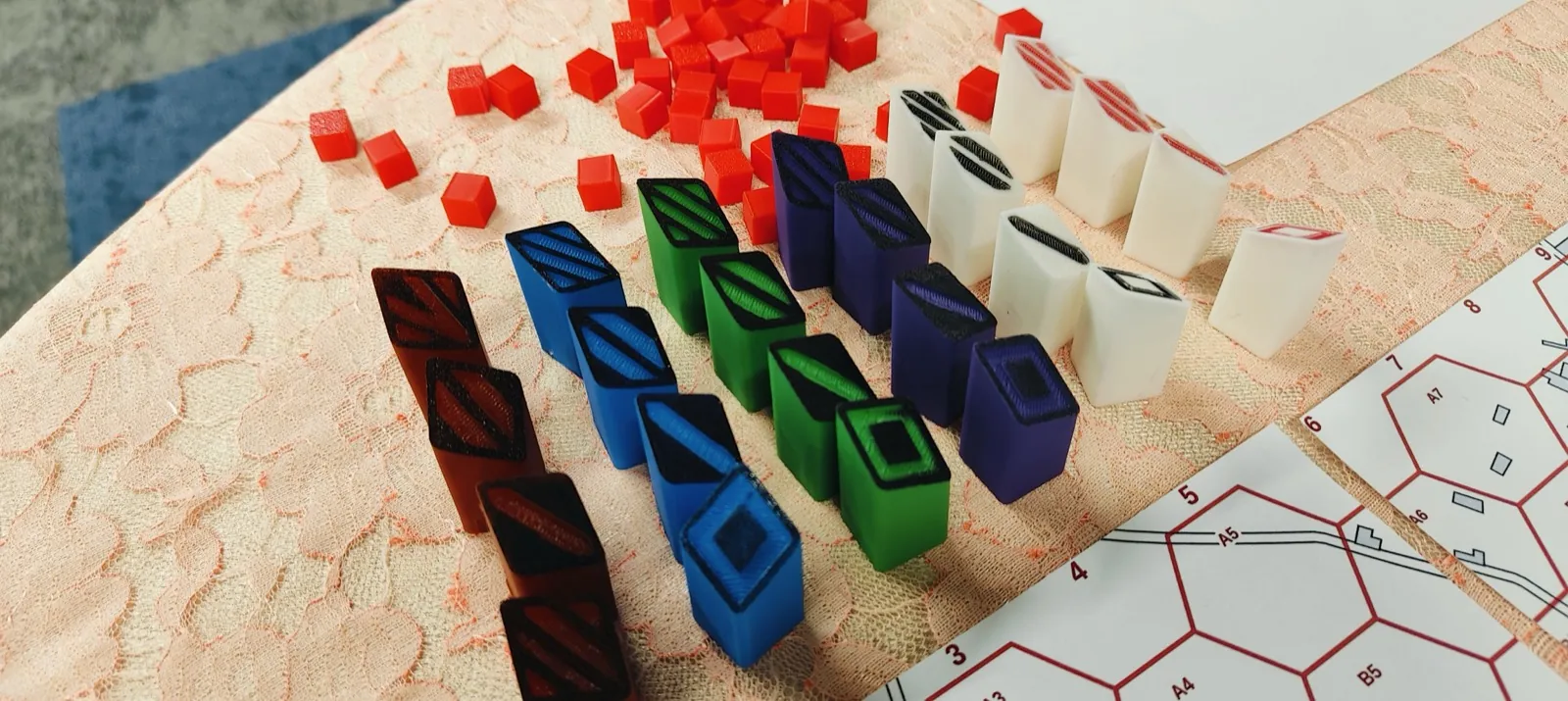
Welcome to Zombiepuram is my flagship, and the biggest thing I make. A whole room at once, split into factions trying to survive in a Bangalore that has gone very badly wrong.
Each faction shares its people and supplies. It has its own missions, kept from the other factions.
And every single player also carries a personal mission that nobody else at their table knows about.
Information can be traded at any time, with anyone. The rules say, more or less in these words, that there are no honesty rules. Lie freely.
A player can even leave their faction and join another, twice in the game. They need a signature from the faction that takes them in, and one from a witness.
But if the city's total population drops below a line, everybody loses. Including whoever was winning.
So every conversation in the game is built to be two things at once. What's good for me, and whether we all make it.
Which is, honestly, your Tuesday. With better lighting.
 What the play is built to bring out
Give a group three to four hours of play, incomplete information and goals that pull against each other, and I think people stop describing good negotiation and just negotiate. The game is designed to put these out in the open:
- Who makes first contact across factions, and whether they open with an offer or a demand.
- Who gives information away to build trust, and who sits on it, waiting for a better price.
- Who becomes the broker, on good terms with three factions at once without belonging to any of them.
- Whose promises hold when keeping them gets expensive. And who changes sides the moment it gets cheaper not to.
- Why being senior counts for nothing at this table. Every player starts with the same rules, so the only power anyone has is the power they negotiate.
- Whether the group can still act together once everyone's personal mission is safe. I suspect this one will be the bruise.
Where AI comes in: the Application step
By Application, the debrief is built so the players have already named what they saw. The coalitions, the broken promises, the broker nobody expected. AI has nothing to do with any of that, which I think is the right way round.
Then each leader brings one real negotiation that is coming up for them. A budget, a headcount ask, a peer they need something from.
- AI plays the other side. Their public goal, their likely private goal, and their next three moves. The same public-and-private shape as the game, pointed at a real person this time.
- The leader tests what to show and what to hold. Out loud, a few times, before it costs anything.
- They write the opening offer. An actual first line, for an actual meeting, with a date.
What stays human is the thing the whole game is about. What to reveal, and to whom.
AI can guess at a private goal. It can't decide how much trust a colleague has earned. That belongs to the leader, and honestly, I think it should stay that way.
What your leaders walk out with
- One real negotiation, rehearsed, against a sparring partner that pushed back with three moves they hadn't planned for.
- An opening offer, already written, so the first sentence in the room is a decision and not an improvisation.
- A clear line between what they'll show and what they'll hold, worked out calmly, a few days before it matters.
- A shared language for the politics - factions, private goals, the broker - that lets a team talk about it without accusing anybody of anything.
- Imagine the next budget meeting where somebody says "can you help me with something", and your leader quietly recognises it as a negotiation before they've said yes.
The receipts
I've been training founders and leaders since 2019, with founders in the US, Canada, Australia, Singapore and India.
One programme at a Fortune 100 company scored 8.82/10 as a satisfaction score, across 113 respondents and six session-days. That is one programme, and I'd rather not stretch it.
Across every scored session-day I have, the satisfaction score is 8.40/10 across 244 respondents. A bit lower, and probably the fairer number to judge me on.
Neither of those is a score for this programme. Zombiepuram doesn't have a published number of its own, and I won't pretend it does.
Who it fits
- Mid-to-senior leaders already living in the soup - competing priorities, cross-functional dependencies, and a political weather system nobody put in writing.
- Senior teams where the politics are quietly hurting decision quality. The game is built to say the thing out loud, so you don't have to.
- Post-merger groups still politely operating as separate camps. The faction structure is built to mirror it.
- A diagnostic before you design something bigger. Three to four hours of real behaviour may tell you more than most surveys.
Who would get more from something else
- Groups under 15. You need enough people for the interests to genuinely compete.
- Frontline or junior teams. This is built for people who will recognise the dynamics, not meet them for the first time. There are gentler starting points on the programmes page.
- Anyone who needs it in under six hours. The day is six hours, and three to four of that is play. Cut the day to three and the play gets cut just as it builds. I'd rather suggest a different programme than run half of this one.
- Settling one specific fight between two people. A game is the wrong tool for that, and I'll say so on the call.
Fair questions
"Why six hours? Can it be shorter?"
That's a fair ask, and honestly it's the one I get most. The six hours is the whole day: the teach, three to four hours of play, breaks and the EPPA debrief. The arc of the play is the product. Alliances forming and breaking, trust getting built and spent, personal missions colliding with the shared one - that needs time. The AI-augmented Application step sits inside that day, in the debrief, after the play. We plan it around your group, and I'll tell you plainly what I think it needs.
"What if real political tensions come up?"
They may, a little. The debrief is built for that. I separate what the game surfaced - patterns, tendencies - from what your office holds, which is history and specific people. Making a pattern discussable without making it personal is delicate work, and it needs the person who designed the thing to run it. That's me.
"Isn't a zombie game a bit silly for senior people?"
A bit, yes, and I think that helps. The zombies give everybody permission to play hard without it being about anyone's actual budget. The negotiating underneath is entirely real.
"Can AI really help with a negotiation?"
With the preparation, I think it can. A sparring partner that will argue the other side for as long as you like is useful, and most of us never get one. It doesn't make the call on what to reveal. Which tools your leaders can use for a live negotiation, and where that information goes, is a fair question too - I'd rather answer that properly for your setup on a call than guess at it here.
Worst case? We have a conversation and you come out of it with a clearer brief, whether or not Zombiepuram is the answer.
Let's see if it fits your leaders
Tell me about your leaders and the negotiations they keep walking into. I'll tell you honestly whether Zombiepuram fits, and if it doesn't, I'll tell you that too.
Or just tell me what you're trying to fix
I went back and forth on whether to put a form at the end of this page.
Because a form asks you to be tidy about something you are probably still working out. And the enquiries I enjoy most tend to arrive as three messy lines, written by someone who has not finished deciding what they want yet.
So there are two ways in, and I genuinely do not mind which one you use.
Write to me directly at arvindh@puttheplayerfirst.com and say roughly what you want to change. Three lines is plenty. I read my own email.
Or fill this in, if that is easier. It lands in the same inbox.
I answer these myself, usually within a day. Two if I am in a room somewhere with my phone in a bag.
And you are not committing to anything by writing in. Worst case we have a conversation, and you come out of it with a clearer brief than you had this morning.
It won't make anybody a natural negotiator in a day. It does mean the next real one starts with a written first line, which is more than most of us manage.
With love from Bengaluru, this is Arvindh saying over and out.