
ChatGPT Training for Non-Technical Employees
I run game-based ChatGPT training for non-technical employees, myself, start to finish. Your people bring a real task from their week, play a short card game with no AI at the table, then use ChatGPT on that task until it is genuinely faster. It comes as a half day, a full day or two days.
This page is for one person, really.
You look after learning or talent at a large company, quite possibly a GCC (global capability centre) in Bengaluru or Hyderabad, and you need AI training for non-technical staff. Your non-technical people have ChatGPT, or something very like it, and most of them have opened it a handful of times.
You need something hands-on, that fits a real calendar, and that you can defend to the business afterwards.
So I have written down exactly what I do, session by session, the way I would explain it to you over filter coffee. It sits under my AI Bootcamp for Teams, which is the programme this course comes from.

Who runs it: me, Arvindh Sundar. I design the games and I run the batches myself. I make learning games, I'm not an engineer, I've been training leaders since 2019, and I run my own business on these tools every day.
The nearest number I have for how a room with me in it tends to feel is an 8.82/10 satisfaction score, 113 respondents, one programme at a Fortune 100 company. It's one programme, so I hold it lightly, and satisfaction is not the same as people using what they learned.
- What the training is, and who it suits
- Half day, full day or two days, side by side
- The session-by-session plan for each format
- The AI serious game in the middle
- The change-leadership module for middle managers
- How delivery works, from first call to last batch
- What participants paste into ChatGPT, and what they never do
- The TL;DR and frequently asked questions
Chapter 1
What is game-based ChatGPT training for non-technical staff?
It's a hands-on course where people use ChatGPT on their own work, in the room, with me beside them.
No code. No jargon. No tour of every button.
Most teams I talk to already have the licences. What they didn't get was anybody sitting down with them and pointing the thing at their actual Tuesday.
The thing I spend the day on is judgment. What to ask, what to check, and what not to hand over.
For me, that last one matters most.
A team led by Harvard Business School researchers, working with more than 700 consultants, found that on tasks inside what the tool does well, AI improved performance by nearly 40%.
On a task just outside that boundary, performance dropped by an average of 19 percentage points.
That's from MIT Sloan's write-up of the study, and it's the clearest case I know for teaching people to tell the two apart.
Non-technical people are often the best at that, honestly, once somebody shows them what a confident wrong answer looks like.
In one lineYour people use ChatGPT on their real work, learn where it is good and where it bluffs, and keep the final call.
Chapter 2
Half day, full day or two days: which format fits?
Same spine every time. What changes is how far we go. Pick by what feels most stuck, and I'll tell you if I think you've picked the wrong one.
| Format | Best when | They leave with |
|---|---|---|
| Half day, 3 hours | People have access and aren't using it. Runs in batches across a large group. | One repeat task genuinely faster, and a prompt library the group wrote themselves. |
| Full day, 6 hours | People use it but can't always tell good output from fluent nonsense. | A shared prompt library and an agreed policy line for their function, written by them. |
| Two days | People can spot what's wrong, and good recommendations still sit unacted on. | A real problem from your business, worked to a case they can take into a steering committee. |
In one lineThree hours to start using it, six to trust it, two days to decide with it.
Chapter 3
What happens in each session of ChatGPT training?
Here is the standard plan, block by block. Exact timings move with the room, and I tune them between batches.
By default it's built on ChatGPT only: the chat window, no agents, no code. If your people use Copilot or an in-house tool instead, I build it on that on request.
The half day (3 hours)
- One disappointing answer. Everyone shares one thing they asked AI for recently that came back poor. It gives us real examples for the session, and it tells the room that inconsistent output is normal, not a personal failing.
- A question versus a brief. We rebuild a weak prompt live, one line at a time, using FACTOR: Function, Audience, Context, Task, Output, Rules. Then each person does it on their own task.
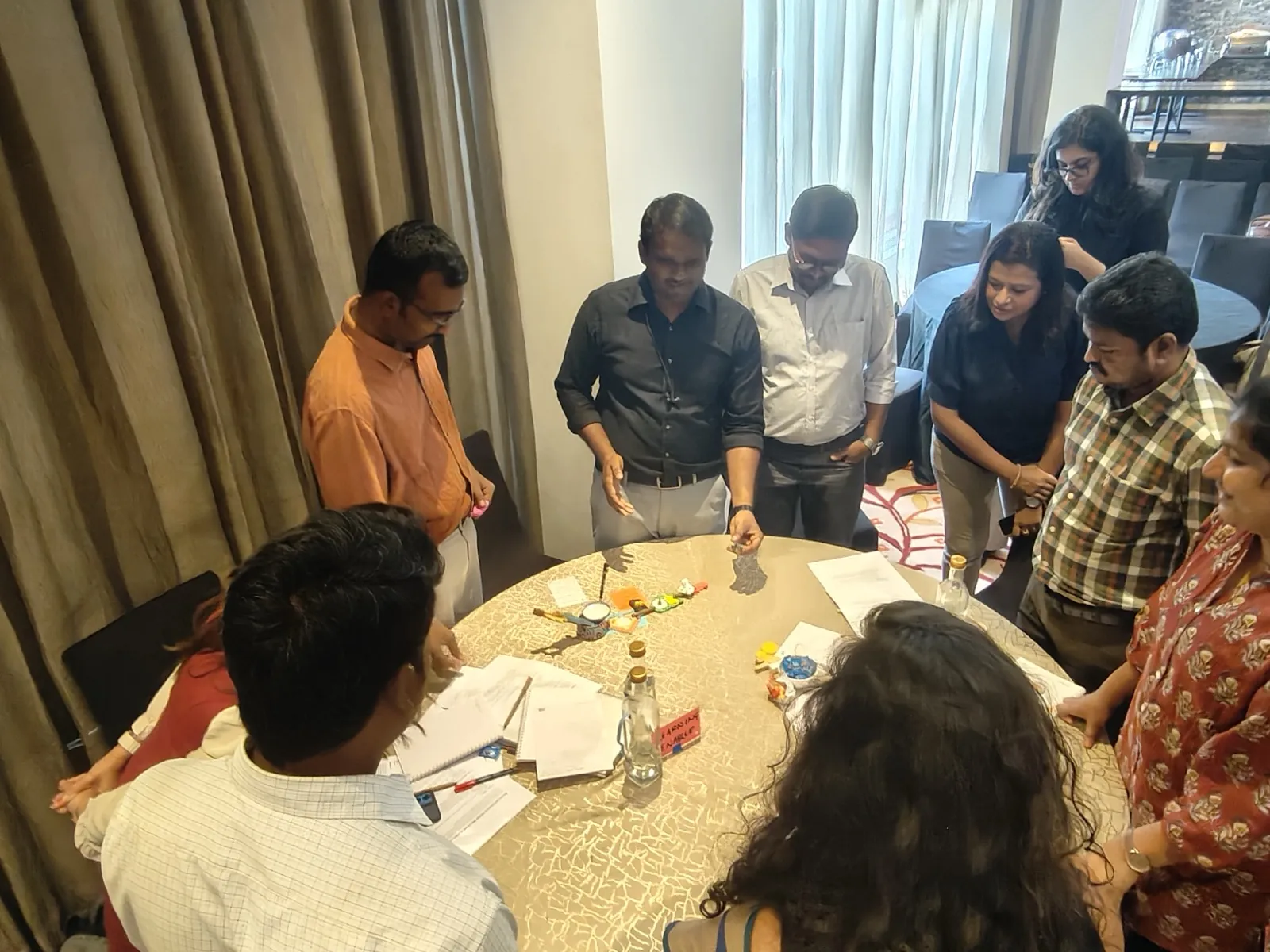
- The game, with no AI at the table. The Potter from Belagavi, 45 minutes of play, then the debrief (more in Chapter 4).
- The confident wrong answer. The tells of an answer that is fluent and false, and where your policy line sits in their real terms.
- One repeat task, rebuilt. Each person saves a working prompt for something they do every week, tests it, and writes one sentence: "This week I will use my saved prompt for this task, which currently takes me this long."
The full day (6 hours)
- Everything in the half day, unhurried.
- When it still goes wrong. The common failures (too generic, invented facts, wrong shape, ignored instructions), each traced back to the FACTOR letter that was missing.
- What these models actually are, in plain English, and why that explains the ways they go wrong.
- Systems rather than single prompts, so nobody's setup starts from scratch every Monday.
- A second, harder task, rebuilt with feedback in the room. It must be a different kind of task from the first.
- Where a decision must not be handed over, worked through on their own live examples. The group writes its own policy line.
The two days
Day 1, think better with ChatGPT. Framing the problem before prompting at it (Double Diamond), getting ideas out properly (Lotus Blossom), the problem versus the symptom, and catching a hallucination before it catches you. Every idea arrives through an activity.
Day 2, apply it and decide. Reading a messy, multi-source pile the way the real world hands it over, and mapping who actually has to say yes.
Then the impact case in the language finance uses, and 30/60/90 commitments, written and said out loud, with names against them.
The two days are built on my leadership decision-making programme, which I've run at a Fortune 100 company; the case study tells that story. I've rebuilt it so AI runs through both days, and the rebuilt version is new, so I'd rather say that plainly.
Before anyone on your team asks ChatGPT anything this week, have them type: "Ask me 3 questions before you start." That one habit fixes a lot of the junk answers people complain about, because now it's working from their context instead of guessing.
In one lineEvery format starts from one disappointing answer and ends with one real task done faster.
Chapter 4
What is the AI serious game, and why is there no AI in it?
The game is called The Potter from Belagavi. I designed it.
You're a potter. Most rounds you can make three pots by hand and sell them. Or you can spend your coins on a wheel, a mould and a kiln, which do nothing the round you buy them and then make pots for you every round after.
Somewhere in round two, somebody at the table buys the wheel. By round five they have more coins than everyone else, having done visibly less work.
That's the whole lesson of using AI at work, felt in 45 minutes with cards and a pencil. Learning a new way costs you a round, and the deadline is today, so the round never gets spent.
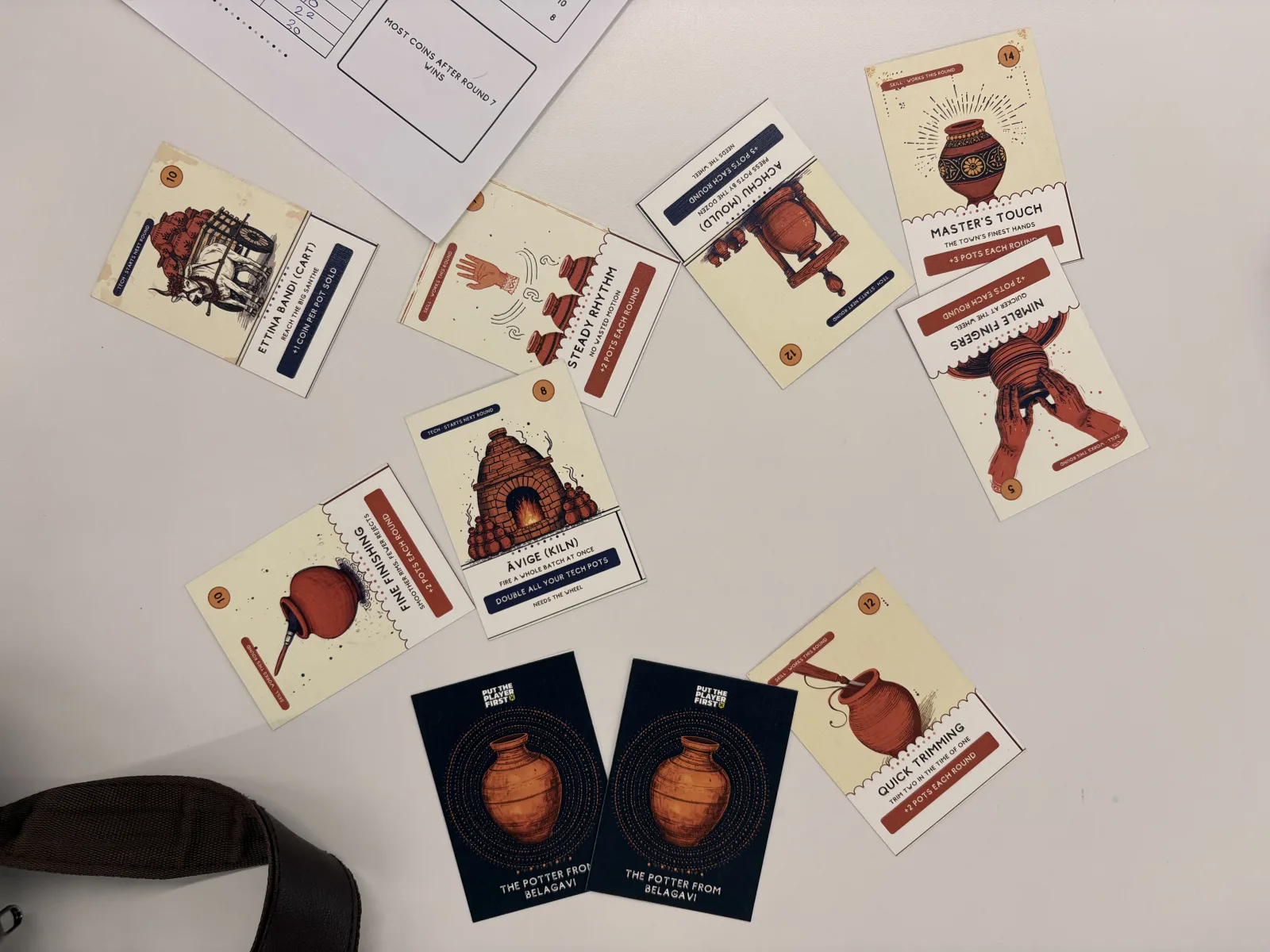
Then the debrief runs on my EPPA debrief loop. The room names the patterns, connects them to their own work, and only then do the laptops come out. Each person names one "wheel" in their week and builds a rough version of it with ChatGPT before they leave.
You can read the full rules on the game's own page, linked from the AI Bootcamp for Teams page.
In one lineThe game makes people feel why the round is worth spending; ChatGPT is how they spend it.
Chapter 5
How do middle managers lead an AI rollout?
Here's the part that sits with the managers rather than the team.
The team learns the tool. Their manager doesn't change anything about the week. And a month later usage is back where it started.
So I add a module for middle managers on leading the change, built from material I already run on leading change. I ran a full leading-change day in Hyderabad in September 2026.
- Resistance is information. When somebody isn't using it, is it capability, incentive, identity or risk? Each one needs a different response, and pushing harder fixes none of them.
- The skip audit. Which early step of a change did your last rollout skip, and what did it cost? In my experience, AI rollouts often skip the part where anyone says why.
- A barrier finder for one named person. Is it a knowledge gap or an ability gap? A refresher course fixes one and does nothing for the other.
- Make it survive you. The one thing the manager would have to stop doing for the new way to hold without them.
There's more on the thinking behind this in change management for managers.
It's a half day. You can book it on its own, or as an add-on to the bootcamp.
In one lineThe team learns the tool; the manager learns to make the new habit stick.
Chapter 6
How does founder-led AI training work for a large company?
Plainly: I build it and I run it. Every batch.
- One call first. Roughly how many people, which AI tools they're allowed to use, and what you've already tried. I come back with the format I'd recommend, or tell you none of them fit.
- A first batch as a pilot. One mixed room before the rest are scheduled, because it's much cheaper to adjust after one room than after eight.
- Batches after that. What batch one found hard changes batch two. Rooms of up to about 25 people, and two batches a month for one client.
- Built on your tool and your limits. Your approved stack and your real policy, including what's explicitly off the table.
- Through your partner, if you have one. Working through an L&D partner the company already uses suits me fine.
- Capacity. I take two or three programmes a month, mostly because I run all of them myself.
- Price. It comes in a quote after a short chat, once I know the format and the numbers.
- In person or online. The game runs in person only, and the two days are in person. The online half day has no game; it suits spreading batches across locations.
In one lineOne person designs it and runs every batch, so every batch makes the next one better.
Chapter 7
What should employees paste into ChatGPT during training?
This is usually the first question from IT, and it should be.
- Your approved account only. People log in to the tool your company allows before they walk in. I send a short pre-session checklist.
- The "never put this in" list, in your terms. I make your policy line concrete, on their own tasks, rather than a generic warning slide.
- Paste, never upload. We work in the chat window, every batch.
- Only three things go in. People paste their own task descriptions, public information, or my practice case pack. No client or customer data.
- Nothing about people. Nobody pastes anything that names a colleague or a candidate, so no CVs and no reviews. And I don't let AI make decisions about people, such as scoring, ranking or selecting participants.
- Your data stays yours. I don't use your data to train AI models. My full AI use policy is public.
After a session I keep two things: the feedback forms and the shared prompt library. I sign your NDA as standard.
In one lineReal work comes into the room, sensitive data does not, and your policy decides the line.
TL;DR: the whole page in seven lines
- Game-based ChatGPT training for non-technical employees, designed and run by me.
- Three formats: a half day to use it, a full day to trust it, two days to decide with it.
- Every format starts from a real disappointing answer and ends with one real task done faster.
- The Potter from Belagavi sits in the middle, with no AI at the table.
- A half-day change module helps middle managers make the new habit stick, on its own or with the bootcamp.
- A pilot batch first, then rooms of up to about 25, two batches a month per client.
- Your approved tool, your policy line, and no sensitive data in the chat window.
Frequently asked questions
Do people need to be technical for this?
No. There is no code anywhere in it. Everything happens in the ChatGPT chat window, on tasks people already do every week. I am not an engineer myself, which I think helps more than it hurts in a room of non-technical people.
What if our people use Copilot or another tool, not ChatGPT?
By default I build it on ChatGPT only. If your people use Copilot or an in-house tool instead, I build it on that on request. The method carries across chat tools, because it is about how you brief and check, not which button you press.
Is the AI inside the game?
No. The game is people at a table with cards and a pencil, making calls together. AI comes in afterwards, when everyone takes what the game showed them and uses ChatGPT on their own real work. The final call always stays with the person.
Who actually runs the sessions?
I do. I design the games and run the batches myself, and I take only two or three programmes a month for that reason. It also means what batch one found hard can change batch two.
Is three hours really enough?
For getting a non-technical team from not using it to using it, I think so. The shortness is deliberate, because in my experience a full day is the length that gets postponed twice. What three hours cannot do is turn people into power users; that is what the longer formats are for.
How do you measure whether it worked?
Satisfaction is the easy part to measure, and it is not adoption. So at 60 days I ask each manager whether they have seen the person use AI to do part of their work faster or better than before.
None of this will turn your team into AI experts in a day, to be fair. It just gets them using it on the work that's already on their desk, which is usually where it was meant to go in the first place.
If you'd like the bigger picture, all three formats and the sponsor view live on the AI Bootcamp for Teams page.
With love from Bengaluru, this is Arvindh saying over and out.
Further reading
Sources cited
- Meredith Somers, How generative AI can boost highly skilled workers' productivity, MIT Sloan, 19 October 2023, on the study by Fabrizio Dell'Acqua and colleagues, "Navigating the Jagged Technological Frontier".