Connection Eats Strategy for Breakfast (And Attention for Lunch)
You Can't Hack Attention Without Hacking Trust First
"If there's one thing I would like people to remember, it's really about connection. If you wanna make impact, especially in large groups, it's really about connection over everything else."
Deepthi Bodupally said this near the end of our conversation, and I sat there realising she had been doing it to me the whole time. Not with slides. Not with a framework. With stories - third-graders in a slum, screensaver faces in a boardroom, and her father, an OG connection master, who once talked his way into a table at a fully booked Mumbai restaurant through what I can only describe as human wizardry.
Connection is not a soft skill you sprinkle on top of the facilitation. It is the operating system. Without it your brilliant content is noise with a deck attached.
I've watched Deepthi walk into a room full of strangers and turn sceptics into collaborators in about four minutes. No charisma trick. No charm offensive. None of that motivational-speaker nonsense. She just reflects people's own reality back at them until they feel seen. Not flattered. Not managed. Seen.
That is the entire difference between facilitators who hold a room and facilitators who beg for it. Attention doesn't follow novelty... it follows safety. The beggars keep adding balloons and hoping somebody will eventually care. Nobody does.
The First Few Minutes Are a Job Interview You Didn't Apply For
Walk into a corporate classroom and every person in it is sizing you up with one brutal question: Do you know my reality, or are you here to waste my time? Deepthi learned this the hard way with a room of Gen Z participants. Her usual metaphors - Indian parenting, husband-wife dynamics, middle-manager misery - landed like inside jokes to people who weren't in on them. So she adjusted. She brought in games. She leaned on the one thing that crosses generations, hierarchies and personality types: tangible play, where adults get to stop performing competence for an hour and be human again.
The corporate world calls these sessions "upskilling" or "capability building". That is marketing copy, and I am not above it either. What actually happens in the room is a negotiation of trust. Nobody volunteered. They were nominated. Voluntold. Sent by a manager who needed a box ticked.
So when Deepthi opens by admitting she was late, or joking about her curly hair, or telling the room about something she got badly wrong, she isn't being casual. She is building psychological safety in plain clothes. She's saying: I'm human, you're human, let's stop pretending this is a TED Talk. And that's when the guards come down.
Flow Isn't a Buzzword. It's a Tightrope Walk.
Deepthi once taught third-graders in a slum, and she had to create three different lesson plans for one classroom. Some kids were bored by grade-level math. Others were overwhelmed. The middle group, the movable middle, needed just enough challenge to stay engaged without checking out. This isn't a classroom problem. This is a facilitation problem. Adults fall into the same bell curve. Some participants will engage even if you do a bad job. Some will disengage even if you bring circus acrobats. But the people in the middle? They go where the energy goes.
Mihaly Csikszentmihalyi's flow model, skill versus difficulty, isn't just theory. It's a live diagnostic tool. If the task is too hard, people give up. If it's too easy, they check out. The facilitator's job is to keep everyone in that narrow band where challenge and competence balance out. Deepthi does this by designing for the last bencher, the person least likely to engage. If they lean in, everyone else follows. If they zone out, you've lost the room. This is why metaphors work better than frameworks. This is why Indian parenting lands harder than situational leadership quadrants. People remember stories. They forget jargon.
Games Are Trojan Horses, Not Icebreakers
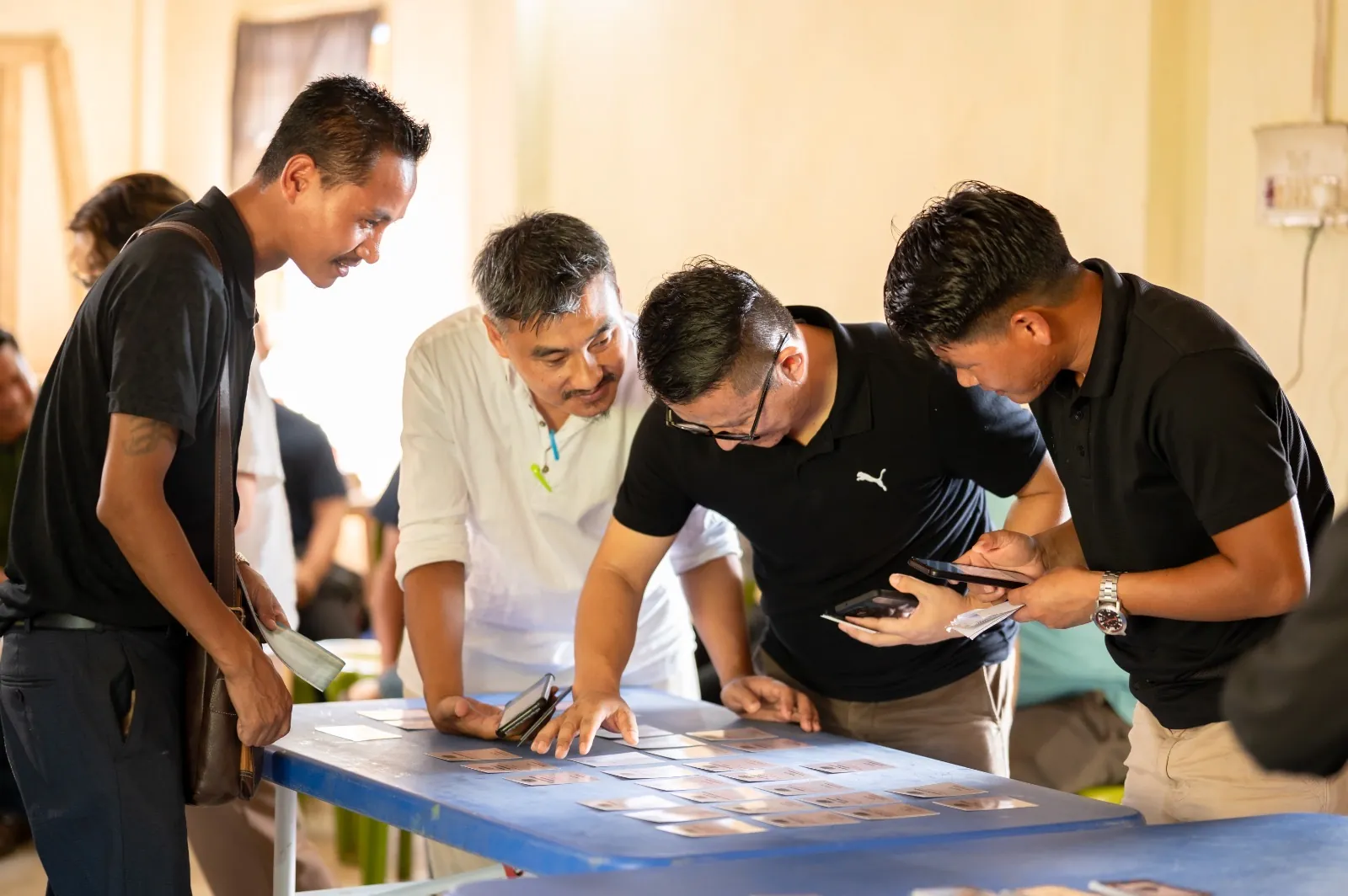
When Deepthi brings balloons or trading cards or blindfolds into a corporate workshop, participants think it's a fun distraction. It's not. It's a precision instrument. Games bypass adult defences and surface behaviour people have no idea they're showing. A game about trust reveals who hoards information. A game about collaboration exposes who competes even when cooperation would benefit everyone. And because participants are having fun, they don't realise anyone is watching. They're not performing competence. They're being themselves. That's when the learning happens.
Corporate L&D loves the phrase "experiential learning" as though putting people in groups and giving them a task were some kind of breakthrough. It isn't.
What is actually hard is designing games with deliberate constraints - information asymmetry, resource scarcity, role conflicts - that mirror what your Tuesday already looks like. Deepthi's games don't have win states. They have revelation states.
Finance versus marketing? Not a metaphor. That is a dual-reporting nightmare with dice. Husband and wife mismanaging expectations? Not a joke. That is situational leadership, live.
And when people see the parallel they don't argue with it. They recognise it. That is the whole bridge from play to insight.
If Your Workshop Needs Coffee to Survive, It's on Life Support
Energy dips are inevitable. Post-lunch comas. Late-afternoon existential dread. The screensaver face. That glazed look where someone's nodding along but mentally grocery shopping. Deepthi's learned to spot these moments and deploy countermeasures: movement, group work, energizers, coffee breaks. Not as band-aids. As design choices. If participants are sitting too long, they are not engaged, they are enduring. If the content is too heavy, they need social pressure to stay present. If the energy flatlines, you need humor to jolt it back.
One participant once told Deepthi, out loud, that he had zoned out for a solid 15 minutes and thanked God for the coffee break.
That is not a failure. That is somebody trusting you enough to say it. Which only happens when the connection is real.
Facilitators who believe everyone is paying attention all day are lying to themselves. Attention is cyclical, contextual and earned again every twenty minutes. The good ones don't blame the room for being human. They design for it.
TLDR. Because Attention Spans Are a Myth and Also Real
- Stop mistaking participation for engagement. They're not the same.
- Connection over correction. Always. Build trust before you build lessons.
- Design for the last bencher. If they lean in, everyone else follows.
- Flow is a tightrope walk between boredom and overwhelm. Keep everyone in the band.
- Games aren't icebreakers. They're behavioral mirrors.
- Movement, humor, and group work aren't soft tactics. They're survival tools.
- Context dictates everything. A six-year-old and a middle manager need different entry points.
- If your workshop needs coffee to survive, it is not facilitation. It is life support.
How I Use This at PutThePlayerFirst.com
Everything Deepthi described - connection, flow, games as revelation engines - is what I design for. When I build simulations, I'm not creating training modules. I'm creating conditions for people to surprise themselves. To see their own behaviour reflected back in ways that bypass defensiveness. To realise collaboration beats competition not because it's morally superior, but because it's strategically smarter. And when participants walk out of a session saying, "I didn't expect to feel that," I know the design worked. Not because I told them something. Because they experienced something.
This is what serious games do. They don't explain empathy or trust or leadership. They make you bump into the edges of your own habits and assumptions. And when that happens in a space where failure is safe, where humor breaks tension, where connection is already there - that is when change becomes possible. Not forced. Not prescribed. Possible. And possibility is the only thing worth designing for.
Watch the full conversation here:
With love from Bengaluru, this is Arvindh saying over and out.
See these ideas in action
I run these games for leadership teams across India, and I am in the room for every single one. Come and see.
See the games Write to me