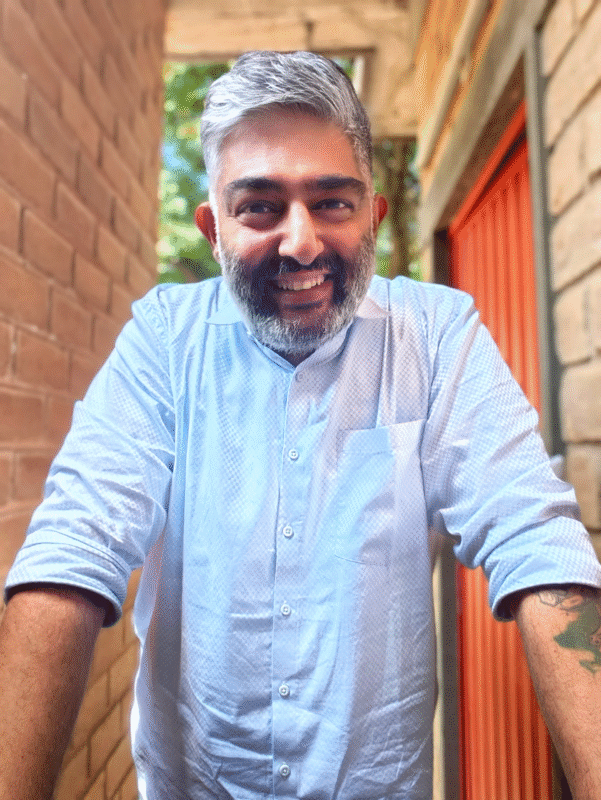
You Can't Force 200 People to Pay Attention. But You Can Design a Space Where They Choose To
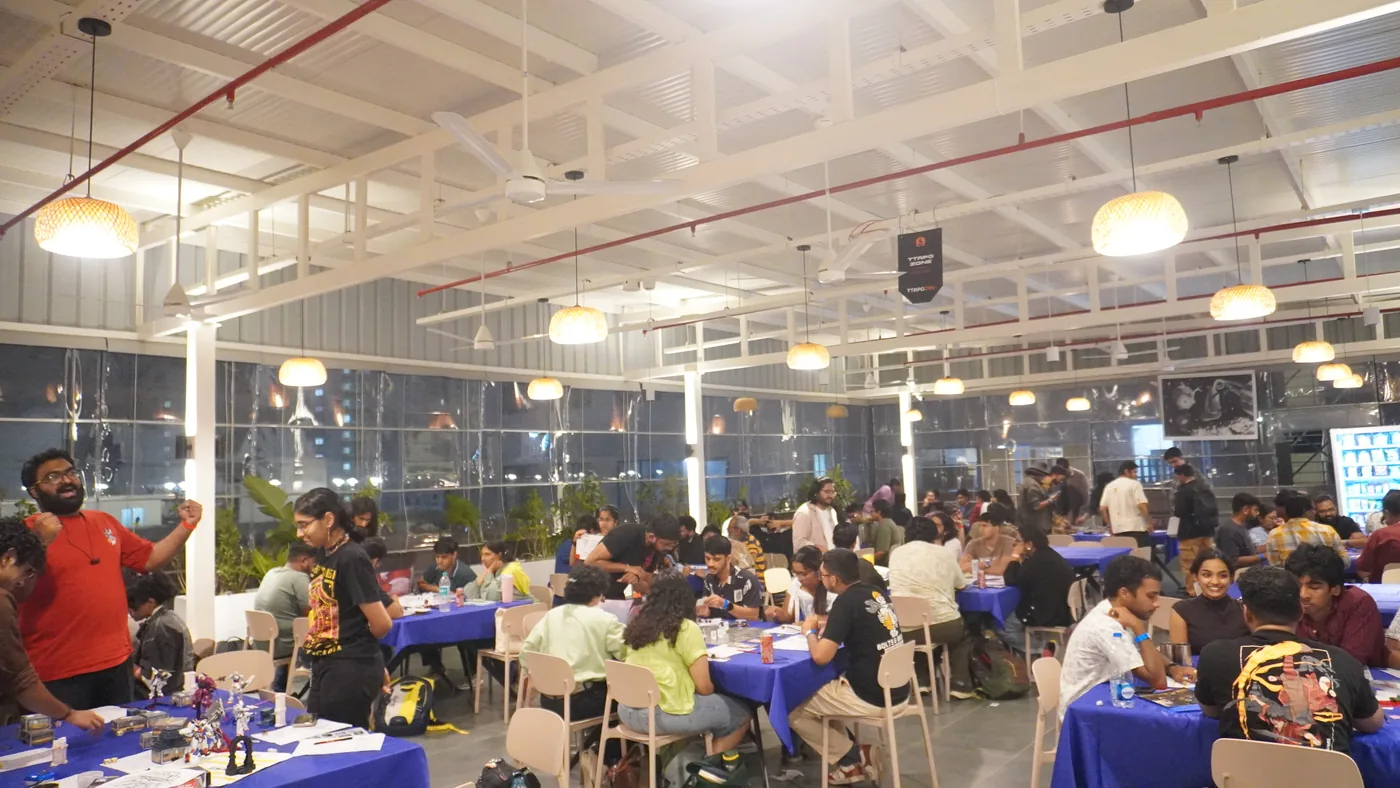
To make focus scale, you need systems, not individuals. That is the single most useful thing I learned organising TTRPGCon - Bangalore's first two-day tabletop RPG convention. When you're coordinating 18 game masters and 200 players across two days inside a post-apocalyptic art space, willpower does not cut it. Neither does charisma. Neither do motivational speeches, or colour-coded spreadsheets nobody opens. What works is building an environment where attention flows on its own because people want to be there, plus enough scaffolding to hold the thing up when it inevitably goes sideways. Which it will.
I did not start with this insight. I started with eight solo Dungeons & Dragons sessions at TTOX - India's largest board game convention - introducing maybe 50 people to the hobby while slowly losing my voice. One game master became two, then four, then five. By the end of the last TTOX, a group of us stood around thinking: what if we could do this, but bigger? What if it wasn't just a side attraction at a board game event, but the main show? What if we could create a space where people who'd never rolled a twenty-sided die could walk in nervous and leave planning their next character sheet?
So I did what any reasonable person would do. I asked a few friends if they fancied helping me run a convention with no budget, no venue and no idea how event permits work. A couple of lunatics said yes. Then the energy fell off a cliff, we very nearly canned the whole thing, and one friend said "If you don't do this now, when are we gonna do it?" I said fuck it, we fireball. That is how you start a convention. One part desperation, one part stubbornness, and a community willing to catch you when you trip over your own ambition.
Apparently "Interactive" Still Means More Than Clicking Dice
Tabletop RPGs are fundamentally different from board games, and the difference matters when you're thinking about how humans pay attention. Board games give you mechanics, components, fixed rules, and a predetermined narrative arc. You operate within boundaries - sometimes beautifully designed boundaries, but boundaries nonetheless. Chronicles of Drunagor or Aeon's End will take you on a journey, but it's a journey someone else mapped out for you. There's comfort in that. There's also constraint.
TTRPGs throw the map away. You have a game master who sets the scene - a dark forest, a neon-soaked corporate lobby, a spaceship losing oxygen - and then you decide what your character does. Not from a menu of four actions. From your imagination. If you can think it, you can attempt it. The dice decide whether you succeed, which means the story careens in directions nobody anticipated. I once watched a barbarian jump off a tower onto a black dragon, wrap iron chains around its mouth mid-flight, and judo-throw it into the ground while landing on its soft belly. That wasn't in the rulebook. That was a player, a game master, and physics-defying conviction colliding in real time.
This matters because attention does not follow obligation. It follows possibility. Sit at a TTRPG table and you're not consuming content or ticking off tasks. You're co-authoring a story that only exists because you turned up. Miss a board game night and the game carries on. Miss a TTRPG session and the story cracks. Your agency is the story. That's why the phones go face-down without anybody asking. That's how a table of total strangers holds four hours of focus with no productivity hack in sight.
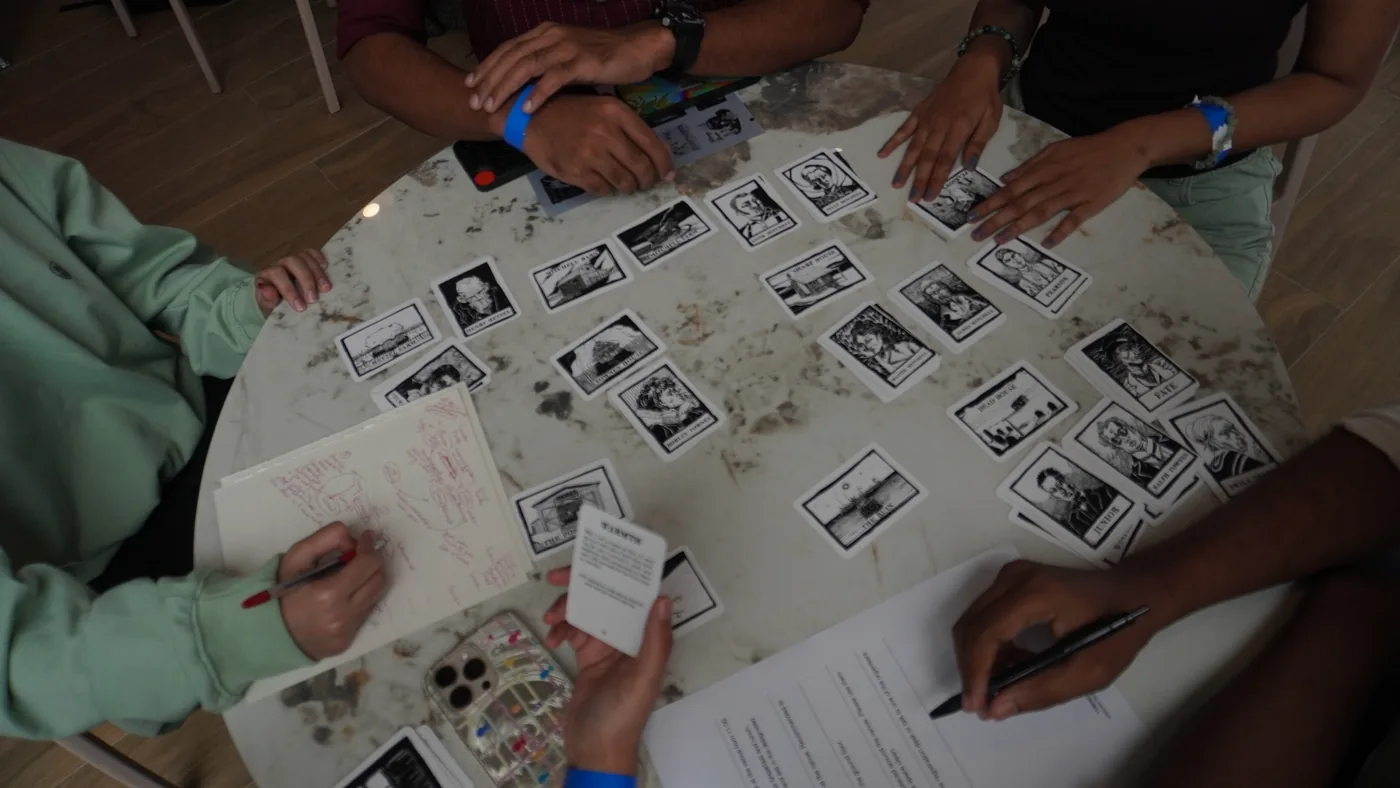
The rules aren't constraints. They're scaffolding. They tell you how to resolve uncertainty - how hard it is to pick a lock, whether your sword connects, if the dragon believes your bluff. But they never tell you what to try. You could negotiate with the villain, burn down the tavern, or seduce the lich. The game doesn't care. The game is you caring, together, voluntarily, because the magic circle opened and you all chose to step inside.
This Is Where Most Conventions Forget They're Hosting Humans
When we designed TTRPGCon, every decision filtered through three questions: Will this help someone who's never played feel welcome? Will this expose existing players to systems beyond D&D? Will this connect people to the community so they keep playing after the convention ends? If the answer to all three wasn't yes, we didn't do it. That sounds simple. It's not. It's a razor, and razors cut.
We built a free online course - The 10,000 Game Masters - to train people who'd played a few games to run their own homebrewed adventures. We created instructional videos for players. We gave game masters specific protocols: use the X-card for boundaries, explain mechanics clearly, put safety above spectacle. We designed the schedule so newcomers wouldn't drown in jargon. We stocked the game library with systems people had actually heard of alongside weird indie titles they hadn't. Every detail pointed toward one goal: make it foolproof to walk in scared and walk out wanting more.
The venue mattered more than I expected. Bangalore Creative Circus isn't a hotel conference room with fluorescent lights and sad coffee. It's a bohemian post-apocalyptic art space with grunge aesthetics, murals on every wall, sustainable design, and a café that actually cares about its beans. It feels alien, which is exactly what you want when you're trying to get people to leave their everyday worries at the door. The magic circle - that psychological boundary between "real life" and "play" - forms more easily when the environment itself signals "you're somewhere else now." Novel spaces help people dissociate from their inbox, their rent, their commute. They help people be present because presence becomes the default state.
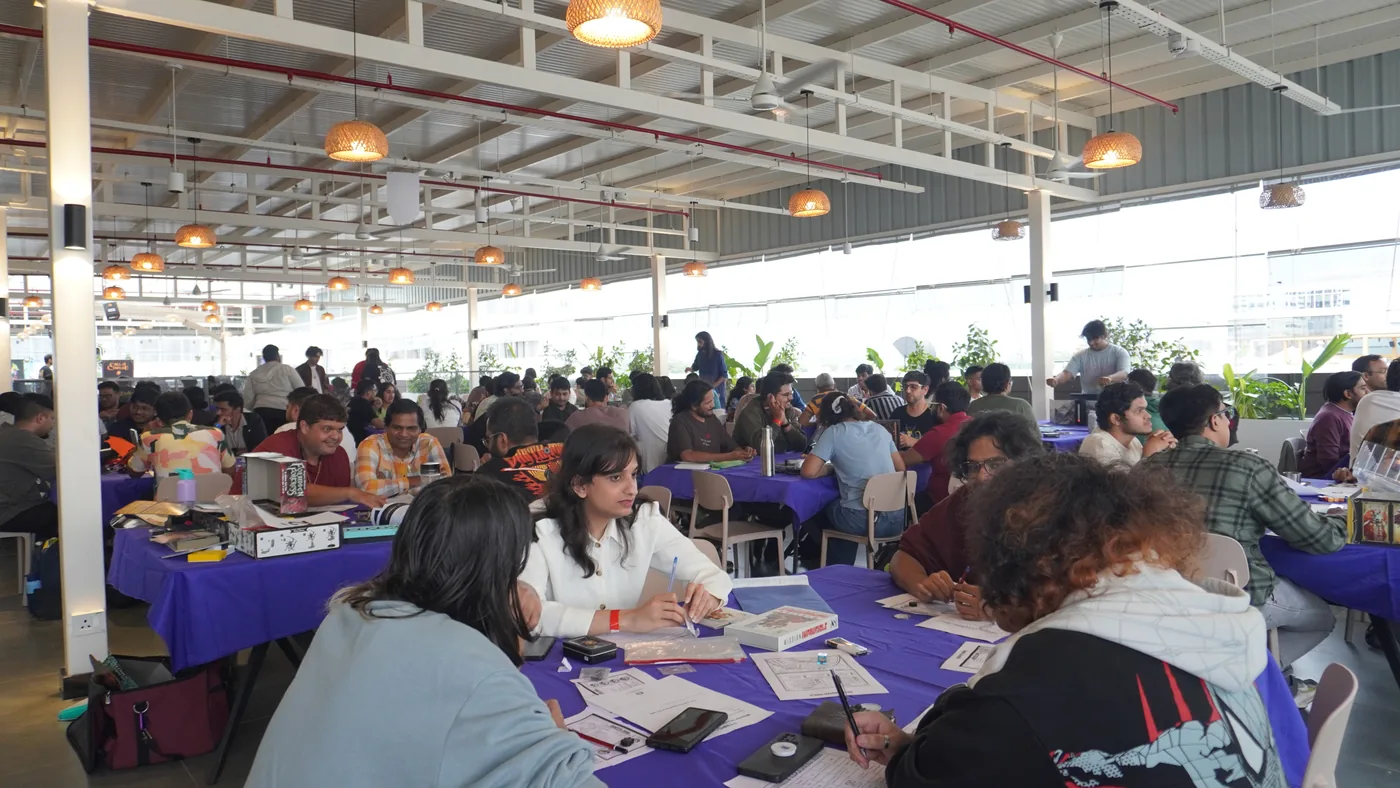
Now add 200 people all doing the same imaginative thing at once and you get a feedback loop. The room's mood becomes a design element in its own right. You do not manufacture that with better signage. You get it by accepting that environment shapes attention at least as much as content does. Probably more.
If You're Going to Take Sponsorship Money, Make Sure They Understand Why Magic Circles Exist
I'm a marketer by training. I know how sponsorships usually work: you pitch brands, they give you money, you slap their logos everywhere and call it partnership. That's fine for product launches. It's poison for community events. We needed sponsors desperately - running a two-day convention in a premium venue with rentals, ticketing infrastructure, and game supplies isn't cheap. But we also knew that letting the wrong sponsors in would kill the thing we were trying to build.
So we said no. A lot. We only approached people who already lived on the fringes of the board game ecosystem - hobby stores run by dungeon masters, cafes with regular TTRPG meetups, communities that played Blood on the Clocktower until 4 AM. Olives, one of our sponsors, has a store manager who's a stand-up comedian and a dungeon master. Cafe Meatball Syrup's owner 3D-printed his own cyberpunk katana for Halloween. BGC plays fringe games alongside their board game marathons. These weren't brands looking for exposure. These were people who got it - who understood that this event existed to serve players first, and everything else was secondary.
We hesitated over bigger cafes and stores with no TTRPG culture baked in. Some of them still didn't understand what we were doing after we'd explained it twice. We parked them. I would love to tell you I had the nerve to put cash flow above culture fit... I did not. The river is my people, and I am a river to my people. If a sponsor wasn't flowing with that current, they weren't part of the ecosystem.
That grassroots energy - the favour-trading, the game-running, the personal connections - turned out to be the strongest infrastructure we had. You can't fake it with marketing spend. You can't buy it from an influencer. You build it by giving first, consistently, boringly, until the day you finally ask and the community stands up.
Attention Follows Safety and Novelty Together - Not One or the Other
Here's the synthesis: tabletop RPGs work as attention-hacking machines because they combine psychological safety with radical novelty. The magic circle establishes boundaries - the X-card lets you pause if something crosses a line, the code of conduct protects everyone, the game master moderates tone. You're safe to fail, safe to improvise, safe to look silly trying something audacious. That safety opens people up.
But safety alone creates boredom. You also need novelty - unpredictable dice rolls, unexpected player choices, plot twists nobody saw coming, environments that feel alien enough to pull you out of your habitual patterns. Bangalore Creative Circus plus collaborative storytelling plus dice-driven chaos equals a cocktail of safety and surprise that keeps attention locked in for hours.
This is the bit most corporate learning gets wrong. It either overcorrects on safety - sterile icebreakers, sanitised scenarios, outcomes you could predict from the invite - or it overcorrects on novelty, which is VR headsets and gamification with nothing underneath. Real engagement lives right at the join. You cannot force it. All you can do is build conditions where people choose to step into the magic circle, because it offers something their normal Tuesday doesn't. The chance to be someone else. Problems that matter right now. Colleagues, minus the usual social scripts.
The bleed is real. Skills you practice at a TTRPG table - empathy, communication, problem-solving, diffusing tense situations, staying curious instead of judgemental - transfer to real life. I've watched players become more confident, more open, better at navigating ambiguity. Not because someone lectured them about soft skills, but because they practiced those skills in a sandbox where failure was low-stakes and success felt meaningful. That's the promise of serious games and simulations done right: voluntary participation plus meaningful challenge equals genuine development.
Running TTRPGCon was not a logistics job. It was attention engineering at scale. Every choice - the venue, the sponsors, the game master protocols, the newbie-friendly design - pointed at one outcome. Two hundred people who wanted to focus. Attention nobody had to beg for or manipulate, because the experience was worth it.
TLDR - The Attention Design Playbook You Won't Find in Most Workshops
- Sustained collective attention requires systems, not heroic individuals willing themselves to focus
- Voluntary engagement is the only engagement that scales - forced participation is life support masquerading as facilitation
- Environment design isn't decoration - novel spaces help people psychologically exit reality and enter the magic circle
- TTRPG rules are scaffolding that enables limitless agency, not constraints that limit possibility
- Culture fit matters more than cash - saying no to wrong sponsors protects the experience you're trying to build
- Bleed is real - skills practiced in low-stakes sandboxes transfer to high-stakes life
- Attention follows the intersection of safety and novelty, not one or the other
- The magic circle is an opted-in state where ideas and behaviors can be "loaded" without resistance
- Community isn't built through marketing - it's built by giving consistently until support flows naturally
- Design for voluntary engagement, or accept that what you're running is compliance theatre
Want the unfiltered version? Here's me interviewing myself about running TTRPGCon, hacking attention through tabletop RPGs, and why most learning experiences are built back to front.
How This Shows Up in My Work
Everything above is also how I build serious games and simulations at PutThePlayerFirst.com. When I design a learning experience I am not building a content delivery system. I'm building a magic circle - a bounded space people step into voluntarily, because it offers something their normal working week does not.
I use TTRPGs and game-based simulations to teach leadership skills, strategic thinking, and collaborative problem-solving because they do what lectures and slide decks can't: they create safe sandboxes where people practice real skills under real (simulated) pressure. A manager learning to delegate does not need another framework diagram. They need to micromanage a dungeon crawl and watch their own team go quiet in front of them. That feedback loop - try something, see immediate consequences, adjust, try again - is how adults actually learn.
The environment matters just as much in corporate sessions as it did at Bangalore Creative Circus. I don't run workshops in beige conference rooms with stale pastries if I can help it. I look for spaces with natural light, interesting textures, places that signal "this isn't another meeting." I use props, soundscapes, deliberate pacing. Not because I'm chasing aesthetics, but because environment shapes whether people feel permission to play, to fail, to be present.
And I'm fussy about who I work with. Not every organisation is ready for a serious game. Some want the optics of innovation without any of the discomfort of change, and those are not my clients. I work with people who accept that real learning needs voluntary participation, that bleed is the feature and not the bug, and that attention can't be forced. Only invited, with something worth focusing on.
TTRPGCon taught me you can coordinate 200 people without controlling one of them. You can create focus without forcing it. You can build a community without manufacturing it. Design the systems that make those things the natural outcome, then get out of the way and let the magic circle work. That's it. That's the trick.
With love from Bengaluru, this is Arvindh saying over and out.
See these ideas in action
Put The Player First runs serious game sessions for leadership teams across India. The designer is in the room for every session.
See the games Get in touch