
How to Be More Adaptable as a Leader (Learning Agility)
The skill was never having the right plan. It is noticing the plan is wrong... and changing it before everyone else has finished defending theirs.
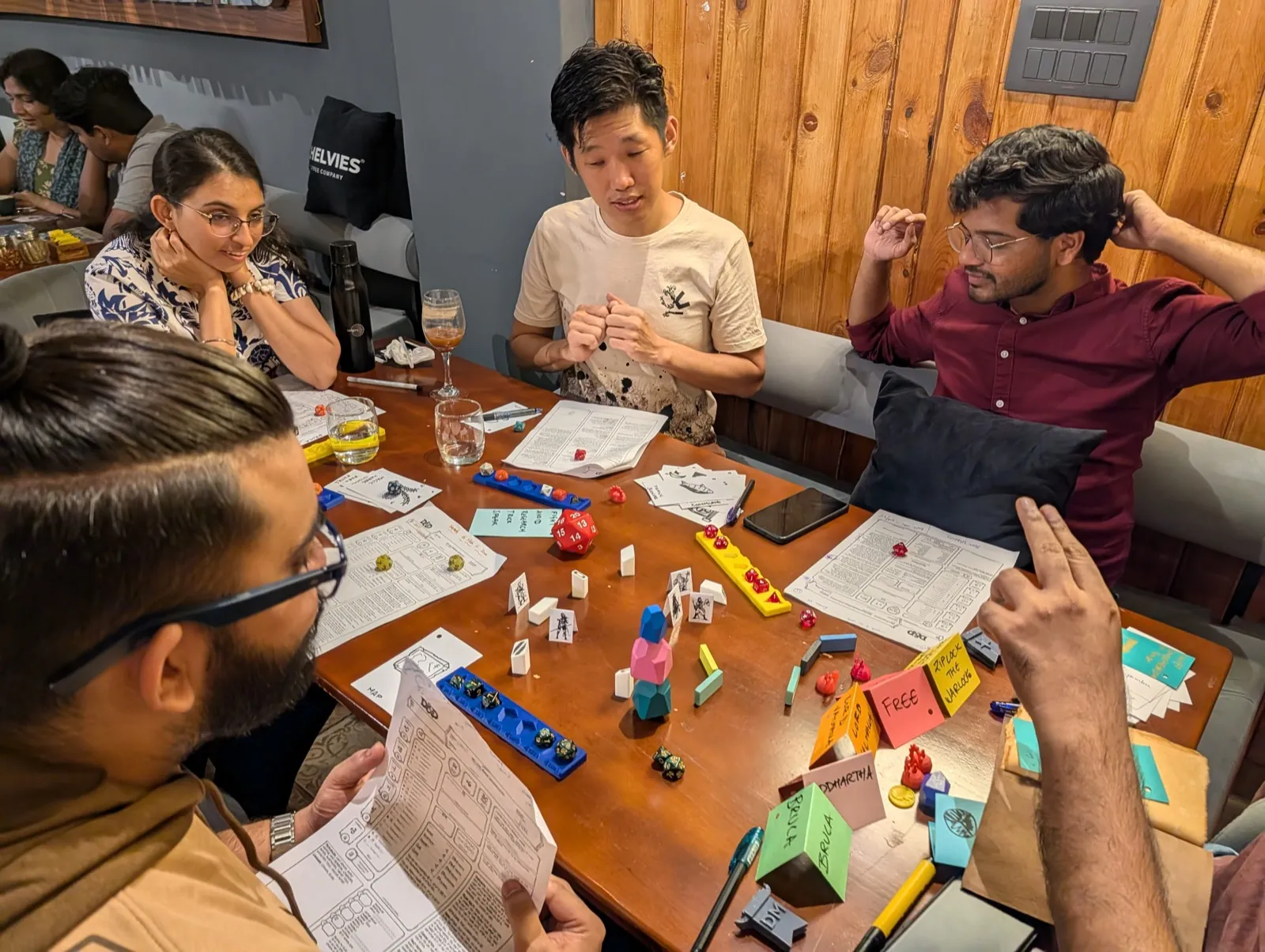
Short answer: You get more adaptable by building learning agility - reading a situation that is moving, updating your view when the evidence disagrees with you, and acting before you have everything. It is a behaviour, not a personality. You build it the way you build any behaviour: reps under shifting conditions, an honest look at whether you default to acting or to analysing, and small reversible experiments instead of a large confident bet on your first read. The fastest way to get those reps without wrecking a quarter is a simulation, and I will come to that at the end.
Key takeaways
| The skill | What it looks like | How to build it |
|---|---|---|
| Learning agility | Doing well in a mess you have never seen before | Walk into unfamiliar problems on purpose, then debrief |
| Knowing your bias | Catching yourself over-acting or over-thinking | Watch your default under pressure and correct for it |
| Updating your model | Dropping a plan the evidence has already killed | Name the signal that would prove you wrong, in advance |
| Safe experimentation | Finding out cheaply, before you commit the budget | Make the first move small and easy to walk back |
| Timing the switch | Stopping the debate and actually calling it | Set the trigger early, not at 6pm on the Friday |
 What learning agility actually is
Learning agility is the ability to learn from one thing and use it on a completely different thing. It is what lets somebody walk into a problem they have never seen and still make decent calls, because they took the lesson out of the last mess instead of the instructions. Of everything researchers have tried to measure about leadership potential, this is the one that best predicts who does well in a job they have never done. Ahead of cleverness. Ahead of how well they did the last job.
Which matters, because the work will not stay still for you. The market moves, the org chart gets redrawn on a Thursday, and the tool you built ten years of expertise on gets replaced by something a graduate learns in a weekend. A leader who is only good at the situations they have already mastered is one reorg away from being stuck and slightly bitter about it.
Now, what learning agility is not. It is not being a generalist who knows a bit of everything. It is definitely not changing your mind whenever somebody senior frowns at you. It is a loop, and a fairly boring one: hit something unfamiliar, try a response, read the result honestly, adjust, put the lesson somewhere you can find it again. The leaders who look effortlessly adaptable are not improvising. They are just running that loop faster than the rest of the room.
The action-versus-analysis bias (know yours)
Under uncertainty everybody leans one of two ways, and the lean is almost always invisible to the person doing the leaning. Some leaders are action-biased: move fast, commit early, sort the details out on the way. Others are analysis-biased: one more data pull, one more model, one more opinion from someone who was not in the meeting. From the inside, both of these feel exactly like good judgement. Both fail, and both fail in a way you could set your watch by.
The action-biased leader comes unstuck when the situation is genuinely new. Their speed runs on pattern recognition, so when the pattern does not hold they have already committed money and people to the wrong call before anyone could get a hand up. The analysis-biased leader comes unstuck on time. They optimise so hard for being right that the window shuts, and a slightly worse decision taken on Tuesday would have beaten the perfect one that lands in March.
Adaptability is not choosing the better bias. It is knowing which one is yours and correcting for it on purpose. Action-biased? Your discipline is the pause - say out loud what you still do not know before you commit. Analysis-biased? Your discipline is the deadline - decide beforehand what "good enough" looks like and move the moment you hit it. And you cannot correct a bias you have never admitted to, which is the whole problem... and the reason a controlled environment that drags it into the open is so useful. More on that below.
 Updating your mental model when the evidence contradicts you
This is where most of us lose. You build a plan. The plan quietly assumes a view of how the world works. Then the world sends a note saying the view is wrong. The adaptable move is to update. The move almost everyone actually makes is to explain the signal away, wait for it to reverse, and then double down - because backing off now would mean saying out loud that the first read was rubbish.
In practice, the block is never analytical. By the time the contradicting evidence turns up you are invested: you argued for the plan in front of your boss, your name is on the slide, your team has been working weekends on it. Changing course feels like losing face, so the brain does something wonderfully convenient and files the new data under noise. That is the most expensive failure in this whole article, because it is the only one that gets worse while you are not looking at it.
The fix is unglamorous. Decide in advance what would prove you wrong, and write it down. The specific signal: this number goes below that line, this customer says this sentence, this assumption turns out to be nonsense. Naming the falsifying evidence early takes your ego out of the room entirely. When the signal arrives you are not humiliating yourself in the moment, you are just executing a decision you made back when you were calm and nobody was watching. Treat the plan as a hypothesis from day one and changing it stops feeling like defeat. It starts feeling like the job.
Experimenting safely instead of betting the farm
Adaptability gets dangerous the moment somebody mistakes it for being brave. Changing direction every fortnight, chasing every shiny signal, betting the annual budget on a hunch from a podcast - that is not agility. That is thrashing, and everyone downstream of you can feel it. The way out is to make each move small and easy to walk back, so you can find out you were wrong without paying full price for the privilege.
A good experiment has three properties. Cheap, so a failure does not sink you. Fast, so the answer arrives while anyone still cares. And clearly defined, so you agreed beforehand what counts as a yes and what counts as a no - otherwise you will simply argue about the result instead of the plan. Run it, read it, and you have replaced an opinion with evidence. Leaders who adapt well are not braver than the rest of us. They have just arranged their decisions so that being wrong is survivable, which lets them move sooner.
This is also how you build adaptability into a team without frightening them. Nobody experiments where failure gets punished. If you want people who adjust to new information, make the small experiment the ordinary unit of work, and make a failed experiment that produced a clear lesson count as a win out loud, in front of everyone. Say it once and nobody believes you. Say it the third time, when it cost something, and they will.
Knowing when to stop debating and act
The opposite trap from doubling down is debating forever. At some point more analysis stops adding value and starts costing you the decision. Adaptable leaders are good at sensing that line, and the trick is that they set it before they start, not in the heat of the moment when they are negotiating with their own anxiety.
Three signals tell you it is time to act. First, when more information would not actually change the decision, you are gathering data for comfort, not for the call. Second, when the cost of delay now exceeds the cost of being wrong, waiting has become the expensive option. Third, when the only way to learn more is to act and watch what happens, analysis has hit its ceiling and the next data point lives on the other side of a decision.
One distinction makes this easier. Reversible decisions deserve a fast call, because if you are wrong you can change it cheaply, so speed beats precision. Irreversible decisions, the ones you cannot easily walk back, earn more analysis, because the cost of being wrong is permanent. Most leaders treat all decisions as if they were irreversible, which is why they are slow on the calls where speed was free.
 Building adaptability as a habit
None of this sticks from reading about it. Adaptability is a behaviour, and behaviours are built by repetition under conditions that resemble the real thing. You cannot become more adaptable by deciding to be, any more than you can get fit by understanding exercise. You need reps, and the reps have to involve genuine uncertainty, real consequences, and a moment afterward where you look honestly at what you did.
In the day-to-day, that means deliberately taking on problems where you do not already know the answer, resisting the urge to delegate the unfamiliar to someone who has done it before, and running a quick debrief after every significant call: what did I assume, what did the evidence say, where did I default to action or to analysis, what would I change. The debrief is where a raw experience becomes a transferable lesson. Skip it and you just had an event. Run it and you built a rep.
This is exactly the logic behind the Put The Player First framework: you change behaviour by putting people in a decision environment, letting them act under real constraints, and then turning what happened into insight through a structured debrief. You do not lecture someone into being adaptable. You give them a situation that demands it and a mirror afterward.
Where a serious game makes this practisable
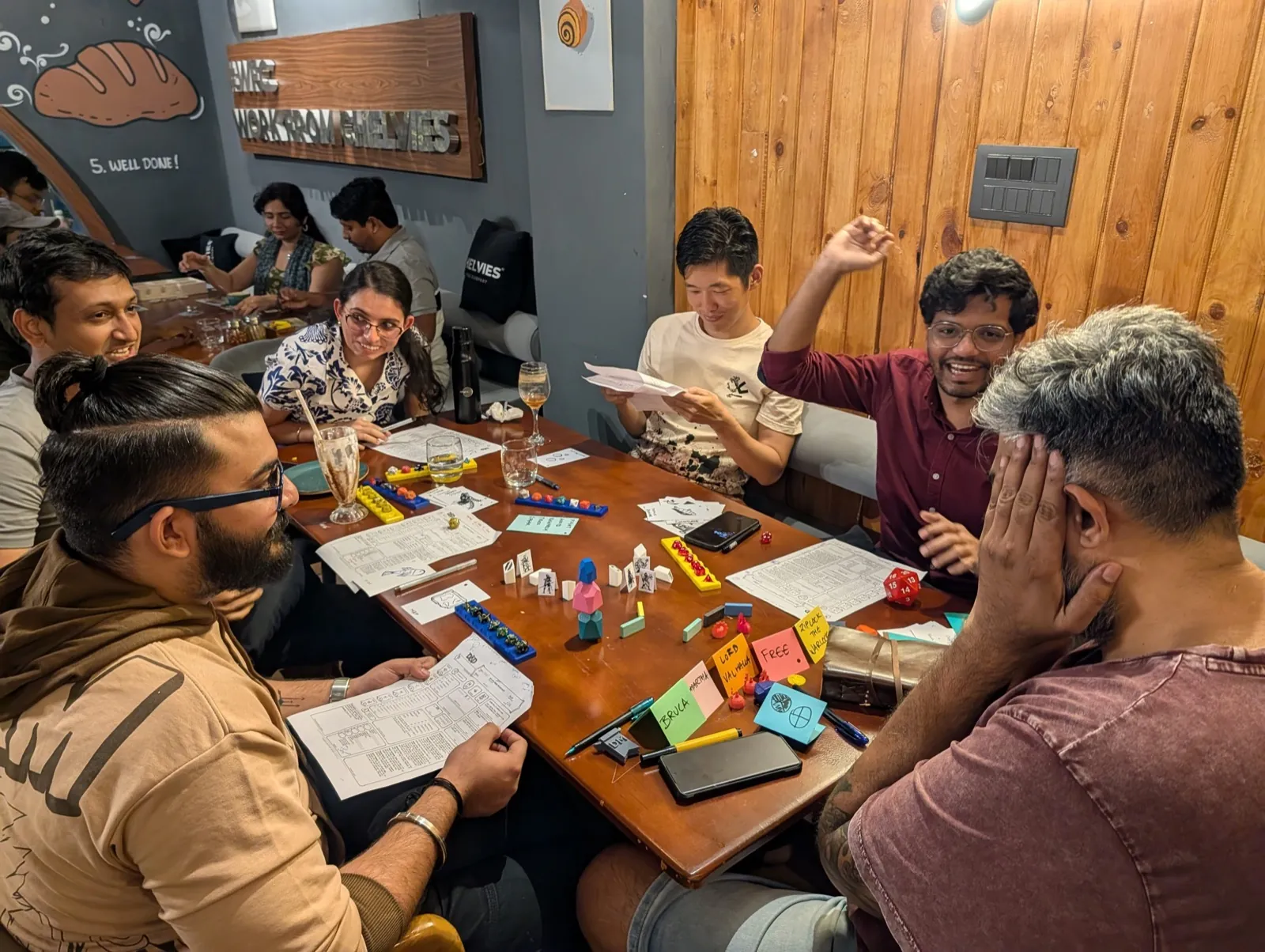
The trouble with practising adaptability at work is that the stakes are real, the feedback takes a quarter to arrive, and your blind spots are invisible to you for the excellent reason that they are blind spots. A well-built serious game - a simulation, if that is the word your organisation uses - squeezes all of it into a few hours where the price of being wrong is a game result and not a year of revenue.
Planetfall is built for this exact muscle. Teams have to land on an alien planet by gathering and acting on incomplete data, and the planet keeps revealing information that contradicts the plan they committed to. You watch people defend a dead plan, or freeze gathering data while the window closes, or move so fast they never tested their first assumption. Your action-versus-analysis bias, the one you cannot see at your desk, shows up in the open where you and the facilitator can name it. Then you get to run it again with that knowledge, which is the rep that actually changes how you behave on Monday.
That's the bridge from reading to doing. Adaptability gets built by practising under shifting conditions, with a debrief that turns the experience into a lesson you can carry. A serious game is simply the cleanest way I know to manufacture those conditions on a Tuesday afternoon. For the wider picture, have a look at the serious games for leadership development guide.

Frequently asked questions
Basics
What is learning agility?
Learning agility is the ability to learn from experience and apply that learning to new, unfamiliar situations. A leader with high learning agility updates their approach quickly when conditions change and performs well even when there is no playbook. It is the single behaviour that best predicts who succeeds in roles they have never done before.
How is adaptability different from learning agility?
Adaptability is the behaviour you can see: changing your plan when the situation changes. Learning agility is the underlying capacity that makes adaptability fast and reliable. Adaptability is the move; learning agility is the muscle. You build the muscle by practising the move under shifting conditions.
Can you actually build it
Can adaptability be learned, or is it a personality trait?
It can be learned. There is a temperament component, but the behaviours that drive adaptability are trainable: seeking disconfirming evidence, running small experiments, updating your model on new data, and timing the switch from analysis to action. Like any skill, it improves with deliberate practice under realistic pressure and a debrief that turns each rep into a lesson.
What is the action-versus-analysis bias?
Every leader leans one way under uncertainty. Action-biased leaders commit before they have enough information and get caught when the situation is genuinely unfamiliar. Analysis-biased leaders gather and debate until the window to act has closed. Adaptability is knowing which bias is yours and correcting for it in the moment.
In the moment
How do I update my mental model when the evidence contradicts me?
Treat your plan as a hypothesis, not a commitment. Decide in advance what evidence would prove you wrong, and when you see it, change course without defending the old plan. The hard part is emotional, not analytical. Naming the falsifying signal ahead of time makes it far easier to act on when it arrives.
When should I stop debating and just act?
Stop when more information would not change the decision, when the cost of delay now exceeds the cost of being wrong, or when the only way to learn more is to act and observe. Set the trigger before you start. A reversible decision deserves a fast call; an irreversible one earns more analysis.
Putting it into practice
How do I build adaptability in my team, not just myself?
Make the small, reversible experiment the normal unit of work, and make a failed experiment that produced a clear lesson count as a win. People do not adapt when failure is punished. A facilitated serious game like Planetfall gives a whole team the reps and the shared debrief in one session.
Related reading
- Serious games for leadership development: the complete guide
- Planetfall: adapt to incomplete data under pressure
- The Put The Player First framework
See Planetfall Come and say hello
With love from Bengaluru, this is Arvindh saying over and out.