
How a Fortune 100 Company Used Serious Games to Fix Team Dysfunction
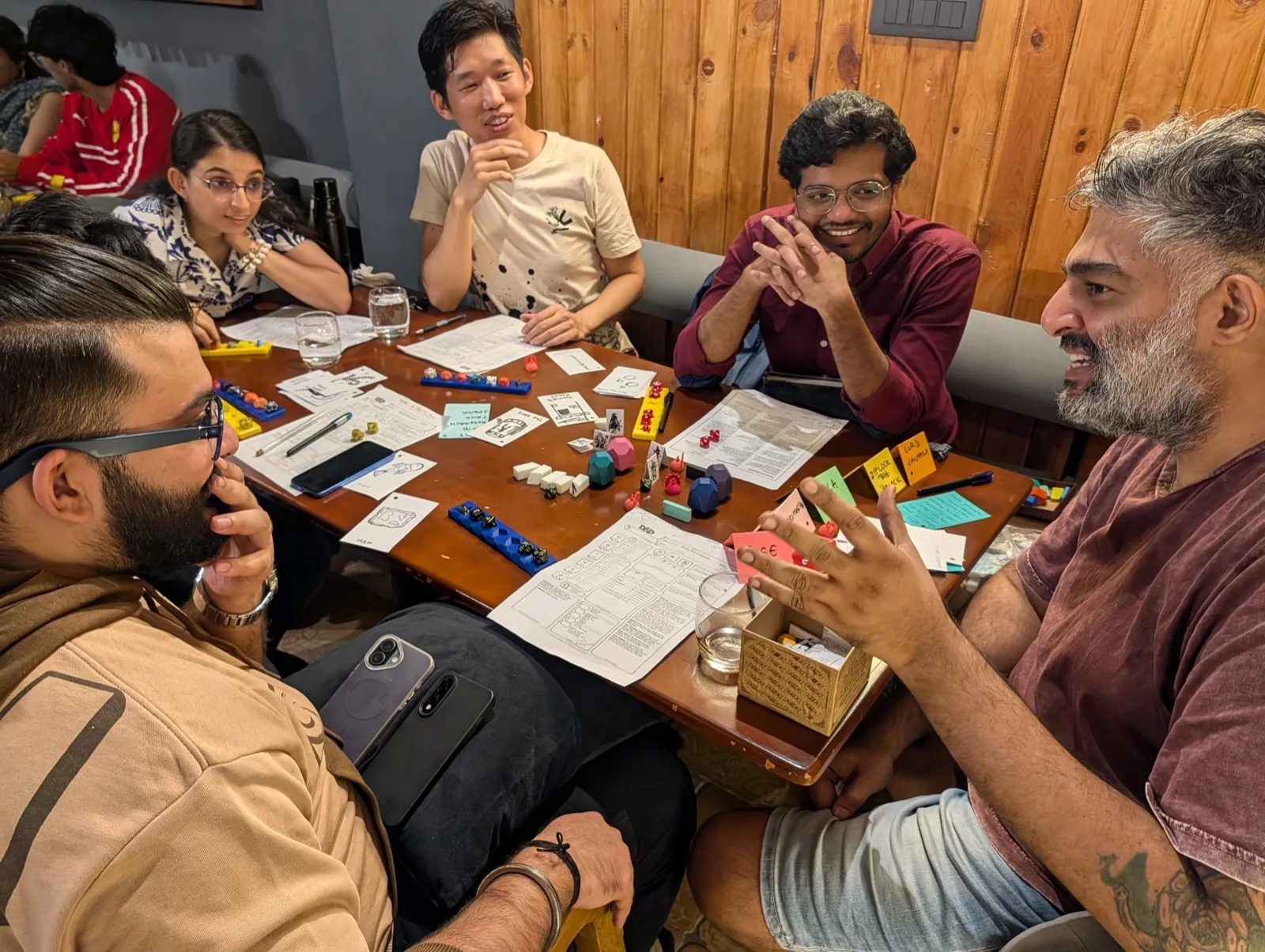
A Fortune 100 company wanted its managers to lead teams, not just run tasks. They had done the courses. So this time they ran the whole thing as serious games instead. Across three batches, the games were the single most-cited takeaway, and satisfaction stayed high cohort after cohort. Here's what we did, and why it worked.
Key takeaways
| Question | Short answer |
|---|---|
| Who | A Fortune 100 company. That is as specific as I am allowed to be. |
| Problem | Managers managing tasks, not leading teams; trust and cross-functional gaps. |
| Approach | A two-day experiential program with a custom team simulation game at the centre. |
| Headline result | Game-based learning was the most-cited takeaway across all 3 batches; 8.82/10 average satisfaction across 113 respondents. |
| Why it worked | The game made team dynamics visible and created the emotional memory a slide can't. |
The problem: managers who managed tasks, not teams
Their managers were good. Genuinely good at execution. Give them a deadline and a tracker and the thing shipped. What they were weak at was the bit that actually separates a manager from a leader... reading a team as a system. Trust. Working across functions. Spotting a small dysfunction before it hardens into "oh, that's just how those two are".
They had run off-the-shelf leadership programs before. Everyone enjoyed them, and very little of it showed up in how the team worked afterwards. The brief this time was blunt, and I liked it: change behaviour on Monday, don't just get a nice score on Friday.
Why not another leadership course
Leadership content has a specific failure mode, and I have written plenty of it myself. You can put "a team is a system" on a slide, say it warmly, put it in the handout... and not one person's behaviour moves. Knowledge transfers beautifully. Behaviour doesn't. People nod, they mean it, and then they go back to protecting their own scorecard, because the idea never cost them anything.
So we didn't teach interdependence. We built a game where you feel it, in your stomach, about forty minutes in.
The centrepiece: a team simulation game
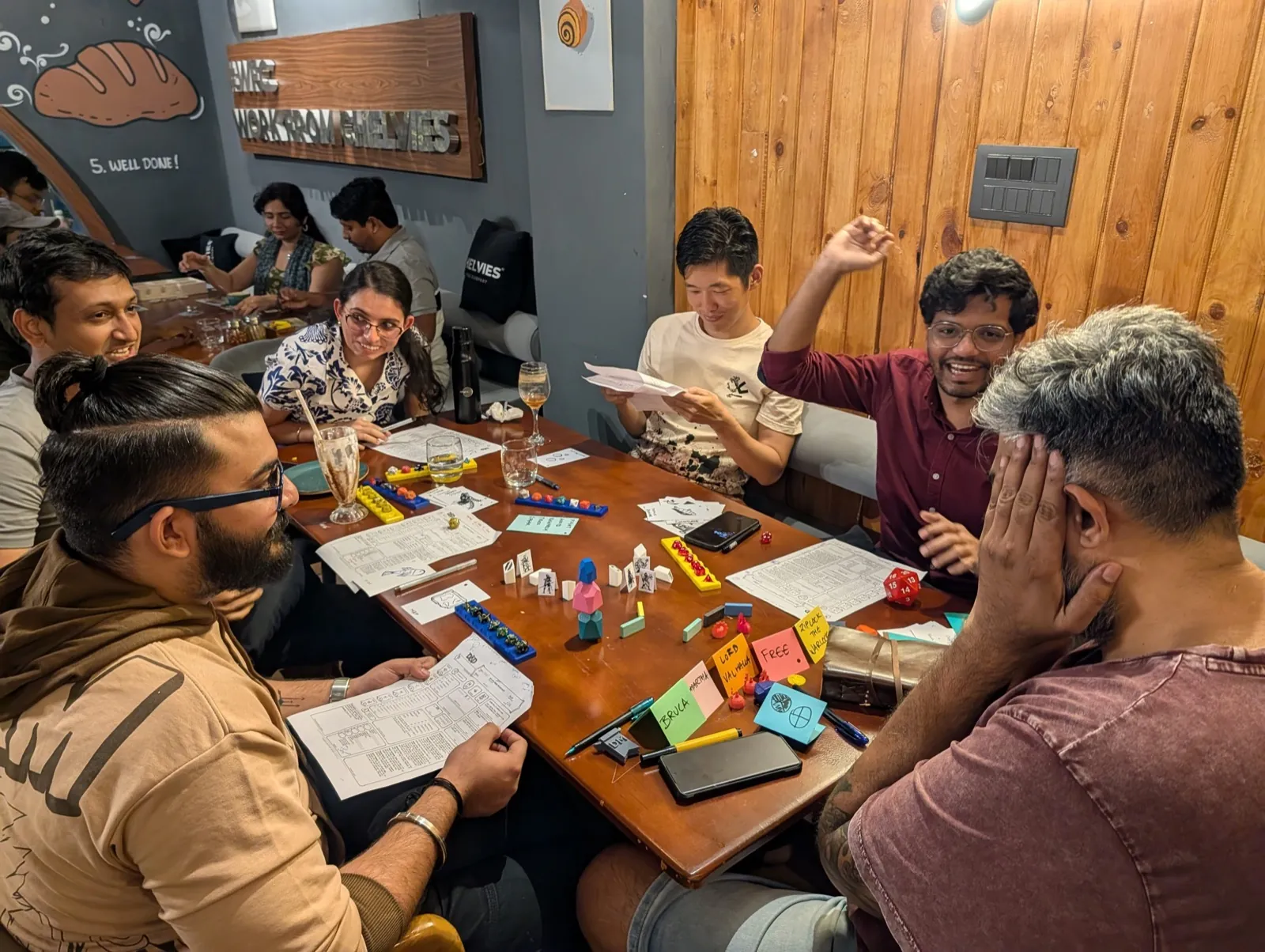
The core of day two was Ripple Effect. A custom simulation where a small leadership team runs one company, and each person holds a different lever. They bid on projects. They trade resources. They make calls without knowing half of what they'd like to know. The catch is that only a few projects can run at once, so every choice ripples into everyone else's outcomes... and in the moment, nobody can see the wire connecting the two.
What the game does
It shows people the thing training normally just asserts. A team is a system, not a pile of individuals. One node moves, the whole thing shifts. And the uncomfortable lesson turns up nearly every single time: the exact skills that got each of these leaders promoted are the skills sinking the group. Everyone plays their own scorecard brilliantly. Individually rational. Collectively a shipwreck. Self-inflicted, too.
The moment it landed
I won't dress this up, so here's what the participants said themselves. Across all three batches, the game-based learning was the most-cited most-valuable part of the program. Named more often than any framework, any discussion, any slide. Ask people what actually moved them and they don't point at something they were told. They point at the round where their own team dynamics showed up on the table in front of them.
It lands because they did it to themselves. Nobody argues with a mess they made.
Then the debrief ties every mechanic back to real work. Where are your decisions making ripples you can't see? Who in this building is quietly absorbing the cost of your team's dysfunction? That's the transfer. Not the game. The recognition.
The results (3 batches)
Three batches, roughly 20-24 professionals each.
- Game-based learning was the most-cited most-valuable element in every single batch - named more often than any framework, discussion, or slide.
- The leadership-situation framework taught alongside the game was cited by participants in every batch as the single most usable takeaway.
- Overall satisfaction landed at 8.82/10 across 113 respondents.
- 100% of one batch rated the program length "Just Right" - not one person said too long or too short.
- My favourite line in the whole feedback pile: one participant's only complaint was "more time spent on gaming." That's not a complaint. That's a request for seconds.
And then they came back for a second, different program off the back of this one. That's the bit I'd look at if I were you. One good room can be luck. A buyer returning is the design holding.
Why it worked (and where a slide deck can't)
- The game made the system visible. You can explain interdependence. Or you can hand people their team as a system for ninety minutes and let them watch it buckle. Only one of those two makes a memory.
- Real stakes, no real damage. You can make a rubbish call in round one, watch it wreck round four, and lose nothing but a fictional contract. That safety is exactly what lets people learn instead of perform.
- A framework they can use on Monday. Alongside the game, a simple way to read a situation and pick a response. It got cited in every batch, and I think that's because it survives contact with an actual Tuesday standup.
- The debrief closed the loop. Every session ended by tying game decisions to situations they were already living through. The game wasn't an icebreaker. The game was the lesson.
Make behaviour visible. Make the consequence immediate. Make the reflection unavoidable. That's the whole design. Plainer than most people expect it to be.
Frequently asked questions
Are serious games just for engagement?
No. Engagement is a side effect. The point is that a game makes real behaviour visible and coachable in a way a lecture can't.
Is this gamification?
No. Gamification bolts points and badges onto a course. A serious game is a designed environment with real stakes and consequences that respond to players' choices.
Does it work at scale?
Yes - this ran across three batches. Different games scale differently, from a small team to large-group flagship formats.
Can the game be customised to our org?
Yes. The centrepiece was a simulation built around their own team-dynamics problem. The design starts from the behaviour you're trying to change.
Run this with your leaders
I design these games and I run every single one of them myself. Not because I'm precious about it. Because the value was never the game - it's reading the room live and running the debrief that turns ninety minutes of play into a different Monday.
I'm a fairly shy person who ended up making a living running games for strangers, which still amuses me. It works though. If your managers are managing tasks instead of leading teams, come and have a chat.
With love from Bengaluru, this is Arvindh saying over and out.
Book a discovery call WhatsApp Arvindh