
Negotiation Skills for Managers: A Practical Guide
Most of your negotiations are not at a table. They are in the hallway, with people who do not report to you.
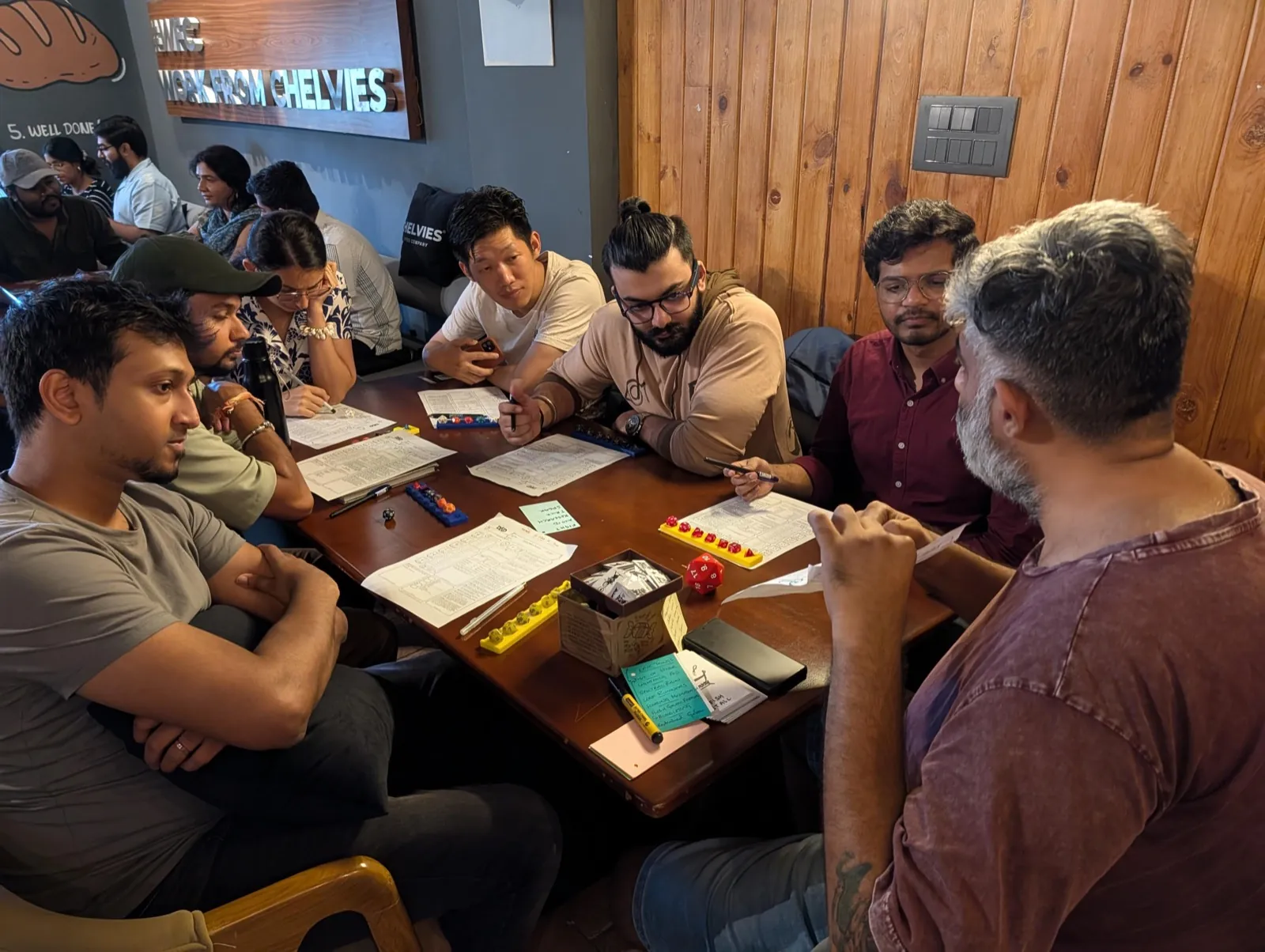
Short answer: The negotiation skills that matter most for managers are preparation, active listening, separating interests from positions, trading across issues to expand value, and influencing without authority. But you are not really negotiating a deal. You are negotiating with the same finance lead, over and over, for the next three years. So the job isn't to win the exchange. The job is to get what you need and still be able to ring that person on Monday.
Key takeaways
| Skill | What it does | Use it when |
|---|---|---|
| Separate interests from positions | Finds the real need behind the stated demand | Both sides are stuck on one number or one answer |
| Integrative trading (win-win) | Expands value across multiple issues before dividing it | You will work with this person again |
| Managing information asymmetry | Controls what you reveal and what you learn | Each side knows things the other does not |
| Coalition-building | Lines up allies before the decision is made | The outcome needs more than one yes |
| Influencing without authority | Moves people through interests, not orders | You depend on people who do not report to you |
 Why manager negotiation is different
Most negotiation advice is built for the car dealership. Two strangers, one deal, you drive off and never see the man again. That is the wrong model for a manager, and it's why so much of the advice feels useless the moment you try it at work. Your counterparty is the finance lead who controls next quarter's budget. The product peer whose roadmap you need. The direct report you have to give feedback to on Friday. The relationship outlasts the deal. Every single time.
That changes the maths completely. Squeeze an extra ten percent today, leave the other person feeling cornered, and you've bought yourself twelve months of them being unavailable whenever you call. Managers who treat every negotiation as a contest to be won tend to win small and lose large. The skill isn't toughness. It's getting a workable outcome without spending goodwill you're going to need again in about a fortnight.
Win-win vs win-lose: choose the right game
There are two underlying structures. Naming which one you're in is half the work, and most people never do it.
Win-lose (distributive) assumes a fixed pie. Whatever you gain, the other side loses. Haggling over one salary number or one delivery date is distributive. The classic move is anchoring - the first number named drags the final figure toward it - which is why preparation and a clear walk-away matter so much here.
Win-win (integrative) assumes the pie can grow. You find several issues that each side values differently and trade across them. You care about the deadline. They care about scope. Hold the deadline, trim the scope, and you both go home better off than a straight fight over one number would have left you.
Default to integrative, because you almost always have more than one issue and you almost always meet again. But don't be soft about it. If the other side is playing strictly distributive, notice, protect your walk-away, and stop handing over information they'll only use to push you. Knowing which game you're in is itself the skill.
Information asymmetry: the hidden lever
In almost every workplace negotiation, each side knows things the other doesn't. The finance lead knows the real budget ceiling. You know exactly how much slack is hiding in your timeline. That gap is where most of the leverage lives, and handling it has two halves.
- Learn before you argue. Ask more than you assert. One open question - "what's driving that deadline?" - surfaces the interest behind the position, and half the time the conflict turns out to be much smaller than it looked from your desk.
- Reveal deliberately, not reflexively. Some disclosure builds trust and unlocks trades. Dumping everything hands over your walk-away in the first five minutes. Trade information for information. Give a constraint, ask for one back.
The opposite extreme is just as bad. Two people revealing nothing to each other for forty minutes will never find the trade that would have made them both better off. They will, however, both feel very shrewd. Calibrated openness beats bluffing and it beats full disclosure.
 Coalition-building and influencing without authority
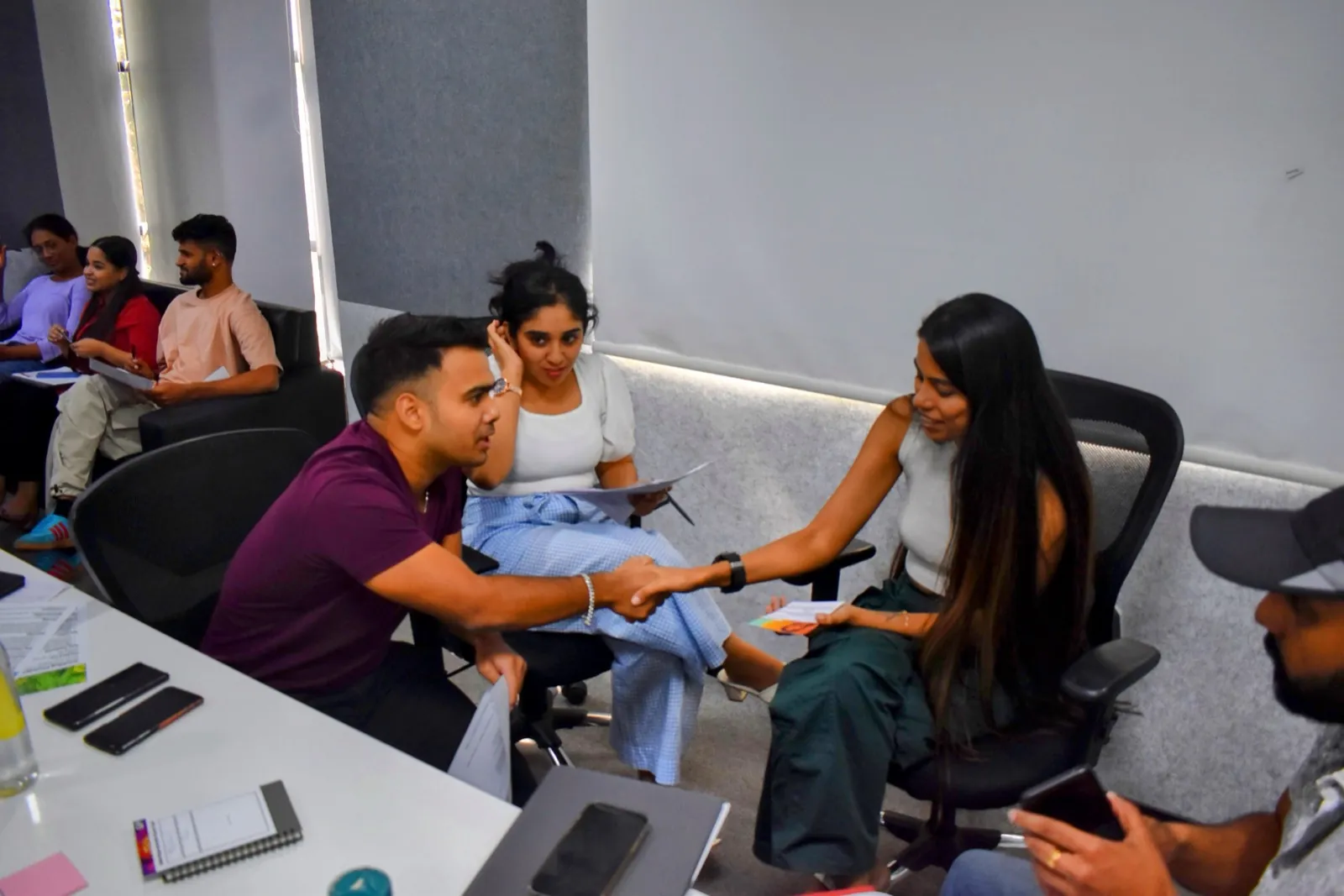
Here's the part the haggle-over-a-number advice never covers, and it is the part managers actually live in. Almost everything you need depends on people who don't report to you. You cannot order the data team to reprioritise. You cannot command another department to back your proposal. You can only influence without authority.
Which runs on interests, not instructions:
- Map the interests first. Before you ask for anything, work out what this person is measured on and what they are quietly trying to avoid. Then frame your ask as a route to their outcome, not yours.
- Build the coalition before the meeting. The decision is usually made before anybody sits down. Line up the people who already agree, handle the swing voter privately, and walk in with the room already leaning.
- Use reciprocity and consistency. People move toward those they owe, and toward things they've already said out loud. Bank small favours early. Get a small public yes before you go for the big one.
- Make the yes cheaper than the no. Strip out the cost, the risk and the effort of agreeing until saying yes is simply less work than resisting.
Authority forces compliance once. Influence earns cooperation over and over. For a manager, that compounds.
Common negotiation traps at work
- Winning the deal, losing the relationship. The most expensive mistake managers make. A cornered colleague remembers for years.
- Anchoring to the first number. Whoever says a figure first sets the gravity. Have your own anchor and your walk-away ready before you walk in.
- Confusing positions with interests. "I need it by Friday" is a position. The interest is a board update on Monday, which a two-page summary on Thursday solves perfectly well.
- Negotiating against yourself. Improving your own offer because the other side went quiet. Silence is a tactic, not a rejection. Hold.
- Splitting the difference by reflex. Meeting in the middle feels fair and mostly just rewards whoever anchored more aggressively.
- Skipping the prep. Walking in without your walk-away, their likely interests, or anything you can trade. Most negotiations are lost before anybody speaks.
 A simple preparation checklist
- Name the game. Distributive or integrative? One issue or several?
- List your interests, then theirs. Not positions. What does each side actually need?
- Set your walk-away. The point past which no deal beats this deal.
- Find your trades. What can you give that costs you little and is worth a lot to them?
- Map the coalition. Whose yes do you need, and who can you line up first?
Why reading this will not make you better at it
Negotiation is a behaviour, not a body of knowledge. You can understand interests and anchoring and coalitions perfectly well on paper and still freeze, over-concede, or torch a relationship the moment there's a real agenda across the table. These things only show up under pressure. When somebody wants something different from you, holds information you need, and is reading you every bit as carefully as you're reading them.
Which is exactly why I build simulations instead of slide decks. The Put The Player First framework drops managers into a designed decision environment where negotiation and influence become impossible to hide, then uses the debrief to turn what happened into something they can use on Monday. For how this fits the wider picture, have a look at the serious games for leadership development guide.
Want the one built precisely for this? Welcome to Zombiepuram. Six hours, competing factions, and everybody holding a piece somebody else needs. You negotiate, you influence with no authority whatsoever, you build coalitions, and you find out by lunch who reads a room and who doesn't. For a tighter focus on moving stakeholders who don't report to you, Bloom does that job in two hours.

Frequently asked questions
Basics
What are the most important negotiation skills for managers?
Preparation, active listening, separating interests from positions, trading across issues, and influencing without authority. Because managers negotiate repeatedly with the same people, protecting the relationship is part of the skill, not separate from it.
What is BATNA and why does it matter?
BATNA is your Best Alternative To a Negotiated Agreement, your walk-away option if no deal is reached. Knowing it sets the floor you will not go below and stops you accepting a deal that is worse than simply walking away.
Win-win vs win-lose
What is the difference between win-win and win-lose negotiation?
Win-lose treats value as fixed, so one side's gain is the other's loss. Win-win finds trades across issues both sides value differently, growing the pie before dividing it. Managers should default to win-win because they meet the same people again.
When should a manager negotiate hard (distributive)?
When there is genuinely one issue, no future relationship to protect, and a clear walk-away. Even then, hold your information close and let the other side anchor first if you can.
Influence and outcomes
How do you negotiate when you have no authority over the other person?
Through interests, not orders. Map what they want, frame your ask as a path to their outcome, line up allies in advance, and lower the cost of saying yes. Influence earns cooperation that authority cannot command.
How do you build a coalition before a decision?
Identify whose yes you need, talk to the people who already agree, then handle the swing voter privately before the group meets. Walk into the room with the decision already leaning your way.
Practice and logistics
How can managers practice negotiation skills safely?
Through deliberate practice under real stakes but no real cost: role-plays, facilitated simulations, and serious games with competing agendas and information asymmetry, followed by a debrief that turns the experience into a transferable habit.
How long does it take to improve at negotiation?
Faster than people expect when practice is deliberate and debriefed, slower than people hope when it is only read about. One well-run simulation with honest feedback usually moves a manager further than a stack of books.
Related reading
- Serious games for leadership development: the complete guide
- Welcome to Zombiepuram: the multi-faction negotiation mega-game
- Bloom: a serious game for influence and stakeholder buy-in
- The Put The Player First framework
Come and see the games Say hello
With love from Bengaluru, this is Arvindh saying over and out.